At first, I thought I was imagining it.
My dog still ate.
Still wagged his tail.
Still followed me from room to room.
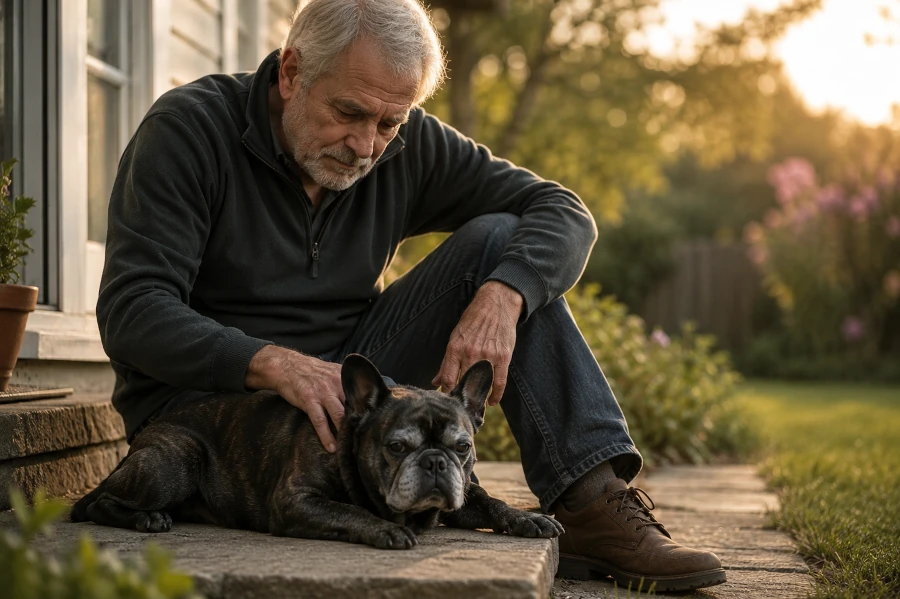
But when I touched his sides one evening, something felt different.
Sharper.
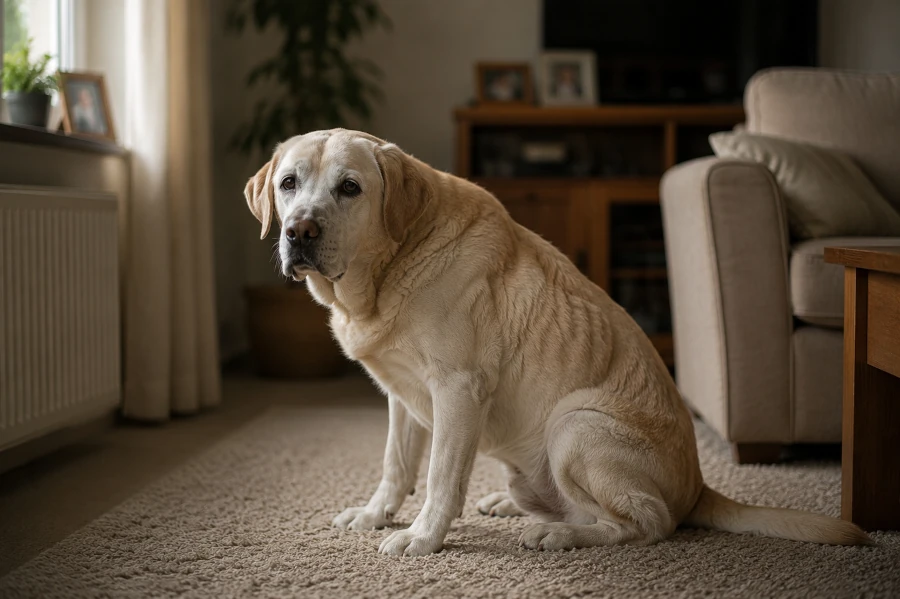
His ribs were easier to feel than before. His hips seemed more visible. And when he turned a certain way under the light, I realized his body looked thinner than it had just a few months earlier.
Not dramatically thin.
Not alarming at first glance.
Just… smaller.
That’s one of the reasons weight loss in senior dogs is so easy to miss.
It often happens slowly enough that you adapt to it little by little, especially if you see your dog every day.
And unlike sudden weight loss, which feels urgent and frightening, gradual weight loss can quietly blend into the idea of “normal aging.”
But not all weight loss should be dismissed that way.
In this guide we will cover:
- why older dogs lose weight more easily
- common causes of gradual weight loss
- how to tell healthy changes from concerning ones
- what you can do at home
- when weight loss may indicate a medical issue
- common mistakes owners make
Why Older Dogs Often Lose Weight
As dogs age, maintaining body weight becomes harder for many reasons.
The body changes gradually:
- muscle mass decreases
- metabolism changes
- digestion may become less efficient
- appetite can fluctuate
- activity levels shift
Even small changes in eating or absorption can slowly affect body condition over time.
Some senior dogs also burn more energy simply trying to move through discomfort, chronic illness, or stress.
And because aging rarely affects only one system, weight loss is often connected to several smaller factors happening together, especially physical changes associated with aging.
The Difference Between Healthy Weight Change and Concerning Weight Loss
Not every change in body shape is dangerous.
Some older dogs naturally become leaner as they age, especially if:
- they stay active
- they lose excess fat
- their diet improves
But there is an important difference between:
- becoming leaner
and - becoming weaker
Healthy body changes usually happen alongside:
- stable appetite
- normal energy
- comfortable movement
- steady behavior
Concerning weight loss often appears with:
- muscle loss
- fatigue
- appetite changes
- weakness
- digestive issues
These warning signs often overlap with low energy and physical decline.
That distinction matters more than the number on a scale alone.
Early Signs Many Owners Miss
Gradual weight loss rarely announces itself clearly.
Usually, owners notice it through small physical changes.
You may observe:
- ribs becoming easier to feel
- hips appearing more prominent
- muscle loss around the legs or spine
- a looser collar or harness fit
- reduced strength or endurance
- changes in coat quality
One of the clearest signs is muscle loss along the back legs and spine.
A dog may technically weigh only slightly less, but look dramatically thinner because muscle has declined.
And muscle loss affects far more than appearance.
It affects stability, energy, and quality of life.
Common Causes of Weight Loss in Senior Dogs
There are many possible causes, ranging from mild to serious.
Reduced appetite
Some older dogs simply eat less consistently.
This may happen because of:
- dental discomfort
- nausea
- reduced smell or taste
- medication side effects
Digestive problems
Poor digestion can reduce nutrient absorption even if appetite seems normal.
These issues are often linked to digestive issues.
Chronic disease
Conditions affecting:
- kidneys
- liver
- heart
- metabolism
can gradually reduce body condition over time.
Pain
Pain changes behavior more than owners sometimes realize.
A dog in discomfort may:
- move less
- eat less
- sleep poorly
Muscle loss from inactivity
Less movement leads to weaker muscles, especially in senior dogs.
And once mobility decreases, maintaining healthy weight becomes harder.
Why Muscle Loss Matters So Much
Many owners focus only on body fat.
But in senior dogs, muscle is often more important.
Muscle supports:
- balance
- mobility
- stamina
- joint stability
A dog who loses muscle may:
- slip more easily
- tire faster
- struggle standing up
- become less confident physically
These mobility issues commonly overlap with weakness of back legs.
This is why some senior dogs appear “skinny” even if they are still eating relatively well.
The problem may not be calories alone.
It may be physical decline affecting the entire body.
Why Senior Dogs Sometimes Eat Normally and Still Lose Weight
One of the most confusing situations for owners is this:
Your dog still eats… but keeps losing weight.
At first, this feels impossible. If appetite is still there, shouldn’t body weight stay stable?
Not necessarily.
In senior dogs, several age-related changes can reduce how effectively the body uses food.
For example:
- digestion may become less efficient
- nutrient absorption can decline
- chronic disease may increase energy demands
- inflammation can change metabolism
- muscle breakdown may happen faster than muscle rebuilding
This means your dog can appear to eat “normally” while slowly losing body condition over time.
That’s why appetite alone is not enough to evaluate health.
You also need to observe:
- muscle tone
- strength
- endurance
- energy levels
- recovery after activity
Sometimes the body is working much harder internally than owners realize.
And gradual weight loss is one of the few visible clues, especially when combined with common medical conditions.
How Weight Loss Affects Confidence and Mobility
Weight loss does not only reduce body mass.
It changes physical confidence.
Dogs rely heavily on strength and stability to move comfortably through everyday life. When muscle declines, ordinary movements require more effort.
You may notice your dog:
- hesitating before stairs
- slipping more often
- turning more carefully
- avoiding jumps he once did easily
- tiring faster during walks
This often creates a cycle.
The weaker the dog feels, the less he moves.
The less he moves, the more muscle he loses.
And over time, even simple activities can start feeling difficult.
This is why preserving mobility matters so much during aging, especially when trying to keep an older dog active safely.
Not to force activity or deny limitations.
But to help your dog maintain enough strength to continue participating in daily life with confidence and comfort.
How Weight Loss Changes Daily Life
Gradual weight loss changes more than appearance.
It changes how a dog experiences daily activity.
You may notice:
- shorter walks becoming tiring
- slower recovery after exercise
- increased sleeping
- hesitation on stairs
- less enthusiasm during routines
And because the changes happen slowly, owners often adjust without realizing it.
You shorten walks.
You help more often.
You avoid activities your dog used to handle easily.
Over time, the entire rhythm of life shifts quietly around the loss of strength and body condition.
What You Can Do at Home
You cannot solve every cause of weight loss yourself.
But you can support your dog carefully and consistently.
Monitor body condition regularly
Do not rely only on appearance.
Feel:
- ribs
- hips
- spine
- muscle tone
Small changes matter.
Track eating habits
Notice:
- appetite changes
- slower eating
- unfinished meals
- food preferences shifting
Patterns are often more important than isolated bad days.
Support easier eating
Some dogs benefit from:
- softer food
- smaller frequent meals
- warming food slightly to improve smell
Encourage gentle activity
Movement helps preserve muscle.
Even short controlled walks can make a difference.
Weigh your dog periodically
Gradual loss is easier to detect with consistent tracking.
When Weight Loss Requires Veterinary Attention
Some weight loss is manageable.
Some requires medical investigation.
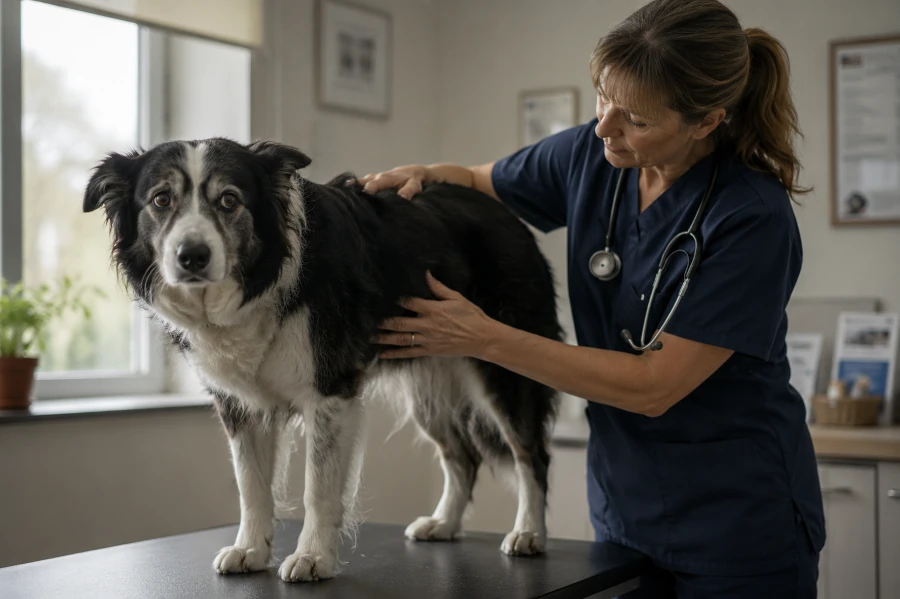
Contact a vet if you notice:
- ongoing decline over weeks or months
- major muscle loss
- appetite reduction
- vomiting or diarrhea
- weakness
- behavioral changes
- difficulty eating
- rapid worsening at any point
Weight loss itself is not a disease.
It is a sign.
And persistent signs deserve answers.
Common Mistakes Owners Make
Weight loss often becomes normalized too quickly in senior dogs.
Assuming “old dogs just get skinny”
Some change is normal.
Significant decline is not always normal.
Focusing only on food quantity
Eating enough does not always mean absorbing nutrients properly.
Ignoring muscle loss
Muscle decline affects mobility and comfort dramatically.
Waiting too long to act
Slow problems still matter.
Overfeeding suddenly
Rapid diet changes or excessive feeding can create digestive stress.
Supporting Strength Instead of Chasing Numbers
This is one of the most important mindset shifts.
Your goal is not simply increasing weight.
It is preserving:
- strength
- comfort
- mobility
- energy
- stability
Sometimes a slightly lean senior dog is healthier than one carrying excess weight.
What matters most is:
- body condition
- muscle preservation
- quality of life
Not perfection.
The Part That’s Hard to Accept
Weight loss changes how your dog feels in your hands.
That’s often when it becomes emotionally real.
You feel the spine more clearly.
The hips more sharply.
The body more fragile than before.
And for many owners, that physical change is painful because it reminds them that aging is happening quietly every day.
Not suddenly.
Not dramatically.
Gradually.
But there is another side to this too.
Care becomes more intentional.
You notice details more carefully.
You appreciate good days more deeply.
You stop taking ordinary routines for granted.
And sometimes, helping a senior dog through gradual weight loss is not about restoring the body to what it once was.
It is about protecting comfort, dignity, and strength for as long as possible.
Because even when the body becomes smaller, the bond itself does not.