It was just a feeling: nothing dramatic.
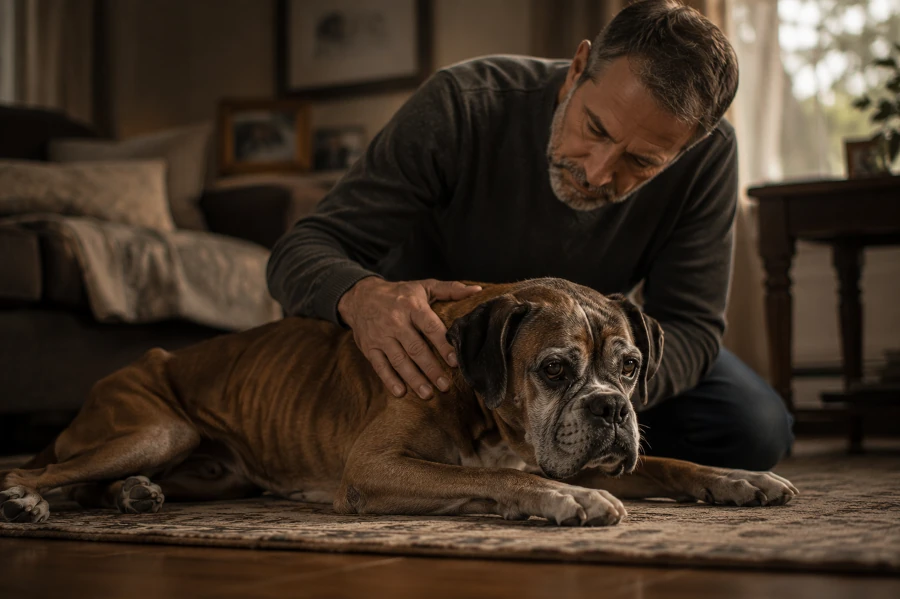
While petting my dog, my hand seemed to “sink” more than usual along his ribs. Then I looked again… and realized something had changed.
He hadn’t stopped eating. He hadn’t acted sick.
And yet—he was getting thinner.
That’s what makes sudden weight loss in dogs so unsettling. It often doesn’t come with clear warnings. It just… appears.
And when you finally notice it, you can’t unsee it.
In this guide we will cover:
- What counts as sudden weight loss in dogs
- The most common causes (and the serious ones)
- Signs that should worry you
- What you should do right now
- Mistakes to avoid when your dog is losing weight
What “Sudden Weight Loss” Really Means
Not all weight loss is a problem.
Dogs can lose a little weight due to:
- seasonal changes
- slight appetite variations
- increased activity
But sudden weight loss is different.
It usually means:
- noticeable weight drop in a short time (days or a few weeks)
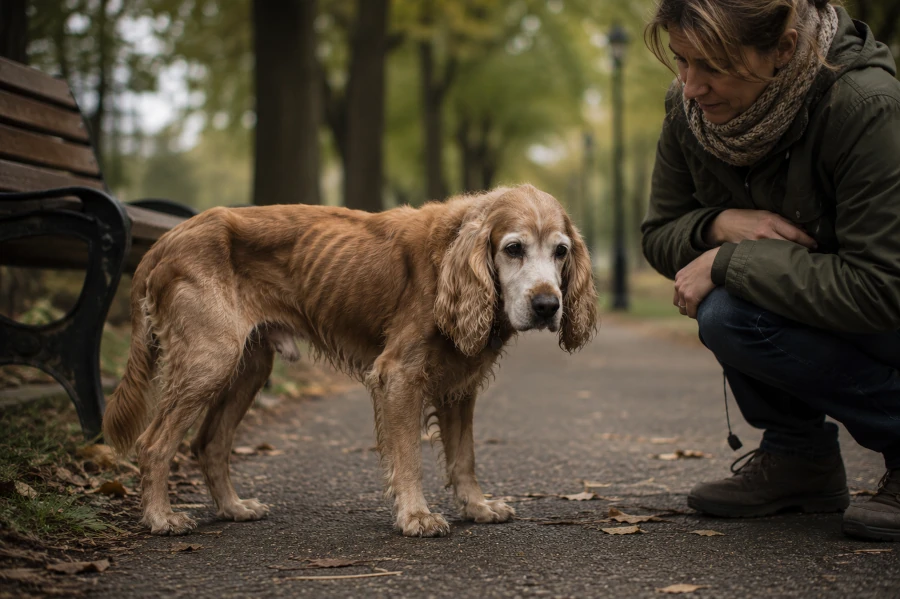
- visible ribs, spine, or hips becoming more pronounced
- no clear explanation (diet unchanged, routine the same)
And here’s the key point:
If you notice it with your eyes or hands, it’s already significant.
Dogs don’t fluctuate like humans do. When they lose weight quickly, something is almost always behind it.
Why It Happens (And Why You Should Pay Attention)
Weight loss is not a disease.
It’s a signal.
Your dog’s body is telling you:
“Something is off. I’m using more than I’m taking in.”
This can happen for different reasons:
1. They’re Eating Less (Even Slightly)
Sometimes it’s subtle:
- leaving a bit of food in the bowl
- eating slower
- skipping occasional meals
Over time, even a small decrease can lead to visible weight loss.
2. They’re Not Absorbing Nutrients Properly
Even if your dog eats normally, the body might not be using the food correctly.
This can happen with:
- digestive issues
- intestinal problems
- parasites
In these cases, the dog eats… but still gets thinner.
3. Their Body Is “Burning More” Than Usual
Some conditions increase metabolism or energy consumption, like:
- chronic illness
- infections
- hormonal imbalances
The body starts consuming its own reserves.
4. Pain or Discomfort
This one is often overlooked.
If eating causes discomfort—even mild—your dog may:
- eat less
- stop before finishing
- avoid food without obvious signs
Dental pain is a classic example.
5. More Serious Conditions
Sometimes, sudden weight loss is one of the first visible signs of something more serious.
This can include:
- organ issues (like kidneys or liver)
- chronic diseases
- tumors
And the difficult part?
In early stages, weight loss might be the only sign.
Signs That Should Worry You
Not all weight loss is equally urgent.
But some signs should immediately raise your attention:
- noticeable ribs, spine, or hip bones
- loss of muscle (especially in legs or back)
- reduced appetite or interest in food
- lethargy or lower energy
- vomiting or diarrhea
- changes in drinking habits
- dull coat or overall “weaker” appearance
Even one or two of these combined with weight loss is enough to take it seriously.
What Loss of Appetite Is Often Trying to Tell You
Loss of appetite rarely happens in isolation.
It’s usually part of something bigger.
Not always something serious — but something meaningful.
A small shift in how your dog feels.
A change in how his body is functioning.
Or sometimes, a combination of both.
It’s not just about food
When a dog stops eating, the instinct is to focus on the bowl.
Change the food. Try something new. Encourage him.
But appetite is often a reflection, not the root cause.
A dog who feels slightly nauseous may avoid food.
A dog who is in pain may not want to move toward it.
A dog who feels off internally may simply lose interest.
Many of these internal changes develop gradually as the body adapts with age.
Looking beyond the obvious
The key is not to react immediately.
It’s to observe what changed around the appetite:
- energy levels
- movement
- behavior
- sleep
Because appetite is often just the first visible signal of a deeper shift.
And when you start seeing it that way, your approach changes.
You stop asking:
“Why isn’t he eating?”
And you start asking:
“What else is different?”
What You Should Do Right Now
This is where many owners hesitate.
“Maybe I’ll wait a few days…”
“Maybe it’s nothing…”
But with weight loss, waiting is rarely helpful.
Here’s what you should do instead:
1. Check How Fast It’s Happening
Ask yourself:
- When did I first notice it?
- Is it getting worse quickly?
If it’s been less than 2–3 weeks and clearly visible → don’t wait.
2. Observe Eating Behavior Closely
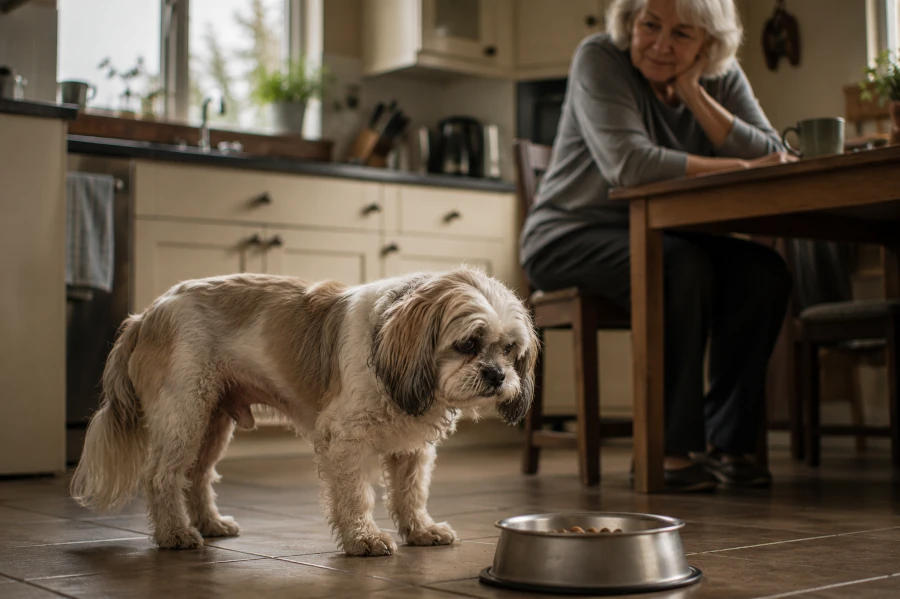
Not just if your dog eats, but how:
- Does he finish meals?
- Does he hesitate?
- Does he chew differently?
Small details matter.
3. Look for Other Subtle Changes
Sometimes the clues are quiet:
- sleeping more
- less enthusiasm during walks
- avoiding certain movements
These are easy to dismiss—but important.
4. Contact Your Vet (Soon, Not “Eventually”)
Sudden weight loss is one of those situations where it’s better to be early than late.
Even if it turns out to be nothing serious, you gain:
- clarity
- peace of mind
- a baseline for the future
How Appetite Changes Often Connect to Weight Over Time
One meal doesn’t define anything.
But patterns do.
A dog who eats slightly less today might seem completely fine.
But when that pattern repeats, small changes start to accumulate.
When appetite drops gradually
Over time, you may begin to notice:
- subtle weight loss
- less muscle tone
- lower energy levels
Nothing dramatic.
But enough to feel like something is shifting.
Even small, progressive changes in weight can have deeper causes worth understanding.
When things go in the opposite direction
Sometimes, the situation is less obvious.
A dog eats less — but also moves less.
And over time, that balance can shift in unexpected ways.
In some cases, reduced activity can lead to different kinds of changes altogether.
Why this matters
Weight doesn’t change overnight.
And appetite doesn’t exist on its own.
They are part of the same system.
Which means that when one changes, the other often follows.
That’s why tracking patterns over time is more important than reacting to a single day.
Common Mistakes to Avoid
When you see your dog getting thinner, your instinct is to fix it immediately.
But some reactions can actually make things worse.
❌ Giving More Food Without Understanding Why
If the problem isn’t intake, more food won’t solve it.
In some cases, it can even:
- stress digestion
- mask underlying issues
❌ Switching Food Abruptly
A sudden diet change can:
- cause stomach upset
- worsen appetite issues
❌ Waiting “Just to See”
This is the most common mistake.
Weight loss is already a late-visible symptom.
Waiting longer rarely helps—and can delay treatment.
❌ Assuming “He’s Just Getting Older”
Aging dogs can lose muscle, yes.
But sudden weight loss is not normal aging.
Never ignore it.
The Emotional Side (What It Feels Like)
There’s a specific kind of worry that comes with this.
It’s not loud or dramatic.
It’s quiet.
You notice it while petting him.
While watching him eat.
While seeing him stand up a little slower than before.
And a thought starts forming:
“Something isn’t right.”
You don’t panic.
But you don’t feel calm either.
And that’s exactly the moment that matters most.
Because catching things here—in this early, uncertain phase—can make a huge difference.
Final Thoughts
Sudden weight loss in dogs is easy to underestimate.
There’s no blood.
No obvious injury.
No clear “event.”
Just a gradual change that suddenly feels… too noticeable.
But here’s the truth:
Your attention is your dog’s first line of defense.
Not tests.
Not treatments.
Not even the vet.
You.
The way you notice small changes.
The way your hand pauses for a second longer.
The way you trust that something feels different.
So if you’re seeing it now—
don’t ignore it.
You’re not overreacting.
You’re paying attention.
And that’s exactly what your dog needs.