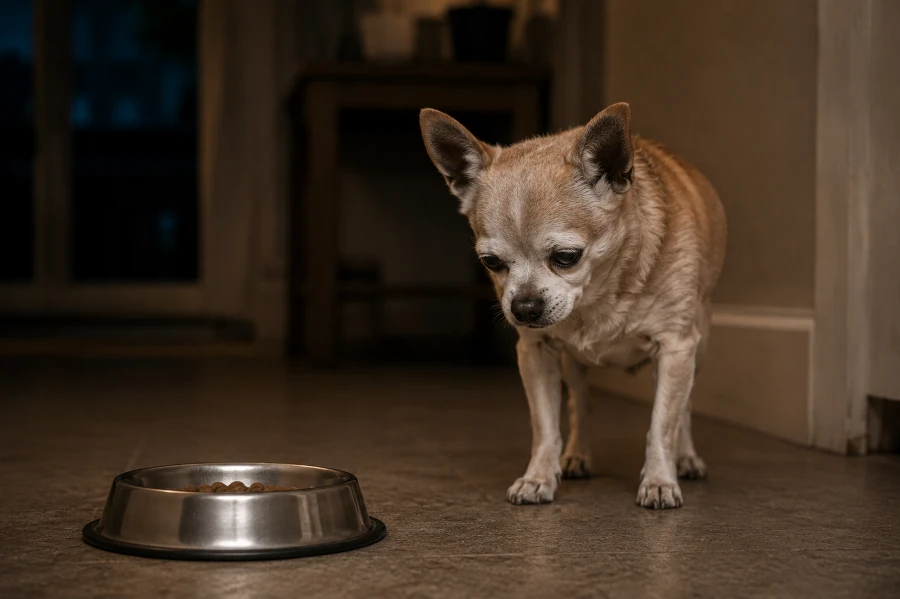
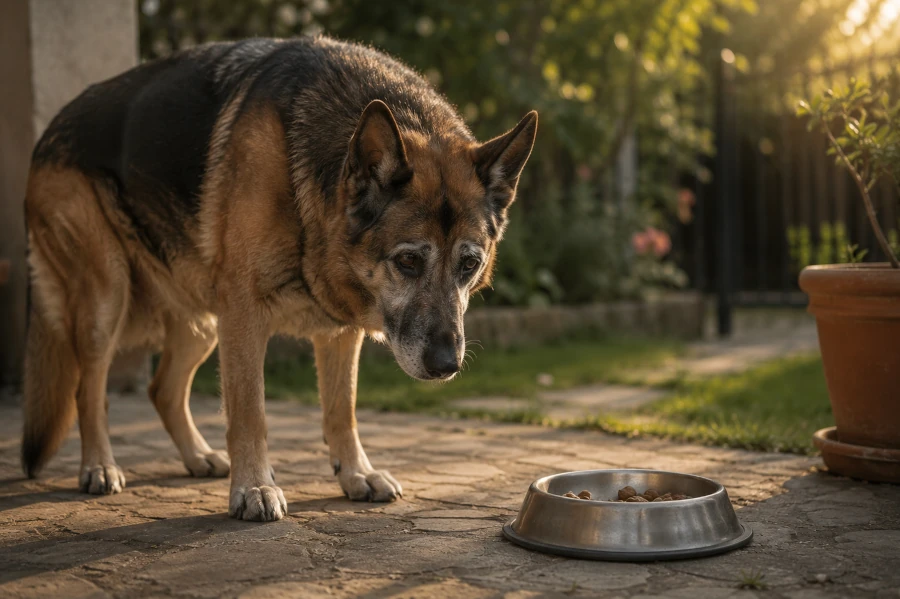
There’s a moment that many dog owners remember clearly.
You put the bowl down like always. Same food. Same place. Same routine.
And he just… looks at it.
Maybe he sniffs it, then turns his head away. Maybe he walks off slowly, like it’s not even there. Maybe he lies down instead.
At first, it doesn’t feel like a big deal. Dogs skip a meal sometimes. It happens.
But then it happens again. And again.
And suddenly, that small moment starts to feel heavy.
Because when a dog who has always loved food begins to lose interest, it rarely feels random. It feels like something is changing—and you’re not sure what.
In this guide we will cover:
- why senior dogs lose appetite
- the difference between normal changes and warning signs
- how to recognize when it’s serious
- what you can do immediately at home
- the mistakes to avoid when your dog won’t eat
Why Appetite Changes in Older Dogs
As dogs age, their relationship with food can change.
Sometimes it’s gradual. Sometimes it’s sudden.
A senior dog may eat less simply because:
- his metabolism has slowed down
- he is less active
- his sense of smell has weakened
- he gets full more quickly
But appetite is not just about hunger.
It is also about comfort.
A dog who doesn’t feel well—physically or emotionally—often eats less. And that’s where things become important.
Loss of appetite is not a diagnosis. It’s a signal.
And the meaning of that signal depends on everything else that’s happening around it.
When Loss of Appetite Is (Relatively) Normal
Not every change in eating is a crisis.
Some senior dogs naturally become lighter eaters.
You might notice:
- smaller portions
- slower eating
- occasional skipped meals
- less excitement at feeding time
If your dog is:
- maintaining a stable weight
- still drinking normally
- otherwise active and comfortable
then a mild decrease in appetite may simply reflect aging.
Still, even in these cases, it’s worth observing.
Because “normal change” and “early warning sign” can look very similar at the beginning.
When You Should Be Concerned
There are moments when loss of appetite in a senior dog deserves immediate attention.
Pay close attention if your dog:
- refuses food for more than 24 hours
- eats significantly less for several days
- loses weight
- seems weak or tired
- vomits or has diarrhea
- drools excessively
- struggles to chew or swallow
- shows signs of pain
- becomes withdrawn or restless
These are not small signals.
They don’t necessarily mean something severe is happening, but they do mean your dog needs help understanding what’s going on.
Especially in older dogs, appetite changes often connect to an underlying issue.
Common Causes Behind Loss of Appetite
It’s easy to assume “he’s just being picky.”
But in senior dogs, that is rarely the full story.
Pain
Pain is one of the most common hidden causes.
A dog who hurts may not feel like eating. Even the act of standing, walking to the bowl, or lowering his head can feel like effort.
Joint pain, dental pain, abdominal discomfort—all can reduce appetite.
Dental problems
Eating should not hurt.
If your dog has:
- bad breath
- red gums
- loose teeth
- difficulty chewing
he may avoid food simply because it’s uncomfortable.
Some dogs still approach the bowl, then walk away. Others try to eat, then stop halfway.
Digestive issues
Nausea changes everything.
A dog who feels nauseous may:
- sniff food and refuse it
- lick his lips
- swallow repeatedly
- seem interested, then back off
Even mild stomach discomfort can make food unappealing.
Chronic diseases
Conditions like kidney issues, liver problems, or heart issues often affect appetite gradually.
The dog may not look obviously sick at first. He just eats less.
That’s why persistent appetite loss should never be ignored in older dogs.
Changes in environment or routine
Sometimes the cause is emotional.
Stress, changes in the home, new routines, or even subtle shifts in your own behavior can affect how a sensitive dog feels around food.
Senior dogs, in particular, rely heavily on predictability.
Subtle Signs That Often Come Before Full Refusal
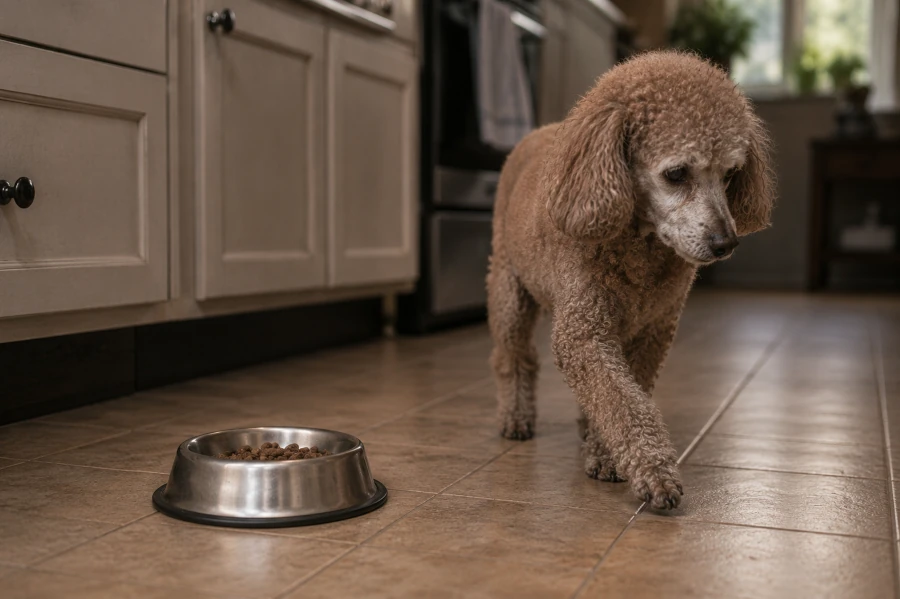
Many dogs don’t stop eating suddenly.
They fade out slowly.
Watch for:
- leaving part of the meal unfinished
- taking longer to start eating
- eating only treats but not regular food
- becoming selective (eating only certain parts)
- walking away and coming back later
- needing encouragement to eat
These are early signals.
Catching them early makes everything easier—for both of you.
Why Appetite Loss Is Often Misinterpreted
One of the most common mistakes is assuming that a dog who doesn’t eat is simply being “picky.”
That idea feels reassuring.
Because if it’s just preference, then nothing is really wrong.
But in senior dogs, appetite loss is rarely about taste alone.
It’s usually about association.
If eating becomes linked to discomfort—even slightly—the dog starts to hesitate.
Not consciously.
But instinctively.
He approaches the bowl, smells the food, and something tells him: this doesn’t feel right.
And so he walks away.
This is why adding better food, stronger smells, or different textures doesn’t always solve the problem.
Because the issue is not always the food itself.
It’s how the dog feels when approaching it.
Pain, nausea, stress, or even mild discomfort can create this shift.
And once that association forms, it tends to repeat.
Understanding this changes your approach completely.
Instead of asking, “How do I make this food more appealing?”
You start asking:
“What is making food feel uncomfortable for him?”
And that’s where real solutions begin.
What You Can Do Right Now
When your senior dog won’t eat, your instinct is to fix it immediately.
That’s understandable.
But the goal is not to force food. The goal is to support him without making things worse.
Make food easier to approach
Small adjustments can help:
- slightly warm the food (to enhance smell)
- add a little warm water or broth
- offer softer textures if chewing is difficult
- serve smaller portions more often
Sometimes, reducing effort is enough to make food feel accessible again.
Create a calm feeding environment
Senior dogs can become sensitive to stress.
Try:
- feeding in a quiet space
- keeping the same routine every day
- avoiding pressure or hovering
Let him approach food at his own pace.
Observe, don’t rush
Instead of immediately changing everything, take a step back.
Notice:
- what he refuses vs. what he accepts
- whether appetite changes during the day
- any connection with movement, pain, or mood
These observations are extremely valuable.
Keep hydration in mind
Even if food intake drops, water is essential.
Make sure:
- fresh water is always available
- he is actually drinking
- there are no signs of dehydration
If both eating and drinking decrease, the situation becomes more urgent.
Contact your vet when needed
If appetite does not return within a short time—or if other symptoms are present—your vet should be involved.
You are not overreacting.
In senior dogs, waiting too long often makes things harder to manage later.
Common Mistakes to Avoid
When your dog won’t eat, it’s easy to fall into patterns that seem helpful but can backfire.
Constantly changing food
Switching food every meal can create confusion.
It can also teach your dog to hold out for something “better,” even when the issue is not preference.
Forcing food
Trying to push food into your dog’s mouth or insisting repeatedly can create stress.
Food should not become a source of pressure.
Relying only on treats
If your dog eats treats but not meals, it’s tempting to rely on them.
But this can mask the real problem and worsen nutritional balance.
Ignoring gradual weight loss
Slow weight loss can be easy to miss.
But it matters.
Even small, consistent changes should be taken seriously in older dogs.
Waiting too long
Hoping things will “just go back to normal” is natural.
But with appetite, time matters.
If something feels off, it usually is.
A Different Way to Look at Appetite
Food is more than nutrition.
It’s also a reflection of how your dog feels.
When he eats well, it usually means:
- he is comfortable
- he feels safe
- his body is working as it should
When that changes, it’s not just about calories.
It’s about listening.
Sometimes the question is not “How do I make him eat?”
It’s “What is he trying to tell me?”
Conclusion
Watching your senior dog lose interest in food can feel unsettling in a very quiet way.
There is no noise. No obvious crisis. Just a bowl that stays full longer than it should.
And in that silence, it’s easy to doubt yourself.
Maybe it’s nothing. Maybe it’s temporary. Maybe you’re overthinking.
But paying attention is not overthinking.
It’s care.
Your dog doesn’t need you to solve everything immediately. He doesn’t need perfect decisions. He doesn’t need pressure or urgency.
He needs you to notice.
To stay present.
To recognize when something has changed, even slightly, and to take that change seriously.
Because in the end, appetite is not just about eating.
It’s about well-being.
And when you protect that—gently, patiently, without panic—you’re doing exactly what he needs most.