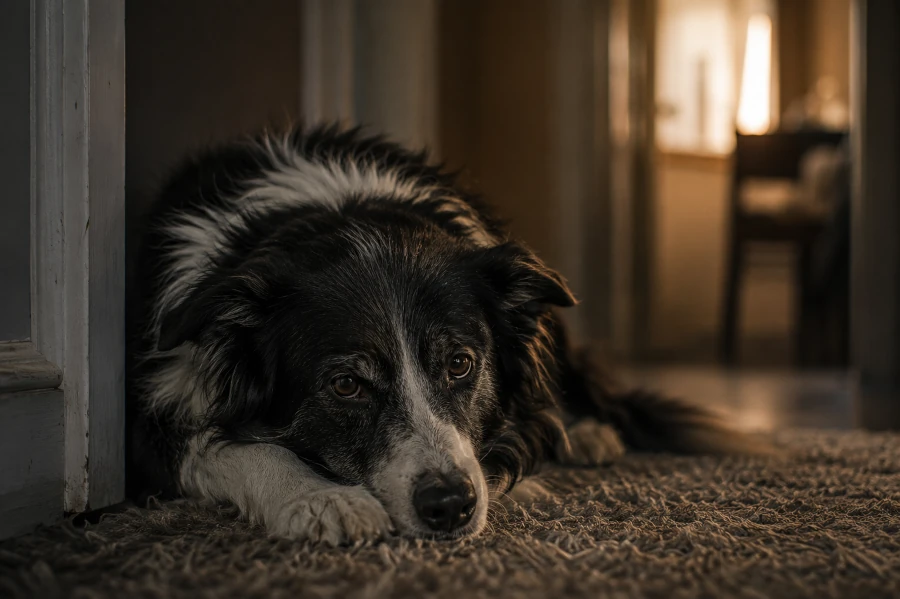
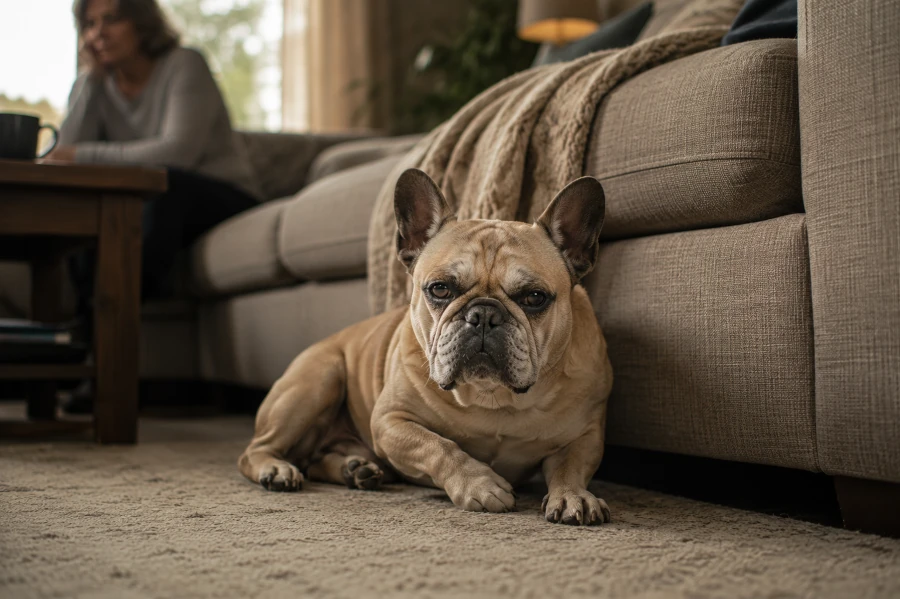
There is something especially hard about looking at your dog and feeling that something is wrong… while not being able to prove it.
He is still there. He still looks like himself. Maybe he still wags his tail when you come home. Maybe he still eats, still goes outside, still lies in his usual spot. And yet something feels off. He seems quieter. Slower. Less willing to move. Or maybe he has started doing small things that do not make sense anymore.
I think this is one of the most painful parts of loving a dog: they cannot say, “I hurt here.”
So we watch. We guess. We compare today to last week. We wonder if we are overreacting. We tell ourselves maybe he is just tired, maybe he is getting older, maybe tomorrow he will seem normal again.
But pain in dogs often hides in small changes long before it becomes obvious. And the earlier you notice those changes, the better chance you have to help him feel safe, relieved, and comfortable again.
In this guide we will cover:
- the subtle signs that may mean your dog is in pain
- how pain changes behavior, movement, and daily habits
- the difference between obvious pain and hidden pain
- what you should do when you suspect something is wrong
- the most common mistakes owners make
Why Pain in Dogs Is Easy to Miss
Many people expect pain to look dramatic.
They imagine crying, limping, whining, or refusing to move. And yes, sometimes that happens. But often, it does not.
A dog may be in pain and still try to carry on. He may still greet you. Still eat treats. Still want to be near you. That is one reason pain can be so confusing. Dogs are often good at masking discomfort, especially in the early stages.
Some dogs become quieter when they hurt. Others become clingy. Some become irritable. Some simply stop doing little things they used to enjoy.
That is why recognizing pain in dogs is not about waiting for one huge sign. It is about noticing a pattern.
It helps to ask yourself:
- Has his normal behavior changed?
- Is he avoiding something he used to do easily?
- Does he seem uncomfortable in certain moments?
- Is his body language different from usual?
You know your dog’s rhythm better than anyone. That matters more than people think.
Obvious Signs of Pain
Sometimes the signs are clear.
Your dog may:
- limp
- cry out when touched
- hold up one leg
- struggle to stand
- shake after moving
- refuse stairs
- yelp when jumping on or off furniture
- pant heavily even when resting
- lick one specific area over and over
These signs should never be ignored.
Even if they seem mild at first, they tell you something is bothering him physically. And if the pain came on suddenly, it deserves prompt attention.
A dog who suddenly cannot put weight on a leg, cries when moving, or looks distressed needs veterinary care as soon as possible.
Still, obvious pain is not the only pain.
The Subtle Signs Most People Miss
This is where many owners get stuck.
The dog is not crying. He is not limping dramatically. So it is tempting to think the problem cannot be serious.
But pain often shows up in quieter ways.
He moves differently
Maybe he gets up more slowly than before.
Maybe he hesitates before lying down, like he needs a second to prepare himself. Maybe he circles more carefully before settling. Maybe he no longer jumps into the car, onto the couch, or onto the bed.
These small hesitations matter.
They can point to joint pain, back pain, muscle soreness, or general physical discomfort.
He becomes less active
A dog in pain often saves his energy.
He may still go for a walk, but seem less excited about it. He may turn back sooner. He may sleep more during the day. He may stop following you from room to room like he used to.
This can look like “just aging,” but pain is often part of the picture.
He avoids touch
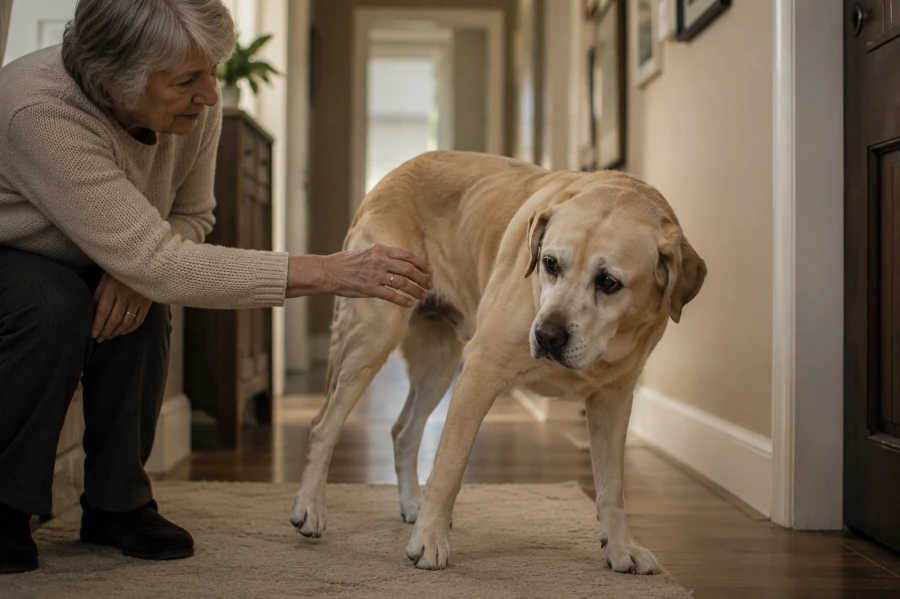
Some dogs become very still when you touch a sore area.
Others pull away, turn their head, stiffen, or suddenly lick their lips. A very patient dog may not snap or growl, but that does not mean he is comfortable.
If your dog used to enjoy being petted and now seems unsure, tense, or withdrawn during touch, pay attention.
He changes his posture
Pain can live in posture.
You may notice:
- a hunched back
- a tucked abdomen
- a lowered head
- stiffness in the neck
- a tail held lower than usual
- weight shifted away from one side
Sometimes a dog in pain does not look dramatic. He just looks “not fully relaxed.”
That feeling is worth trusting.
He pants or trembles for no clear reason
Panting is not always about heat.
A dog in pain may pant while resting, especially indoors or when the room is not warm. He may also tremble, shake lightly, or seem unable to settle.
That does not always mean severe pain, but it does mean discomfort, stress, or distress may be present.
He licks, chews, or focuses on one area
Dogs often try to soothe pain by licking it.
If your dog keeps licking a paw, a leg, a joint, his lower back, or one side of his body, it may be more than a habit. Repeated licking can be a clue that something hurts there.
His mood changes
This is one of the biggest signs.
Pain changes personality.
A dog who hurts may become:
- quieter
- more withdrawn
- more needy
- restless
- easily startled
- less tolerant
- unexpectedly grumpy
Sometimes owners feel guilty when a sweet dog suddenly seems irritable. But irritability can be pain speaking through behavior.
He is not being difficult. He may just be trying to protect himself.
How Pain Affects Daily Habits
One useful way to recognize pain in dogs is to stop looking only at symptoms and start looking at routines.
Pain usually interrupts normal life.
Eating and drinking
Some dogs eat less when they hurt. Others still eat, but more slowly.
Dental pain, neck pain, stomach pain, or general discomfort can all affect appetite. A dog may want food but seem less enthusiastic. He may drop kibble, chew on one side, or walk away sooner than usual.
Sleeping
Pain and rest do not always go well together.
A sore dog may change sleeping positions often. He may struggle to get comfortable. He may wake up more during the night. He may sleep more out of exhaustion, but sleep less deeply because he cannot fully relax.
Walking and climbing stairs
Watch the transitions.
Often the clearest clues come before or after movement:
- getting up after rest
- climbing stairs
- going down stairs
- jumping into the car
- stepping over obstacles
- walking on slippery floors
Pain tends to reveal itself in these moments.
Toileting
A dog in pain may take longer to squat. He may have trouble lifting a leg. He may posture awkwardly or seem reluctant to go outside in the first place.
Sometimes people think the dog is becoming stubborn. In reality, he may just be uncomfortable.
Emotional Pain Signals in Dogs
Not every sign of pain is physical in an obvious way.
Sometimes the strongest clue is emotional tension.
A painful dog may:
- seem unable to relax
- follow you more than usual
- hide in another room
- look at you with a worried expression
- avoid family activity
- react badly to normal handling
I have seen dogs who were not dramatic at all. They simply looked tired in a deeper way. Not sleepy. Not lazy. Just burdened.
That expression can be easy to miss if you are busy. But once you notice it, it is hard to unsee.
Common Causes of Pain
Pain can come from many places, and you do not need to identify the exact cause on your own before taking it seriously.
Some common reasons include:
- arthritis and joint stiffness
- dental disease
- injuries or sprains
- back or neck problems
- ear infections
- stomach upset
- skin inflammation
- nail injuries
- urinary issues
- age-related disease
In senior dogs, pain is especially easy to misread because it blends into the idea of “slowing down.” But slowing down is not always harmless aging. Sometimes it is discomfort that has been building quietly.
What You Should Do if You Suspect Pain
Do not panic. But do not dismiss it either.
Start simple.
Watch for patterns
Take note of:
- when the signs happen
- what movement seems difficult
- whether the issue is getting worse
- changes in appetite, sleep, mood, or walking
Even one or two days of careful observation can help you describe the problem clearly.
Limit unnecessary strain
Until you understand what is happening, keep things gentle.
That may mean:
- shorter walks
- fewer stairs
- no jumping on furniture
- extra traction on slippery floors
- a softer, easier resting area
You are not trying to fix the problem at home. You are trying not to make it worse.
Contact your vet
If the pain seems persistent, recurrent, or sudden, your vet needs to know.
Do not wait for your dog to “prove” he is hurting badly enough. Mild-looking pain can still matter a lot, especially when it has been present for days or weeks.
And if the signs are severe, sudden, or frightening, seek care quickly.
In urgent cases, go sooner
Get prompt veterinary help if your dog:
- cries out repeatedly
- cannot walk normally
- collapses
- has a swollen abdomen
- seems distressed and cannot settle
- refuses to eat and appears painful
- has trouble breathing
- seems confused along with signs of pain
What Not to Do
When we are worried, it is easy to make well-meaning mistakes.
Do not give human pain medication
This is one of the most important rules.
Many human painkillers are dangerous for dogs. Even common medications can cause serious harm.
Never give anything unless your vet specifically tells you to.
Do not assume “he would cry if it were serious”
Not all dogs cry.
Some dogs become silent when pain gets worse. Waiting for a dramatic reaction can delay help.
Do not force exercise
Some owners think movement will “loosen him up.” Gentle activity can be useful in some situations, but pushing a sore dog is not the answer.
If he is reluctant for a reason, listen to that reluctance.
Do not punish behavior changes
A dog who growls when touched, avoids contact, or seems more irritable may be hurting.
Correcting the behavior without addressing the pain is unfair and can make him more anxious.
A Simple Way to Check In With Your Dog
When you are unsure, ask yourself these quiet questions:
- Does he seem comfortable at rest?
- Does he move freely without hesitation?
- Is he still acting like himself?
- Does he enjoy normal daily activities?
- Does touch seem welcome or tense?
- Has something changed that keeps repeating?
You do not need all the answers at once.
Sometimes recognizing pain in dogs is less about one perfect observation and more about allowing yourself to say, “This is different, and it matters.”
Conclusion
Your dog will not always show pain in ways that are easy to read.
Sometimes pain is a limp. Sometimes it is a cry. But very often, it is a pause. A hesitation. A change in expression. A once-simple movement that now seems heavy. A familiar routine that suddenly takes more effort.
And because dogs love us so faithfully, they often keep going longer than they should have to.
That is why your attention matters so much.
Not because you need to become an expert overnight. Not because you must catch every tiny thing perfectly. But because love, in real life, often looks like noticing. It looks like seeing the change that nobody else would catch. It looks like protecting his comfort before his suffering becomes obvious.
If your dog seems different, trust that instinct.
You are not betraying him by being cautious. You are caring for him in the most honest way possible: by listening to the things he cannot say out loudly.