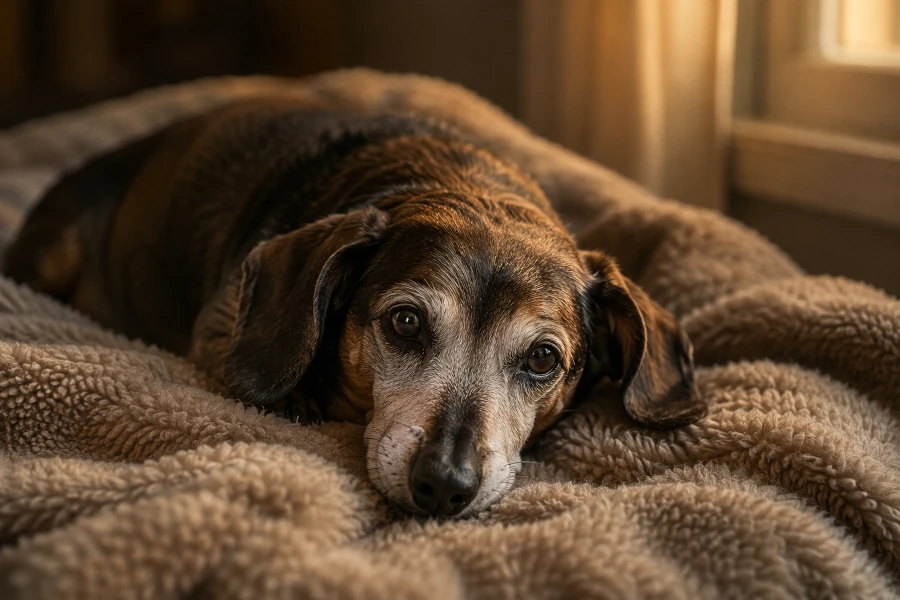
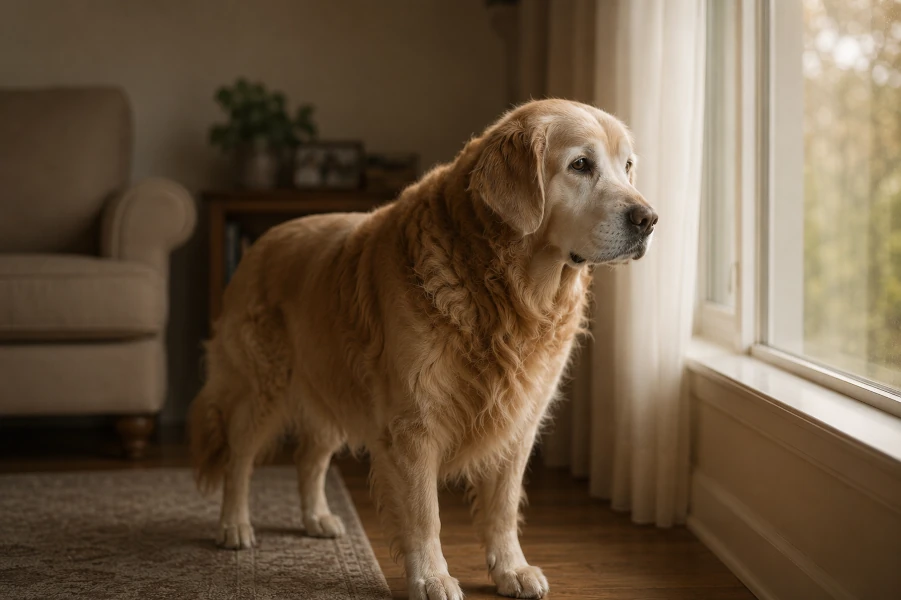
A dog becomes a senior earlier than many people expect — and most owners don’t realize it until it’s already happening.
For a lot of us, it does not happen in one dramatic moment. There is no single morning when we wake up, look at our dog, and suddenly think: “This is an old dog now.”
It is usually quieter than that.
Maybe he still runs to the door when you pick up the leash, but he takes a little longer to stand up afterward. Maybe his face looks the same, but something in his eyes feels softer, slower, more thoughtful.
That is often the first hard part.
We do not always notice aging because love makes us see the dog we have always known. The playful puppy, the young adult who could walk forever, the companion who seemed made of energy and habit.
So when someone says, “Your dog is a senior now,” it can feel strange, even wrong.
But knowing when a dog is considered a senior matters.
Not because it is a label, but because it changes how we care for him. And sometimes, the sooner we understand that change, the more comfort we can give him.
In this guide, we’ll cover:
- Senior dogs’ needs
- YOUR reaction as owner
- Best practices
- Common mistakes
Why There Isn’t One Exact Age for Every Dog
The simplest answer is this: a dog is usually considered a senior somewhere between about 7 and 10 years old.
But that range is wide for a reason.
Dogs do not age at the same speed.
A small dog often stays “middle-aged” longer than a giant breed. A Chihuahua at 8 may still seem lively and youthful in many ways, while a Great Dane at 8 is already deeply into senior life.
Size matters a lot.
Breed can matter too.
So can health history, genetics, weight, activity level, and how stressful or easy life has been on the body.
That is why the question cannot be answered with one clean number.
In general:
- Giant breeds may be considered senior around 6 or 7
- Large breeds often around 7 or 8
- Medium breeds often around 8 or 9
- Small breeds often around 9 or 10
Still, these are not rules carved in stone.
They are more like useful guides.
And honestly, most owners do not need the perfect number.
They need the right mindset.
The better question is often not “How old is senior?” but:
“Is my dog starting to age in a way that changes what he needs from me?”
That question leads to better care.
Aging Often Shows Up Before We Fully Accept It
One reason this stage can be confusing is that senior dogs do not always look old at first.
Sometimes the signs are subtle:
- sleeping a little more deeply
- taking longer to recover after exercise
- hesitating before jumping into the car
- becoming less interested in rough play
- needing a warmer, softer place to rest
- getting stiff after lying down
- preferring shorter but more frequent walks
None of these changes alone automatically means “senior.”
But together, they often tell a story.
And that story usually begins before many people are emotionally ready for it.
A dog can still wag his tail, follow you room to room, beg for snacks, and enjoy life very much while also entering an older phase.
Senior does not mean “at the end.”
It does not mean fragile, joyless, or fading away.
In many cases, it simply means the body is becoming less forgiving, and comfort starts to matter more than intensity.
That shift is important.
Because if we keep expecting a senior dog to live like a younger one, we may miss what he is quietly telling us.
Senior Is Not Just About Age. It Is About Needs
This is where many owners get stuck.
They think “senior” is just a word on a chart.
But in practice, it is about changing needs.
A younger dog can often bounce back from little things.
A missed nap.
A longer walk than usual.
Sleeping on a hard floor.
Waiting too long for a bathroom break.
Skipping a meal.
A senior dog is less flexible.
Small discomforts can affect him more.
Recovery can take longer.
Routines begin to matter more.
That does not mean life becomes sad.
It means life becomes more deliberate.
A senior dog may need:
- more consistent routines
- easier access to food, water, and rest
- gentler exercise
- more attention to weight changes
- better support for joints and mobility
- more frequent checkups
- more patience with behavior changes
In a way, this stage asks us to become better observers.
Not panicked. Not dramatic. Just more present.
You start noticing whether your dog lies down differently.
Whether stairs have become a small negotiation.
Whether he seems happy to go out, but happier to come home sooner.
These details matter because they tell you how aging is unfolding in real life, not just on paper.
The Emotional Side No One Talks About Enough
Sometimes the hardest part of having a senior dog is not the care itself.
It is what the word senior does to us.
It can make time feel suddenly visible.
Maybe your dog is 8, 9, or 10, and until now age was just a number you mentioned at the vet.
Then one day, the word “senior” enters the conversation, and everything feels more fragile.
You begin thinking ahead.
You imagine losses that have not happened.
You notice gray hairs more than you used to.
That reaction is normal.
Loving a dog means living with the fact that his timeline moves faster than yours.
Most of us know that in theory.
But the senior stage is often when we begin to feel it in a more personal way.
The good news is that this period can also become one of the deepest parts of the relationship.
Older dogs often become even more tuned in to the people they trust.
They may be calmer, more affectionate, more interested in quiet closeness than excitement.
The bond changes.
It becomes less about adventure and more about presence.
There is something very beautiful in that.
A younger dog may race through the day.
A senior dog often teaches you to slow down enough to really share it.
So, How Can You Tell Your Dog Has Entered the Senior Stage?
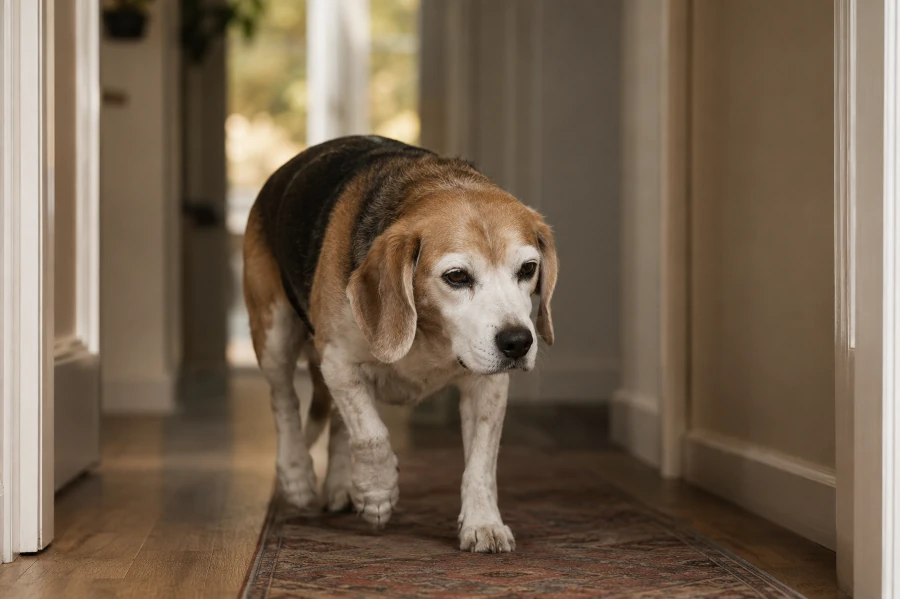
Instead of looking for one official birthday, it helps to look at a combination of age, breed size, and everyday changes.
Your dog is probably entering the senior stage if:
- he is in the typical senior age range for his size
- his energy is still good, but less intense than before
- his body needs more recovery time
- stiffness or slowness appears more often
- his habits are becoming more fixed
- comfort affects his mood more than it used to
You may also notice changes in sleep, hearing, vision, appetite, or tolerance for long outings.
Again, this does not mean something is “wrong.”
Aging is not a problem to eliminate.
It is a phase to understand.
That mindset helps a lot.
Because when owners resist the idea of aging, they sometimes wait too long to adjust care.
But when they accept it early, they often make simple changes that improve daily life right away.
What To Do Once Your Dog Reaches Senior Age
This part does not need to be complicated.
The goal is not to overhaul everything overnight.
It is to make life easier, softer, and more supportive.
Start with a few simple actions:
- Watch mobility more closely, especially after sleep or exercise
- Keep walks regular, but adjust pace and distance as needed
- Make sure your dog has a comfortable place to rest
- Maintain a steady feeding and bathroom routine
- Pay attention to appetite, thirst and weight
- Schedule regular vet checkups appropriate for an older dog
- Avoid assuming that “slowing down” is always just age
It also helps to think in terms of friction.
What now takes more effort than it used to?
Jumping?
Standing?
Climbing stairs?
Holding the bladder longer?
Settling in cold rooms?
Once you notice the friction points, you can often reduce them with small changes.
And small changes matter more than people think.
A rug on a slippery floor.
A bed with better support.
A shorter route with more sniffing and less pushing.
A little extra time in the morning.
These do not look dramatic from the outside.
But to an older dog, they can change the entire feel of a day.
Common Mistakes Owners Make
A few mistakes happen often, especially when the dog still seems “mostly fine.”
Waiting for obvious decline
Many people only adjust care once their dog looks clearly old.
But senior life often begins before obvious decline.
Early support is usually more helpful than late reaction.
Treating all dogs the same
A 7-year-old giant breed and a 7-year-old toy breed are not in the same stage.
Context matters.
Thinking “senior” means “stop everything”
Older dogs still need activity, curiosity, routine, and engagement.
The goal is not less life.
It is better-paced life.
Ignoring subtle changes
Small shifts in movement, appetite, mood, or sleep can tell you a lot.
The quieter signs are often the most important ones.
Making it about fear
Yes, aging can be emotional.
But fear is not useful care.
Attention is.
Calm observation is.
Gentle adaptation is.
The Real Meaning of “Senior”
In the end, being considered a senior is not about a number that suddenly changes your dog into someone else.
He is still your dog.
Still the one who knows your footsteps.
Still the one who waits near the door, or beside the couch, or outside the bathroom.
Still the one who has built a life around your routines, your moods, your presence.
Senior simply means he is entering a stage where your love has to become a little more observant.
A little more thoughtful.
A little softer around the edges.
And maybe that is not a loss.
Maybe it is a different kind of closeness.
Because when a dog grows older, he often stops asking for the world and starts asking for smaller, deeper things:
comfort,
patience,
familiarity,
safety,
your voice,
your hand near his shoulder,
your willingness to notice what others would miss.
So when is a dog considered a senior?
Usually earlier than people expect.
But not so early that joy is gone.
Not so early that your best moments are behind you.
Often, it is simply the beginning of a quieter chapter.
One where love becomes less about doing more, and more about understanding better.
And for many dogs, that understanding is one of the greatest gifts we can give.