
I noticed it in a way I didn’t expect.
Not with something obvious like vomiting or diarrhea.
Not with a sudden illness.
It started with hesitation.
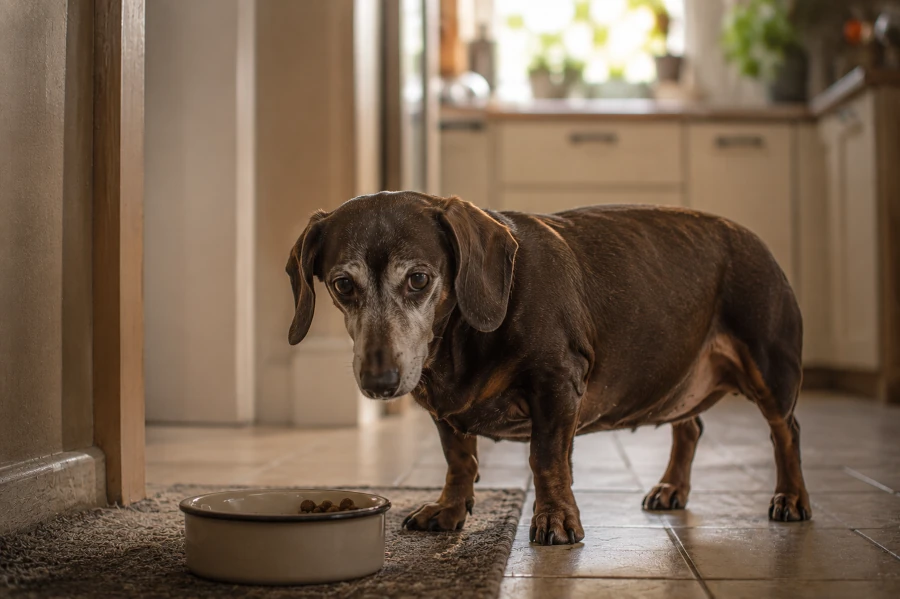
My dog walked toward his bowl, sniffed it, and just stood there for a few seconds longer than usual. He eventually ate, but something felt different. A few days later, his stool changed. Not dramatically. Just softer one morning, then harder the next.
Nothing looked urgent.
But little by little, I realized his digestion simply wasn’t as stable as it used to be.
That’s how digestive problems in older dogs often begin. Quietly. Gradually. With small inconsistencies that are easy to dismiss as “just aging.”
And because the signs are subtle, many owners don’t realize their dog has been uncomfortable for weeks or even months.
In this guide we will cover:
- how digestion changes as dogs age
- early signs of digestive problems
- the most common digestive issues in senior dogs
- how stress and routine affect the stomach
- practical things you can do at home
- when digestive symptoms become serious
Why Digestion Changes in Senior Dogs
As dogs get older, the digestive system becomes less efficient.
That doesn’t necessarily mean something is “wrong.” Aging itself changes how the body processes food, absorbs nutrients, and regulates bowel movements.
Several things may happen over time:
- digestion slows down
- enzyme production may decrease
- gut bacteria can become less balanced
- sensitivity to certain foods increases
- hydration levels become harder to maintain
This is one reason why an older dog may suddenly react badly to food he tolerated for years.
Aging also affects the body as a whole. Dogs with reduced activity levels, chronic pain, or illnesses often experience digestive changes as part of a bigger picture.
The difficult part is that digestive decline is usually inconsistent.
One day everything looks normal.
The next day something feels slightly off.
That inconsistency is often the first warning sign.
Early Signs That Are Easy to Miss
Digestive problems do not always appear dramatically.
Many senior dogs continue eating, walking, and behaving relatively normally while dealing with chronic digestive discomfort.
You may notice:
- occasional soft stool
- constipation
- increased gas
- mild bloating
- lip licking
- eating grass more often
- slower eating
- irregular bowel movements
- low energy after meals
None of these signs automatically mean something serious.
But repeated patterns matter.
A dog who occasionally skips a meal may not have a problem. A dog who repeatedly approaches food with hesitation probably does.
This becomes especially important if digestive changes appear together with reduced interest in food over time.
The Most Common Digestive Problems in Older Dogs
Digestive issues can have many different causes.
Sometimes the problem is mild and manageable. Sometimes it reflects an underlying medical condition that needs attention.
Sensitive stomach
Older dogs often become more sensitive to ingredients, fat levels, or sudden dietary changes.
You may see:
- diarrhea
- vomiting
- stomach noises
- discomfort after eating
Sometimes the solution is surprisingly simple: more consistency, gentler meals, and fewer unnecessary treats.
Constipation
Constipation becomes more common with age, especially when dogs:
- move less
- drink less water
- consume insufficient fiber
- experience pain while squatting
A dog who strains repeatedly without producing normal stool should not be ignored.
Chronic diarrhea
Recurring diarrhea may be linked to:
- food intolerance
- inflammation
- stress
- infections
- chronic disease
Even when diarrhea improves temporarily, repeated episodes deserve attention.
Pancreatic problems
The pancreas helps digest fats properly.
When pancreatic function becomes impaired, dogs may experience:
- greasy stool
- weight loss
- poor digestion
- recurring stomach upset
Gastrointestinal inflammation
Some older dogs develop chronic inflammation in the digestive tract.
Symptoms may include:
- inconsistent stool quality
- nausea
- reduced appetite
- recurring vomiting
In many cases, digestive problems overlap instead of appearing alone.
That’s why it helps to look at the dog as a whole rather than focusing on a single symptom.
The Connection Between Digestion and Appetite
One of the first things digestive discomfort affects is appetite.
But appetite loss doesn’t always look dramatic.
Some dogs still want food, but hesitate before eating it.
Others approach the bowl, sniff, then walk away.
Sometimes owners describe the behavior as “picky,” when in reality the dog may associate eating with discomfort.
This is especially common in dogs dealing with nausea, inflammation, or chronic stomach irritation.
A dog who repeatedly avoids meals should never be dismissed too quickly, particularly if you also notice dangerous or unexplained weight loss.
Why Symptoms Often Come and Go
One of the most confusing things about digestive problems is their inconsistency.
Symptoms may appear for two days, disappear for three, then suddenly return.
That pattern causes many owners to wait too long before taking action.
But digestive systems that are aging or inflamed often work unpredictably.
The body compensates until it can’t compensate as effectively anymore.
Triggers may include:
- stress
- dietary variation
- dehydration
- rich treats
- disrupted routine
- underlying illness
When symptoms improve temporarily, it’s tempting to assume the problem is over.
Often, it isn’t.
How Stress Affects Digestion
People often think digestion is only about food.
But stress has a direct impact on the stomach and intestines.
And older dogs usually tolerate stress less effectively than they once did.
Even small changes may trigger digestive upset:
- different feeding schedules
- moving furniture
- household tension
- less daily interaction
- changes in walking routines
- visitors or travel
You may notice:
- softer stool during stressful periods
- reduced appetite
- more gas
- restlessness after meals
Routine becomes extremely important for senior dogs.
Predictability helps stabilize both emotional wellbeing and digestion.
That includes:
- feeding at the same time daily
- maintaining regular walks
- avoiding sudden food changes
- providing calm resting areas
Dogs dealing with chronic stress may also show signs discussed in how anxiety affects older dogs emotionally and physically.
What You Can Do at Home
You do not need to panic every time your dog has an upset stomach.
But you should start observing carefully.
Small adjustments often help significantly.
Keep meals consistent
Frequent food changes can worsen digestive instability.
Consistency is usually more important than constantly searching for the “perfect” food.
Watch for patterns
Pay attention to:
- stool quality
- appetite changes
- energy after meals
- vomiting frequency
- reactions to treats
Patterns reveal more than isolated incidents.
Consider smaller meals
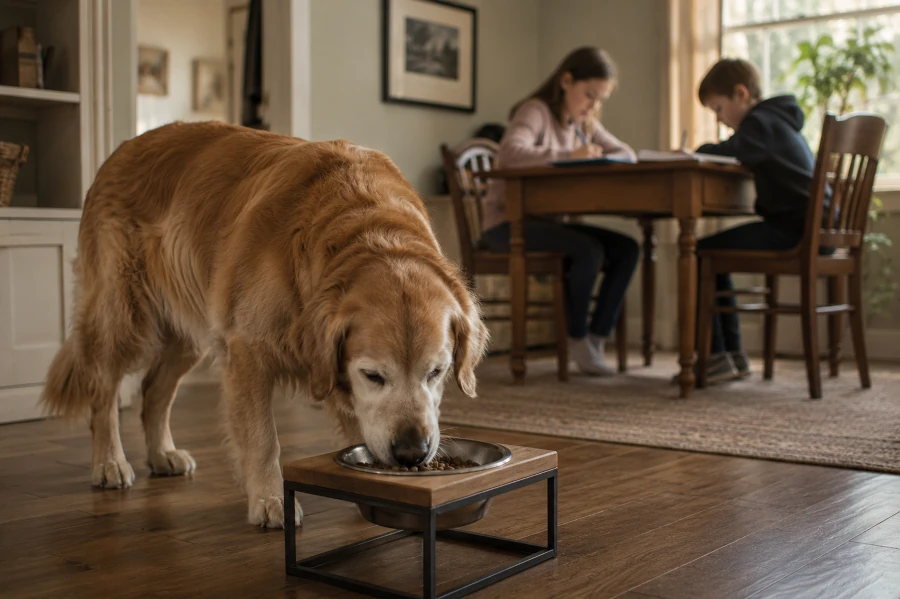
Some senior dogs digest food more comfortably when meals are divided into smaller portions throughout the day.
Support hydration
Dehydration contributes to constipation and digestive discomfort.
If hydration becomes difficult, articles about helping older dogs stay properly hydrated may help.
Avoid excessive treats
Many owners unintentionally overload older dogs with snacks.
Even healthy treats can irritate a sensitive digestive system if given excessively.
Observe behavior after eating
Digestive discomfort often appears through behavior rather than obvious stomach symptoms.
Watch for:
- pacing
- lip licking
- restlessness
- stretching repeatedly
- reluctance to lie down
Dogs communicate discomfort quietly.
When Digestive Problems Become Serious
Some symptoms require veterinary attention quickly.
You should contact a vet if your dog shows:
- persistent vomiting
- diarrhea lasting longer than 24–48 hours
- blood in stool
- severe lethargy
- rapid weight loss
- complete refusal of food
- signs of abdominal pain
- sudden bloating
These situations should not be handled with a “wait and see” approach.
In older dogs, digestive symptoms can sometimes reflect conditions involving the kidneys, liver, pancreas, or other organs.
Common Mistakes Owners Make
Digestive issues are often misunderstood rather than ignored intentionally.
Changing food too fast
Owners often switch foods immediately after mild digestive upset.
Unfortunately, sudden changes can worsen instability.
Assuming aging explains everything
Aging changes digestion, but chronic discomfort is not automatically “normal.”
Focusing only on dramatic symptoms
Many serious digestive problems begin subtly.
Small repeated signs matter.
Overfeeding rich foods
Older digestive systems tolerate excess fat and table scraps less effectively.
Waiting too long
Because symptoms fluctuate, owners often postpone action until the dog becomes significantly worse.
Earlier adjustments usually lead to better outcomes.
Supporting Digestive Health Long-Term
Digestive care is rarely about finding one magical solution.
Instead, it’s about creating stability.
That means:
- predictable feeding
- consistent routines
- careful observation
- gradual adjustments
- reducing unnecessary stress
When digestion improves, many other things improve too.
Energy.
Comfort.
Mood.
Appetite.
And in senior dogs, comfort matters enormously.
Sometimes more than owners realize.
The Part That’s Easy to Overlook
Digestive problems rarely look dramatic at first.
They quietly affect daily life instead.
A little nausea after meals.
A little hesitation before eating.
A little less enthusiasm than before.
Individually, those things seem small.
But over time, they shape how your dog experiences each day.
That’s why paying attention matters.
Not because every digestive issue is dangerous.
But because older dogs depend on us to notice the subtle changes they cannot explain themselves.
And when you notice early, respond calmly, and make thoughtful adjustments, you are doing more than managing symptoms.
You are protecting your dog’s comfort, dignity, and quality of life during a stage when those things become incredibly important.