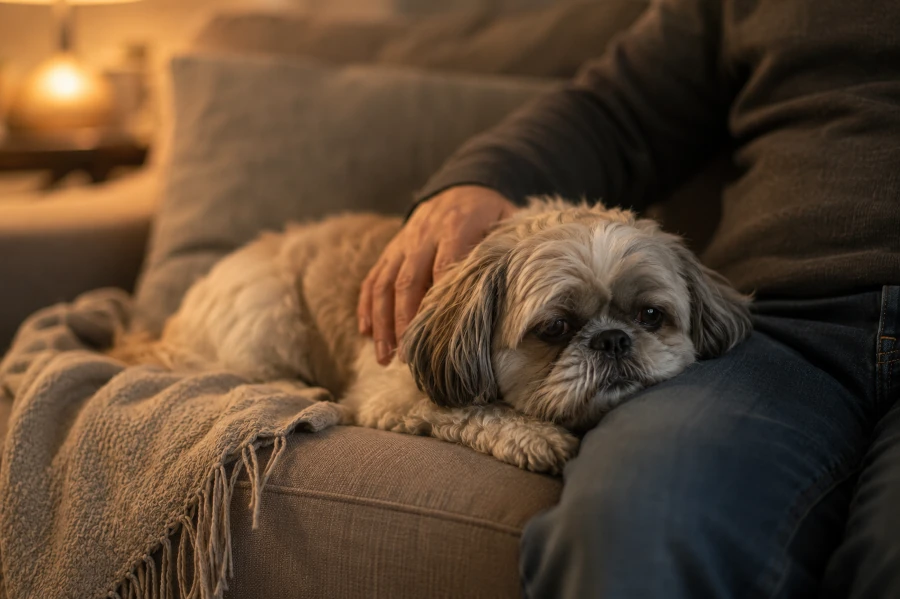
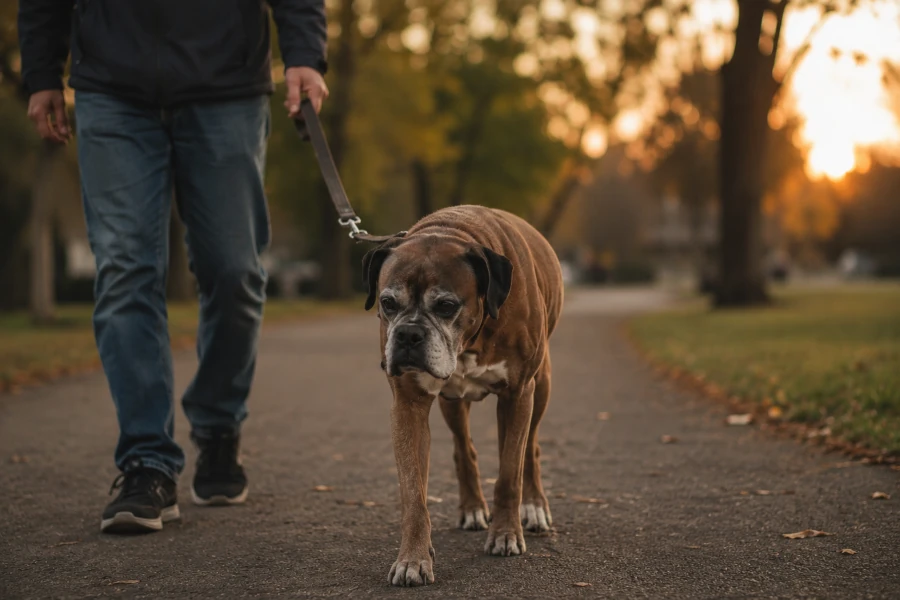
I remember the moment I realized something had changed.
It wasn’t dramatic. No sudden collapse, no obvious emergency. Just… small things. Slower movements. A hesitation before jumping onto the couch. That look in his eyes that said, “I’m not as comfortable as I used to be.”
If you’re here, you’ve probably felt something similar.
Your dog is still your dog — same eyes, same presence — but something is shifting. And the hardest part is not always knowing what.
In this guide we will cover:
- The most common health problems in senior dogs
- How these conditions usually show up
- What subtle signs you should never ignore
- What changes are normal vs. concerning
- What you can realistically do right now
What’s Actually Happening as Dogs Age
Aging in dogs doesn’t happen all at once.
It’s gradual. Quiet. Sometimes almost invisible.
Their body simply becomes less efficient:
- Organs work a bit slower
- Recovery takes longer
- Inflammation becomes more common
- The immune system weakens
And because dogs are incredibly good at hiding discomfort, many diseases develop under the surface before you notice anything.
That’s why understanding patterns matters more than spotting dramatic symptoms.
If you’ve ever wondered whether what you’re seeing is normal aging or something more, this is where things start to become clearer.
The Most Common Diseases in Senior Dogs
Not every dog will develop these. But these are the ones that appear most often as they grow older.
1. Arthritis (Joint Degeneration)
This is probably the most widespread issue.
It doesn’t usually start with obvious pain. It starts with:
- Stiffness after rest
- Slower movements
- Reluctance to jump or climb stairs
- Subtle changes in posture
Your dog may still wag his tail. Still follow you around. But he’s compensating.
Over time, inflammation in the joints makes movement uncomfortable.
And the tricky part? Many owners think:
“He’s just slowing down.”
Sometimes that’s true. Often, it’s not.
2. Heart Disease
Heart problems are common, especially in older small breeds.
They don’t always look dramatic at first. Instead, you might notice:
- Getting tired faster during walks
- Mild coughing (especially at night or after activity)
- Breathing that seems just a bit heavier than usual
These signs are easy to dismiss.
But the heart, just like any muscle, can weaken with age.
And when it does, everything else starts to feel harder for your dog.
3. Kidney Disease
Kidney issues are one of those conditions that develop quietly.
Often, the earliest signs are subtle:
- Drinking more water
- Urinating more frequently
- Slight weight loss
- Reduced appetite
Nothing alarming on its own.
But together, they tell a story.
The kidneys are losing efficiency, and toxins begin to accumulate slowly in the body.
4. Cancer
This is the word every dog owner fears.
The reality is: cancer becomes more common with age.
It can show up in many forms:
- Lumps or bumps under the skin
- Unexplained weight loss
- Changes in appetite
- Persistent fatigue
Not every lump is cancer. Not every change means something serious.
But ignoring changes doesn’t make them go away.
What matters is awareness, not panic.
5. Dental Disease
This one is often underestimated.
Over time, plaque and bacteria build up, leading to:
- Gum inflammation
- Pain while eating
- Bad breath
- Even systemic infections if left untreated
A dog with dental pain may:
- Eat slower
- Drop food
- Avoid hard kibble
And yet, many dogs will still try to eat — because that’s what they do.
6. Cognitive Decline (Dog Dementia)
This one is harder to see — and harder to accept.
You might notice:
- Confusion in familiar places
- Staring at walls
- Changes in sleep patterns
- Restlessness at night
- Less interaction with you
It can feel like your dog is “drifting away” in small moments.
And those moments can be deeply unsettling.
When Is It “Normal Aging” vs. A Problem?
This is the question most people struggle with.
Here’s a simple way to think about it:
Normal aging:
- Slight slowing down
- Longer recovery after activity
- More sleep
Potential problem:
- Avoiding movement
- Noticeable behavioral changes
- Eating or drinking changes
- Repeated or worsening symptoms
If something feels different, not just slower — trust that instinct.
You know your dog better than anyone.
How Subtle Signs Often Appear Before Real Problems
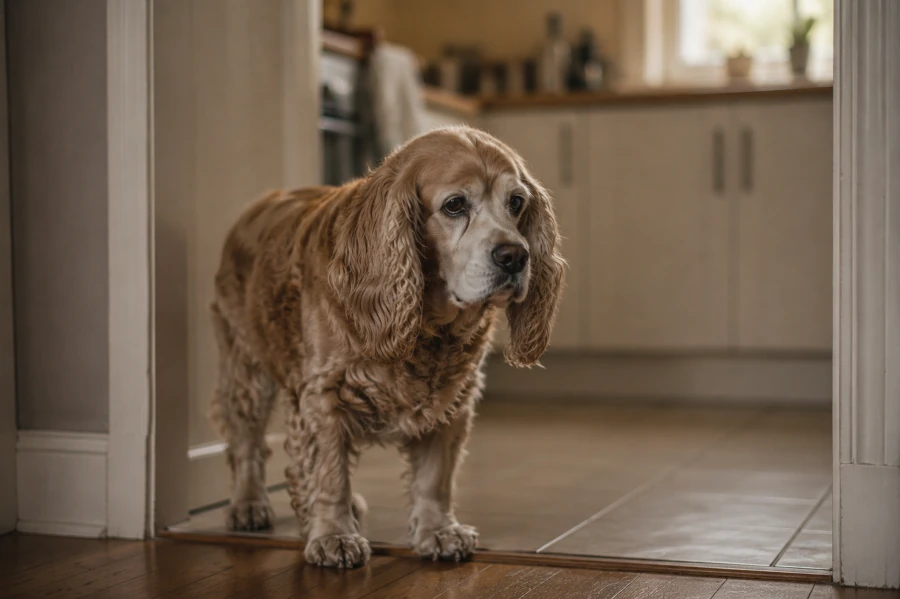
One of the hardest parts about senior dogs is this:
Things don’t start with clear symptoms.
They start small.
Almost invisible.
A slight hesitation before standing up. A moment longer before responding when you call. Sleeping a bit more than usual — but not enough to feel alarming.
And that’s exactly why many conditions go unnoticed in the early stages.
Dogs adapt incredibly well.
If something hurts, they don’t complain — they adjust. They move differently. They avoid certain actions. They compensate in ways that are easy to miss if you’re not looking closely.
You might see:
- Choosing a different spot to lie down
- Avoiding stairs only sometimes
- Eating just a little slower
- Being slightly less enthusiastic on walks
None of these scream “problem.”
But together, they create a pattern.
And patterns are what matter.
Subtle changes in behavior like these are often the first signs something deeper might be happening.
This is where your role changes.
You’re no longer just reacting to obvious issues — you’re observing changes over time.
Not obsessively. Not anxiously.
Just… paying attention.
Because the earlier you notice a shift, the more you can do to keep your dog comfortable.
And often, comfort is everything at this stage.
When to Stop Waiting and Take Action
There’s a moment every dog owner faces.
That quiet internal question:
“Is it time to do something… or am I overreacting?”
The truth is, most people wait a little too long.
Not out of neglect — but out of hope.
Hope that it’s nothing.
Hope that it will pass.
Hope that it’s “just age”.
But here’s a simple shift in mindset that helps:
You don’t need certainty to act.
You just need a reasonable doubt.
If something:
- Persists for more than a few days
- Gets gradually worse
- Changes your dog’s normal behavior
…it’s worth paying attention to.
Not panic. Not worst-case thinking.
Just action.
That might mean:
- Observing more carefully over the next days
- Making small adjustments at home
- Or simply scheduling a vet check, even “just to be sure”
Because catching something early doesn’t just improve outcomes.
It often prevents unnecessary discomfort.
And when you’re dealing with a senior dog, comfort is not a small thing.
It’s the difference between just getting through the day…
and actually feeling okay in it.
What You Can Do Right Now
You don’t need to become a vet.
But there are simple things that make a real difference.
Start here:
- Observe patterns, not isolated moments
- Check your dog regularly
- Feel for lumps
- Watch how he walks
- Notice eating and drinking habits
- Adjust the environment
- Easier access to favorite spots
- Non-slip surfaces
- Comfortable resting areas
- Keep movement gentle but consistent
- Schedule regular vet checkups
You don’t need to do everything at once.
Even one small adjustment can improve your dog’s daily comfort.
Common Mistakes to Avoid
These are easy traps to fall into:
- “He’s just old”
- Waiting for obvious pain
- Changing everything at once
- Ignoring small signs
The small signs are often the first signs.
Don’t underestimate them. Never.
The Part No One Talks About Enough
Here’s the truth.
Aging is not just physical.
It changes your relationship too.
You start watching more closely. Listening more carefully. Noticing things you never had to think about before.
And sometimes, that awareness comes with a quiet weight.
But there’s another side to it.
You become more present.
More patient.
More connected.
Because you understand — even if you don’t say it out loud — that this phase matters.
Not because it’s easy.
But because it’s real.
And your dog, even now, even slower, even different…
is still looking at you the same way.
And that means everything.