A dog’s body does not change all at once.
If you live with him every day, the transition is almost invisible. One morning looks like the next. The same routine. The same quiet habits. The same familiar presence moving through the house. And yet, if you stop for a second and really look, something is different.
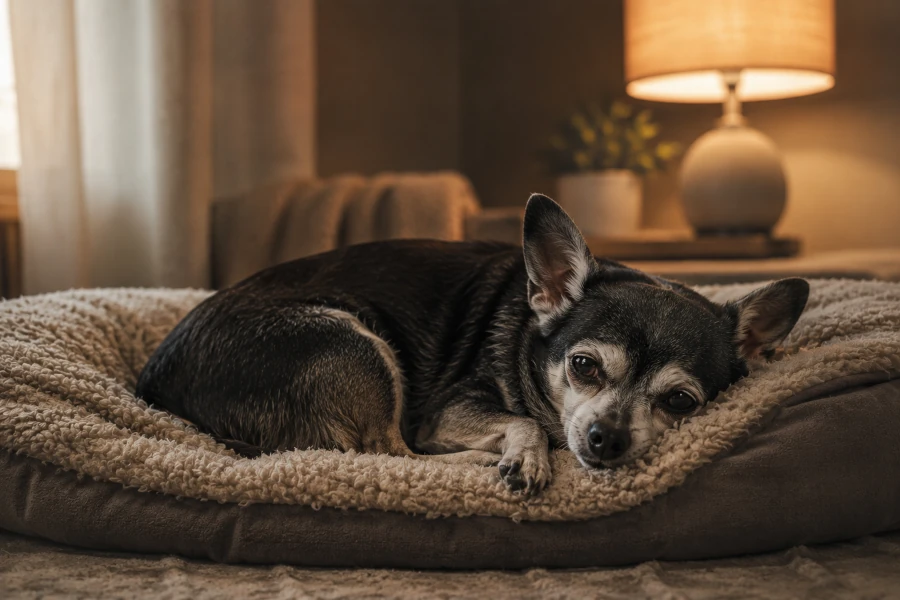
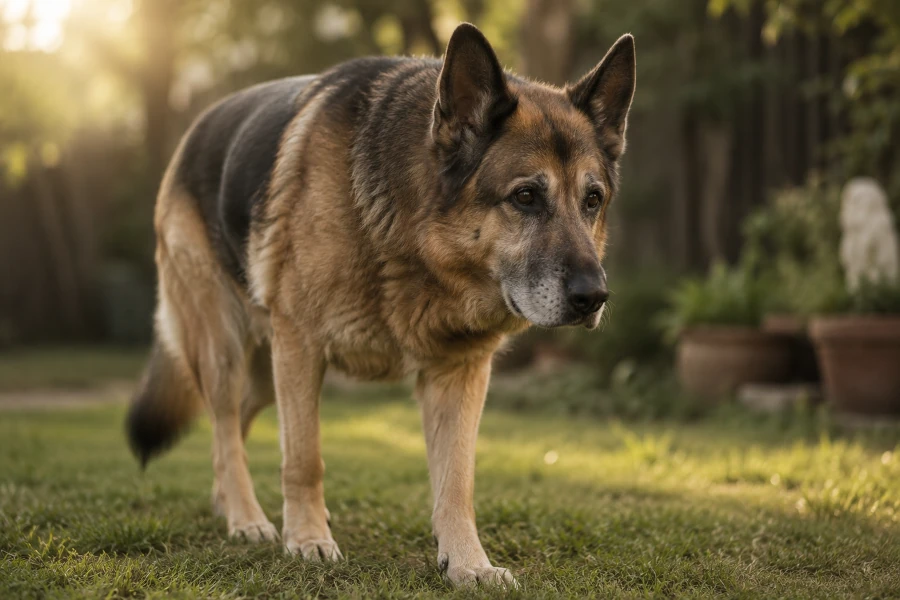
Maybe he stretches longer before getting up. Maybe he chooses softer places to lie down. Maybe he still follows you everywhere, but with a slightly slower pace, as if he is no longer rushing toward anything, just staying close.
That is how aging often begins.
Not as a problem, but as a shift.
And understanding how a dog’s body changes with age is not about worrying. It is about noticing, early enough to make his life easier without turning it into something heavy or clinical.
In this guide, we’ll cover:
- First subtle changes
- Energy management
- Eating issues
- What you can do
What Aging Really Means for the Body
When people think about aging, they often focus on the number.
But the number is only a reference. What really matters is what happens inside the body over time.
Aging is not a single change. It is a gradual slowing down of multiple systems working together.
Muscles lose some strength. Joints become less flexible. The metabolism shifts. Recovery takes longer. Energy is still there, but it is used differently.
None of this happens overnight.
That is why many dogs look “the same” for a long time, even while their bodies are quietly adapting underneath.
And that is also why small signs matter more than big ones.
The First Changes Are Often Physical (But Subtle)
One of the earliest things you may notice is not weakness, but hesitation.
Your dog still wants to do the same things. He just approaches them differently.
He may:
- take a moment before jumping
- slow down after intense play
- stretch more often
- shift position more frequently while resting
- avoid certain movements that used to be automatic
These are not dramatic changes. In fact, they are easy to ignore.
But they are often the body’s way of saying: “I can still do it… just not in the same way.”
And that difference matters.
Because if we expect the same performance as before, we miss the adjustment that is already happening.
Joints and Mobility: The Most Visible Shift
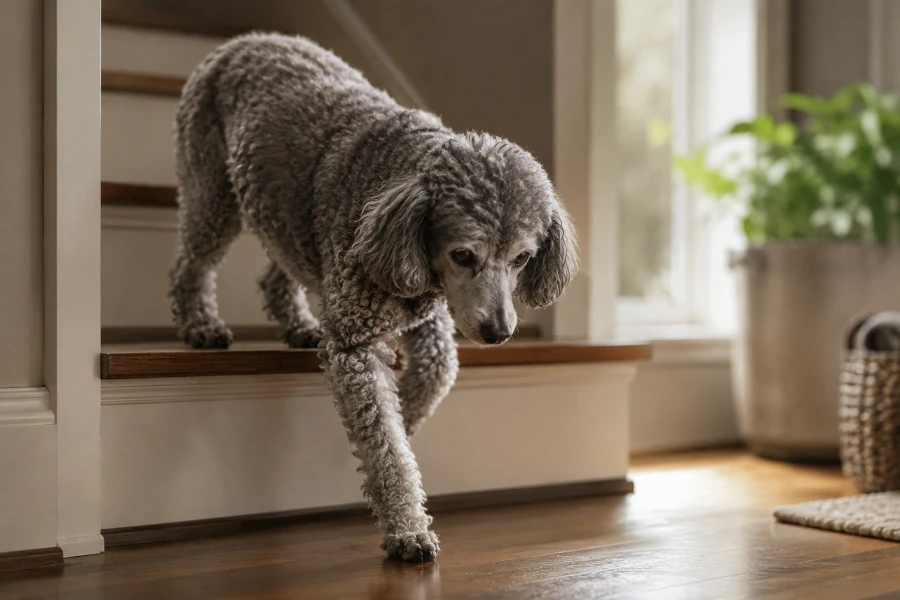
As dogs age, joints tend to become less smooth in their movement.
You may notice stiffness after rest. Or a slower start in the morning. Or a slight reluctance with stairs, jumping, or getting into the car.
This is not always pain. Sometimes it is simply reduced flexibility.
But over time, even small changes in mobility can affect how a dog experiences the day.
A walk may still be enjoyable, but not at the same pace. Standing up may take a little more effort. Lying down may require more adjustment.
And this is where many owners unintentionally make a mistake:
They wait for obvious difficulty before adapting.
But by the time the change is obvious, the dog has often been compensating for a while.
Energy Changes, Not Disappears
Another common misconception is that older dogs “lose energy.”
In reality, energy does not disappear. It becomes more selective.
A younger dog spreads energy across the entire day. An older dog often concentrates it.
He may still get excited for a walk. Still wag his tail. Still engage. But afterward, he may need more recovery. More rest. More quiet time.
This is not a loss of personality.
It is a shift in how the body manages effort.
And when we respect that rhythm instead of pushing against it, the dog stays more comfortable, and often more engaged in the moments that matter.
Digestion and Metabolism Slow Down
Not all changes are visible from the outside.
As dogs age, digestion and metabolism often become less efficient.
This can show up as:
- slight weight gain (even with the same food)
- reduced appetite on some days
- increased sensitivity to dietary changes
- different stool patterns
These shifts are gradual, but they influence overall well-being.
Food that once worked perfectly may not feel the same anymore. Portions that were ideal may become too much. Or sometimes not enough.
Again, nothing dramatic. Just different.
And “different” is the keyword of aging.
Recovery Takes Longer
This is one of the most important changes to understand.
A younger dog can overdo it and bounce back quickly. An older dog may not.
After a long walk, intense play, or even a day with more stimulation than usual, recovery time becomes more important.
You may notice:
- more sleep the next day
- slower movements after activity
- less interest in repeating the same effort immediately
This is not weakness.
It is the body asking for more time to reset.
And when that time is respected, the dog usually maintains a better overall balance.
What You Can Do to Support These Changes
You do not need to completely change your dog’s life.
Most of the time, small adjustments are enough.
Start here:
- keep exercise regular, but adapt intensity
- allow more time for warm-up and cool-down
- provide a comfortable resting area
- avoid forcing movements that seem hesitant
- observe patterns instead of isolated moments
- keep routines predictable
It also helps to think in terms of support, not correction.
You are not “fixing” aging. You are making it easier.
And often, the difference between a comfortable dog and an uncomfortable one comes down to small, consistent choices.
Common Mistakes Owners Make
A few patterns tend to repeat.
Ignoring early signs
Small changes are often dismissed until they become bigger.
Expecting consistency
Older dogs are not less capable, but they are less consistent. Some days will be better than others.
Overcompensating
On the opposite side, some owners reduce activity too much. Movement is still important.
Thinking aging equals suffering
Many dogs age without pain. Discomfort is not inevitable, especially when changes are noticed early.
The Emotional Side of Physical Change
Watching your dog’s body change can feel strange.
Not because something is wrong, but because something is ending quietly.
The version of him that moved without hesitation, that jumped without thinking, that never seemed to tire… that version slowly fades into something softer.
But what replaces it is not emptiness.
It is a different kind of presence.
More deliberate. More aware. Often more connected.
You start noticing things you did not notice before. The way he settles next to you. The way he chooses comfort over excitement. The way he still looks for you, just like always.
Conclusion
Aging does not take your dog away from you.
It changes how he lives beside you.
His body may slow down, adjust, and ask for more care. But the bond does not weaken. If anything, it becomes more visible in the quiet parts of the day.
Understanding how a dog’s body changes with age is not about tracking decline.
It is about learning how to stay in sync with him.
And when you do that, aging stops feeling like something you are losing… and starts feeling like something you are sharing.