The early signs your dog is getting older don’t show up all at once.
There isn’t a specific day when you suddenly think:
“Okay, now my dog is old.”
It doesn’t happen like that.
It’s slower. Subtle. Almost invisible at first.
Maybe one morning he takes just a second longer to get up.
Or he stops running to the door the way he always did.
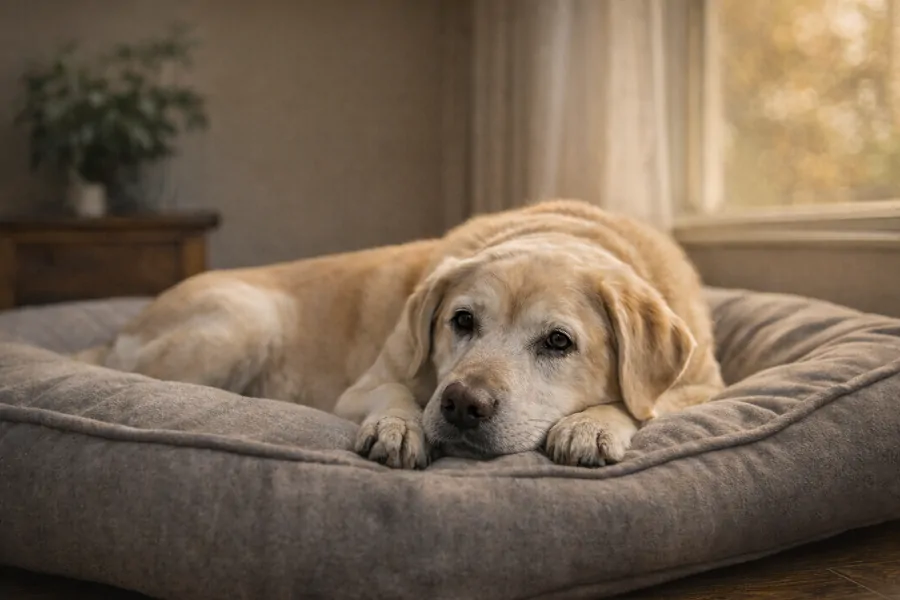
I remember a friend’s dog — a Labrador, around 10 years old. Always active, always excited.
Then one day, while everyone was leaving, he stayed there.
Not tired. Just… slower.
That’s when you realize something is changing.
And it’s not necessarily a bad thing.
But it is something you need to recognize.
Because the earlier you notice these changes, the more you can actually help your dog stay comfortable, active, and mentally engaged.
In this guide, we will cover:
- Early signs your dog is aging
- Movement and joint changes
- Appetite and nutrition
- Behavioral changes
- What changes day by day
- What you should do
When Does a Dog Become “Senior”? (Without Obsessing Over Numbers)
On paper, it’s simple:
- Small dogs → 10–12 years
- Medium dogs → 8–10 years
- Large dogs → 6–8 years
But real life doesn’t follow charts.
You’ll see 12-year-old dogs still energetic…
and others slowing down at 7.
Age matters.
But what matters more is how your dog changes day by day.
A dog doesn’t “become senior” overnight.
It transitions.
And that transition is exactly what you need to observe.
A Graying Muzzle (The First Sign You Notice)
At first, it’s almost invisible.
A bit of gray around the nose.
Then above the eyes. Then it spreads.
Most people see it as just an aesthetic change.
In reality, it’s often the first visible sign that your dog is entering a different phase.
You don’t need to act yet.
But this is the moment to start paying closer attention to everything else.
Because what you see on the outside is often just the beginning of what’s happening inside.
Slowing Down (And It’s Not “Laziness”)
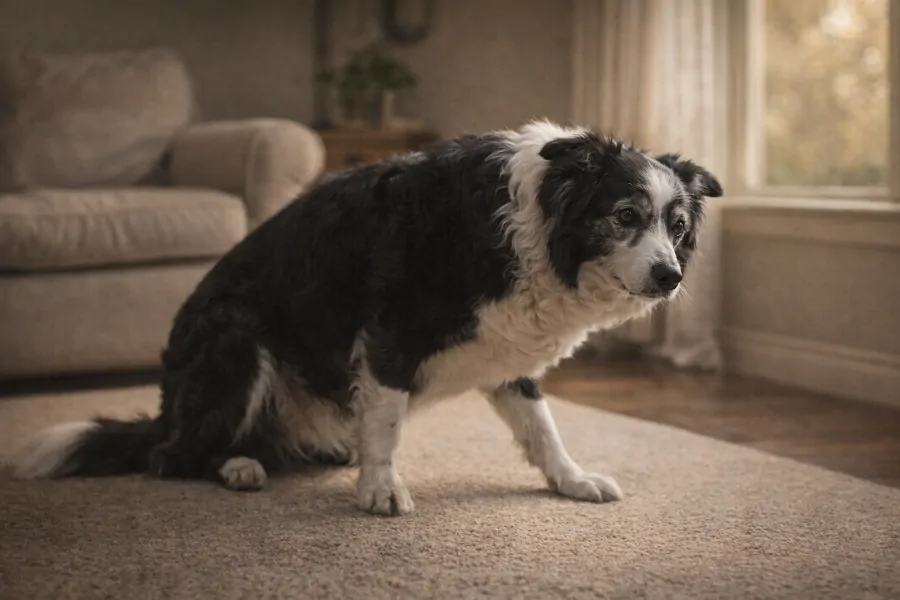
This is one of the most underestimated signs.
At first, it looks like nothing:
- gets up more slowly
- hesitates before jumping
- avoids stairs
I remember a dog who used to jump on the couch every day.
Then one day he stopped.
He stood there. Looked. Then climbed up slowly.
That wasn’t personality.
That was the beginning of discomfort.
This is often where joint issues start.
What you can do right away (without overcomplicating things):
- avoid unnecessary jumping
- use non-slip surfaces
- improve where your dog sleeps
Even something as simple as a better bed can reduce pressure on joints during the night — which often translates into easier movement in the morning.
This is often the first real shift you’ll notice — and also the one where small changes can make the biggest difference.
Sleeping More (But Also Being Less “Present”)
Yes: if your dog is senior, he sleeps more.
But there’s a subtle difference many people feel before they can explain it:
Before, it was just resting.
Now, sometimes, he seems more… disconnected.
You might start to notice:
- less responsiveness
- slower wake-up
- reduced interaction
It’s not necessarily a serious problem.
But it is a real shift.
What helps most:
- better comfort
- stable routines
- a calm environment
Older dogs don’t just need more sleep — they need better-quality rest.
And interruptions, noise, or constant changes in the environment can impact them much more than before.
Changes in Appetite (One of the Most Important Signals)
This is one of the signals you should never ignore.
You might notice:
- eating less
- refusing food
- losing weight
- gaining weight more easily
I’ve seen dogs suddenly stop eating the same food they had eaten for years.
Same brand. Same bowl.
It wasn’t stubbornness.
It just wasn’t right for them anymore.
As your dog ages, nutrition becomes one of the biggest levers you have.
Adjusting food can impact:
- energy
- digestion
- joint health
- overall quality of life
And sometimes, even small adjustments — like texture, ingredients, or feeding schedule — can make a noticeable difference.
Vision and Hearing Changes (You Realize It Later)
At first, you might think:
“He’s ignoring me”
“He’s being stubborn”
Then small details start to appear:
- slower reactions
- getting startled more easily
- bumping into objects
Often, it’s not behavior.
It’s physical change.
Once you understand that, your approach naturally becomes more patient.
And you also start adapting:
- approaching more gently
- avoiding sudden movements
- using voice or touch differently
These adjustments can reduce stress more than you think.
Behavioral Changes (The Most Delicate Part)
This is where people really start to worry.
- getting lost in familiar places
- staring into space
- barking without a clear reason
- changes in routine
I once saw a dog that started walking in circles every evening. Same spot, same time.
He wasn’t “weird.”
Something was changing internally.
What matters most here:
- don’t stress them
- keep routine stable
- avoid sudden change
Predictability becomes extremely important at this stage.
Because when internal orientation becomes less reliable, external stability becomes essential.
Accidents in the House (And It’s Not Its Fault)
This is one of the hardest parts emotionally.
Because it’s frustrating.
But it’s essential to understand:
It’s not disobedience.
It’s not regression.
It’s often related to a loss of bladder or bowel control:
- loss of control
- difficulty holding it
Your dog is not choosing this.
And in many cases, he may even feel discomfort or confusion about it.
What he needs is patience — not correction.
Weight Changes Without a Clear Reason
As dogs age, several internal factors change:
- metabolism
- activity level
- digestion
And weight follows.
Pay attention especially to:
- rapid weight loss
- sudden weight gain
These are signals worth monitoring, not ignoring.
Because they are often connected to deeper changes that are not immediately visible.
How a Senior Dog’s Day Really Changes
The change isn’t just in single signs.
It’s in the entire daily rhythm.
He wakes up more slowly.
He doesn’t react immediately.
He takes time before moving.
During the day, you might notice:
- more frequent breaks
- more need for comfort
- less tolerance for chaos
I observed a dog who used to follow his owner everywhere.
Over time, he started choosing fixed spots:
his bed, a rug, a quiet corner.
He wasn’t less attached.
He was simply using his energy differently.
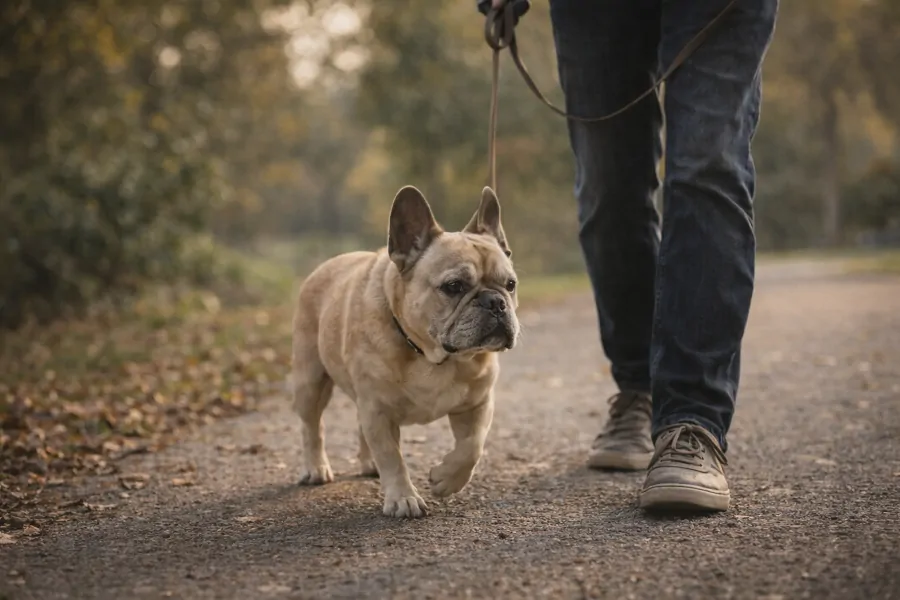
Walks change too.
It’s no longer about distance or speed.
- more stops
- more sniffing
- slower pace
Many people think:
“My dog doesn’t want to walk anymore.”
Often, it’s the opposite.
There is still willingness to explore.
But he just needs a different rhythm.
Subtle Signals Most People Miss
Not all signs are obvious.
Some are so small that they’re easy to ignore:
- hesitation before simple actions
- looking for more stable surfaces
- choosing comfort over interaction
- avoiding situations that used to be normal
These are not random behaviors.
They are adjustments.
Your dog is already adapting to his new condition — even before you fully realize it.
And recognizing these early can help you intervene before discomfort becomes a real limitation.
What You Should Actually Do (Without Overthinking It)
If you recognize several of these signs, don’t panic.
Just adapt.
✔️ Vet check
→ to understand, not to worry
✔️ Adjust nutrition
✔️ Support joints early
✔️ Simplify the environment
- fewer obstacles
- more comfort
- less unnecessary effort
And most importantly:
observe consistently.
Because small changes, noticed early, are much easier to manage than big problems discovered too late.
Common Mistakes (That Add Up Over Time)
When a dog gets older, most people aren’t prepared.
Not because they don’t care.
But because they try to treat the dog as if nothing has changed.
❌ Expecting the same rhythm → creates stress
❌ Ignoring small signals → delays intervention
❌ Changing everything suddenly → creates confusion
❌ Underestimating comfort → impacts daily life
❌ Thinking “it’s just age” → prevents improvement
Aging is normal.
But decline is not always inevitable.
Conclusion (the MOST important part)
Your dog isn’t becoming “less.”
He is changing.
He may not run like before.
Not jump. Not react the same way.
But he’s still there: near you.
And when everything slows down, something interesting happens:
you start noticing more.
The looks.
The pauses.
The quiet moments.
You don’t need to do something extraordinary.
You just need to be there better.
- more attention
- more patience
- more presence
Because time changes.
But the bond doesn’t.
And if there’s one thing worth doing now, it’s not trying to go back.
It’s walking with your friend.
All the way through.