
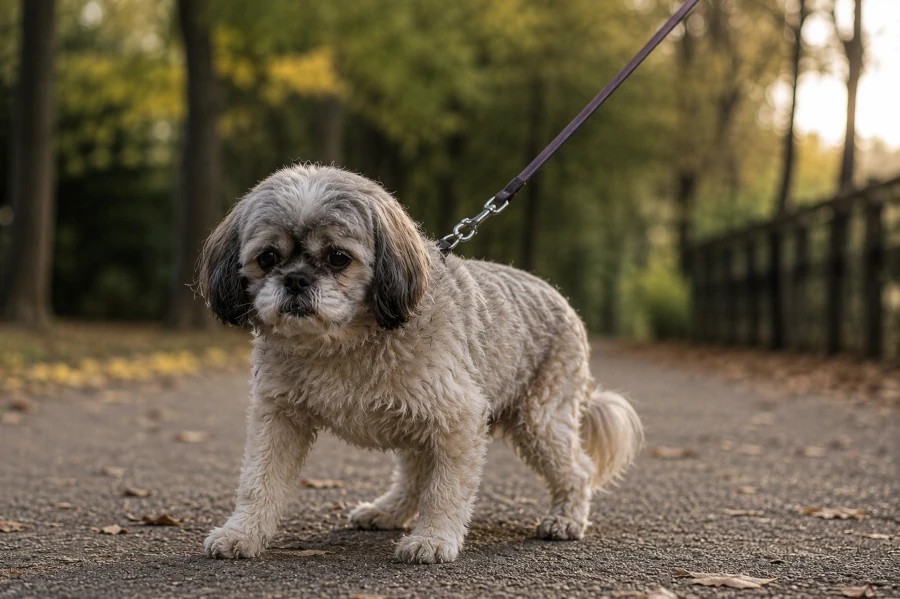
Tremors in senior dogs are one of those things that stop you mid-movement.
You’re just sitting there, maybe watching TV, maybe not even paying full attention… and then you see it.
A slight shaking.
At first, you think it’s nothing.
Maybe he’s cold. Maybe he’s dreaming. Maybe it’s just a weird position.
But then it happens again.
And this time, you don’t look away.
I remember staring at my dog’s front leg, barely moving, but enough to feel wrong.
Not violent. Not dramatic. Just… not normal.
And that’s exactly what makes tremors so unsettling.
They don’t scream for attention.
They whisper.
And you’re left wondering:
“Is this harmless… or is something starting?”
In this guide we will cover:
- What tremors in senior dogs actually look like
- The most common causes (from harmless to serious)
- How to tell when you should worry
- What you should do in the moment
- Mistakes that can make things worse
What Tremors in Dogs Really Are
Not all shaking is the same.
And this is where confusion usually starts.
A tremor is typically:
- rhythmic or repeated shaking
- localized (one leg, head, or body) or generalized
- happening while awake (not just during sleep)
This is different from:
- normal dreaming movements
- brief shivers from cold
- excitement-related shaking
Tremors tend to feel… persistent.
Even if they come and go, they leave a question behind.
Why Tremors Happen in Senior Dogs
As dogs age, their bodies become more sensitive.
The nervous system changes.
Muscles weaken.
Coordination isn’t as precise as it once was.
This creates more opportunities for tremors to appear.
But the reasons behind them can vary a lot.
1. Benign (Harmless) Tremors
Some tremors are not dangerous.
They can be caused by:
- mild muscle fatigue
- temporary weakness
- slight neurological changes related to aging
These are usually:
- short-lived
- not worsening over time
- not accompanied by other symptoms
Still, even harmless tremors deserve attention.
Because they can evolve.
2. Pain or Discomfort
Pain doesn’t always look like limping or crying.
Sometimes it shows up as:
- subtle shaking
- tension in specific areas
- tremors when standing or moving
Joint pain, especially, can trigger this.
The body reacts even if the dog doesn’t “complain.”
3. Neurological Changes
The nervous system controls movement.
When something interferes with it, tremors can appear.
This might involve:
- age-related degeneration
- nerve dysfunction
- coordination issues
These tremors may:
- become more frequent
- affect multiple areas
- appear during rest or movement
4. Metabolic or Internal Issues
Sometimes tremors come from inside the body.
Possible triggers include:
- blood sugar imbalances
- toxin buildup
- organ-related problems
In these cases, tremors are often just one piece of the puzzle.
5. More Serious Conditions
In some cases, tremors can be linked to:
- neurological diseases
- seizures (or pre-seizure activity)
- more complex health issues
This doesn’t mean every tremor is serious.
But it does mean you shouldn’t ignore patterns.
The Difference Between Tremors and General Shaking
Many owners use the words “tremors” and “shaking” as if they mean the same thing.
But they are not always identical.
Tremors are usually more rhythmic and involuntary. They may affect one part of the body or appear as repeated muscle movements that your dog cannot fully control.
Shaking is broader.
A senior dog may shake because of:
- pain
- fear or anxiety
- cold temperature
- weakness
- nausea
- stress
- fatigue
Sometimes the difference is obvious.
A cold dog may shiver briefly and stop once warm again. A nervous dog may shake during stressful situations like vet visits or storms.
Tremors, however, often look more repetitive or persistent.
The challenge is that senior dogs can experience both at the same time.
A dog dealing with chronic pain, neurological changes, or weakness may develop trembling movements while also shaking from discomfort or stress.
This is one reason it is important to look at the entire situation instead of focusing only on the movement itself.
Ask yourself:
- When does it happen?
- How long does it last?
- Does your dog stay alert and responsive?
- Is it connected to activity, fear, cold, or pain?
- Is it becoming more frequent over time?
The answers often matter more than the shaking alone.
And while occasional mild shaking is not always an emergency, repeated episodes that appear suddenly, worsen over time, or happen alongside weakness, confusion, pain, or collapse deserve closer attention.
When You Should Start Worrying
Not every tremor requires panic.
But some signs should shift your mindset from
“let’s observe” to “let’s act.”
Pay attention if tremors are:
- increasing in frequency
- lasting longer than before
- spreading to other parts of the body
- happening even at rest
- interfering with walking or standing
And especially if they appear together with:
- weakness
- confusion or disorientation
- loss of balance
- changes in appetite
- unusual behavior
Even one of these combinations is enough to take seriously.
What You Should Do in the Moment
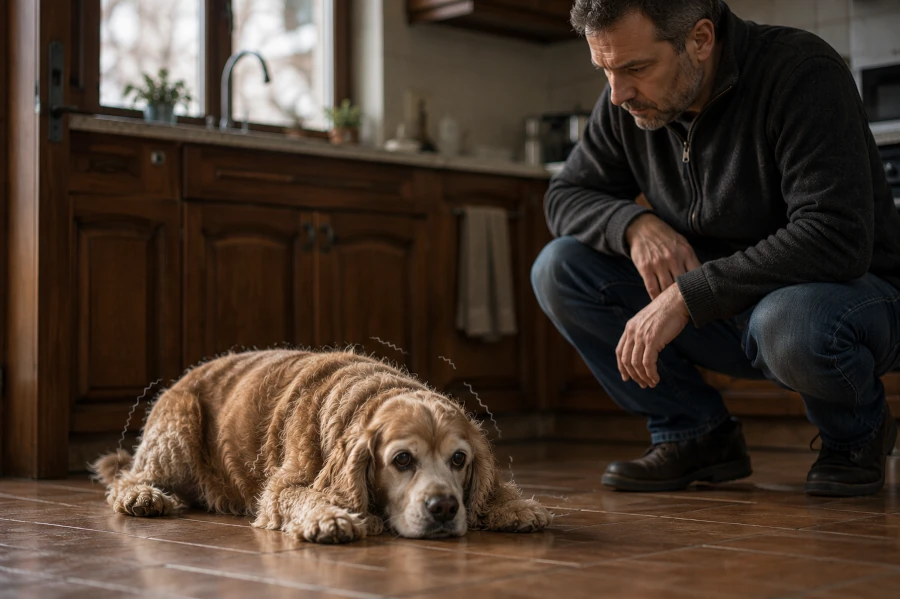
When you first see a tremor, your instinct might be to panic.
Try not to.
Instead, focus on observing.
1. Stay Calm and Watch
Look at:
- which part of the body is involved
- how long it lasts
- whether your dog is aware and responsive
Your calm helps your dog stay calm.
2. Check the Environment
Ask yourself:
- Is it cold?
- Has he just exercised?
- Is he stressed or excited?
Sometimes context explains everything.
3. Gently Touch and Reassure
Place your hand on him.
Does the tremor stop?
Does it change?
This can give useful clues.
4. Take Note (Even Mentally)
You don’t need to write a report.
Just remember:
- when it happened
- how long it lasted
- anything unusual before or after
Patterns matter more than single events.
5. Contact Your Vet if It Repeats
One isolated tremor might not mean much.
But repeated episodes?
That’s your signal.
How to Support a Dog With Tremors
If tremors become part of your dog’s life, your role changes.
You’re not just observing anymore.
You’re adapting.
Keep Their Environment Stable
- avoid slippery floors
- provide soft resting areas
- reduce sudden stressors
Stability helps both body and mind.
Maintain Gentle Movement
Even with tremors, movement is important.
- short walks
- controlled pace
- no forcing
This keeps muscles active without overload.
Monitor Without Obsessing
There’s a fine line.
You want to:
- stay aware
- notice changes
But not:
- watch every second
- create anxiety for both of you
Balance matters.
Common Mistakes to Avoid
❌ Ignoring It Completely
Hoping it goes away without paying attention can delay important action.
❌ Panicking at the First Episode
Not every tremor is an emergency.
Overreacting can lead to unnecessary stress.
❌ Self-Diagnosing
Trying to label the cause without proper evaluation can be misleading.
Tremors look similar… but mean very different things.
❌ Waiting Too Long When It’s Recurrent
Patterns are everything.
If it keeps happening, it deserves attention.
The Emotional Side (The Part No One Prepares You For)
There’s something very specific about seeing your dog shake.
It’s not like seeing a limp.
It’s not like a visible injury.
It feels… internal.
Uncontrollable.
And that makes you feel a bit helpless.
You sit there, watching something you don’t fully understand,
trying to decide if you should act or wait.
That uncertainty is the hardest part.
Because you don’t want to overreact.
But you also don’t want to miss something important.
And the truth is:
That tension you feel?
It’s not weakness.
It’s attention.
It’s care.
It’s you being present enough to notice something subtle.
Final Thoughts
Tremors in senior dogs live in that gray area.
Not always dangerous.
Not always harmless.
But always worth noticing.
They are small signals.
And small signals are often the first chance you get to understand what’s happening beneath the surface.
So don’t ignore them.
But don’t fear them blindly either.
Watch.
Learn.
Stay present.
Because your dog doesn’t need you to have all the answers.
He just needs you to notice when something changes.
And to be there when it does.