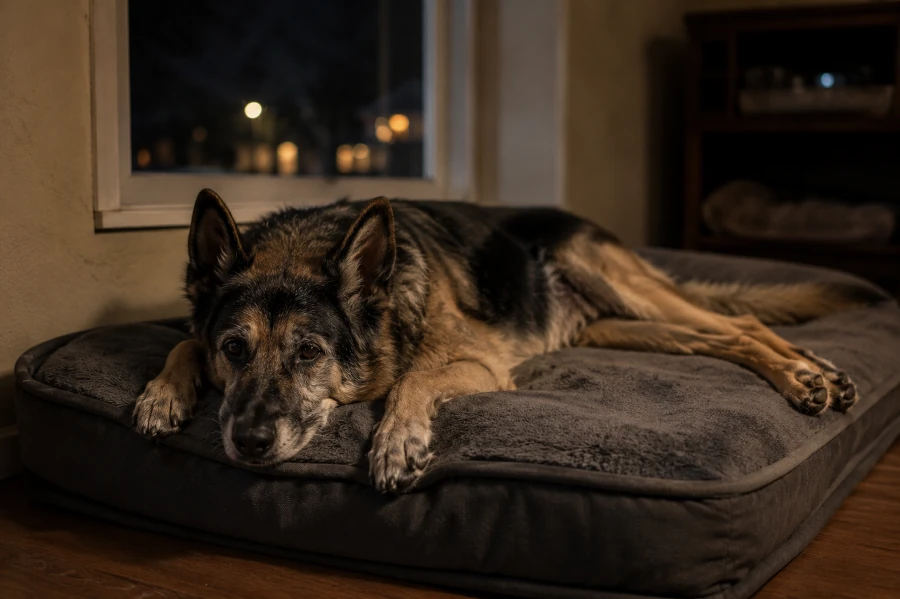
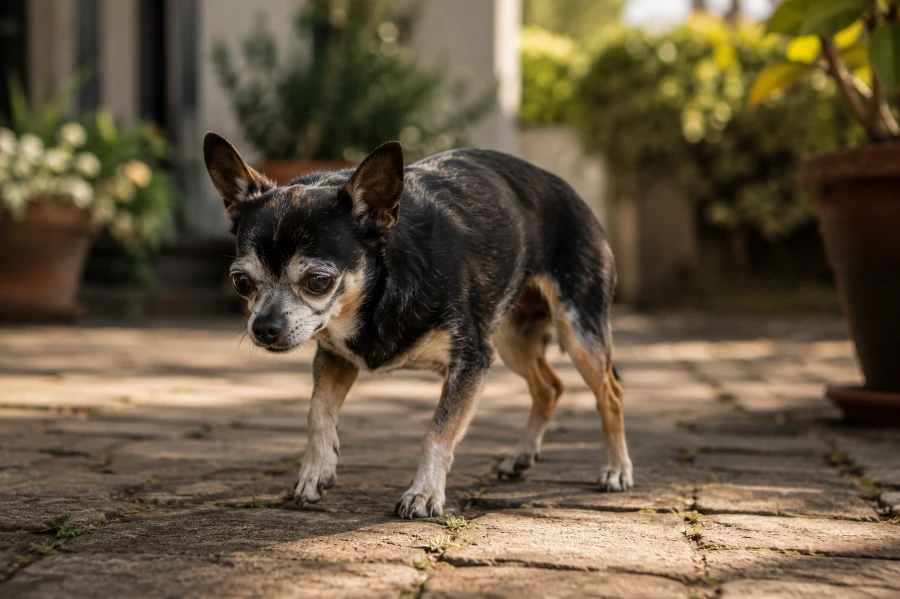
The first time I noticed it, it barely seemed important.
My dog hesitated before jumping onto the couch.
That was all.
No crying.
No collapse.
No dramatic injury.
Just hesitation.
At first, I told myself he was being careful. Maybe tired. Maybe just slower because of age.
But over the following weeks, I started noticing other things.
He struggled slightly on slippery floors.
He took longer to stand up after resting.
Sometimes his back legs trembled for a second before stabilizing.
And suddenly, what looked like “slowing down” started looking like weakness.
Weak back legs in senior dogs are extremely common, but the causes can vary widely. Sometimes it’s muscle loss. Sometimes arthritis. Sometimes nerve or spinal problems.
And because the changes usually happen gradually, many owners don’t recognize how much mobility has declined until everyday activities become difficult.
In this guide we will cover:
- why back leg weakness happens in older dogs
- the most common causes
- early warning signs
- how weakness affects daily life
- practical things you can do at home
- when weakness becomes a more serious concern
Why Back Leg Weakness Happens With Age
Aging affects movement in multiple ways at the same time.
Muscles naturally shrink with age if they are not used consistently. Joints become stiffer. Recovery slows down. Balance changes.
This creates a gradual loss of strength and stability.
In many dogs, several factors overlap:
- muscle loss
- arthritis
- hip problems
- spinal degeneration
- reduced activity levels
The result is often the same:
The back legs stop feeling reliable.
And once confidence in movement decreases, dogs start moving differently to compensate.
Early Signs Many Owners Miss
Weakness usually appears quietly at first.
You may notice:
- hesitation before stairs or jumping
- slipping on smooth floors
- slower standing after rest
- difficulty getting into the car
- swaying while walking
- occasional stumbling
- back legs shaking briefly
- reduced endurance during walks
One subtle sign many owners overlook is posture, especially in dogs already dealing with fatigue and reduced energy levels.
A dog with weak back legs may:
- shift more weight to the front legs
- stand differently
- widen the rear stance for balance
These are small adaptations meant to prevent falling or instability.
Common Causes of Weak Back Legs
According to veterinary sources, this condition often develops gradually and may not be obvious at first.
Several conditions can contribute to rear leg weakness in senior dogs.
Arthritis
Pain and stiffness in the joints reduce strength and mobility over time.
Dogs may:
- avoid movement
- walk more slowly
- struggle after resting
These mobility issues are commonly linked to joint pain and stiffness in older dogs.
Hip dysplasia
Some dogs live with mild hip problems for years before aging makes symptoms worse.
Muscle loss
Reduced activity leads to weaker muscles, which further reduces movement.
This creates a cycle:
- less activity
- more weakness
- even less activity
Neurological problems
Nerve or spinal issues can affect coordination and strength.
This may cause:
- dragging paws
- wobbling
- crossing legs awkwardly
Pain
Sometimes the issue is not true weakness, but pain avoidance.
Your dog may still have strength but hesitate because movement hurts.
How Weakness Changes Everyday Life
Rear leg weakness affects much more than walking.
It changes confidence.
Things your dog once did automatically suddenly require planning and effort.
You may notice hesitation around:
- stairs
- slippery floors
- getting into cars
- standing after sleep
- changing direction quickly
Over time, some dogs become less active not because they “want to rest,” but because movement feels uncertain.
That uncertainty can affect mood too.
A dog who struggles physically may:
- become quieter
- avoid interaction
- sleep more
- lose interest in activities
These changes can overlap with behavioral changes in senior dogs.
And because the decline is gradual, it’s easy to underestimate how exhausting everyday movement has become.
The Emotional Side of Mobility Loss
This part is difficult for many owners.
Watching a dog lose physical ability feels deeply unfair.
Especially when the mind still seems alert and engaged.
Your dog may still:
- want to follow you
- want to go outside
- want to be involved
But the body cannot always keep up anymore.
That mismatch creates frustration for both of you.
And sometimes owners accidentally make things harder by expecting normal movement from a body that can no longer move normally.
Acceptance does not mean giving up.
It means adapting realistically.
Why Slippery Floors Make Weakness Worse
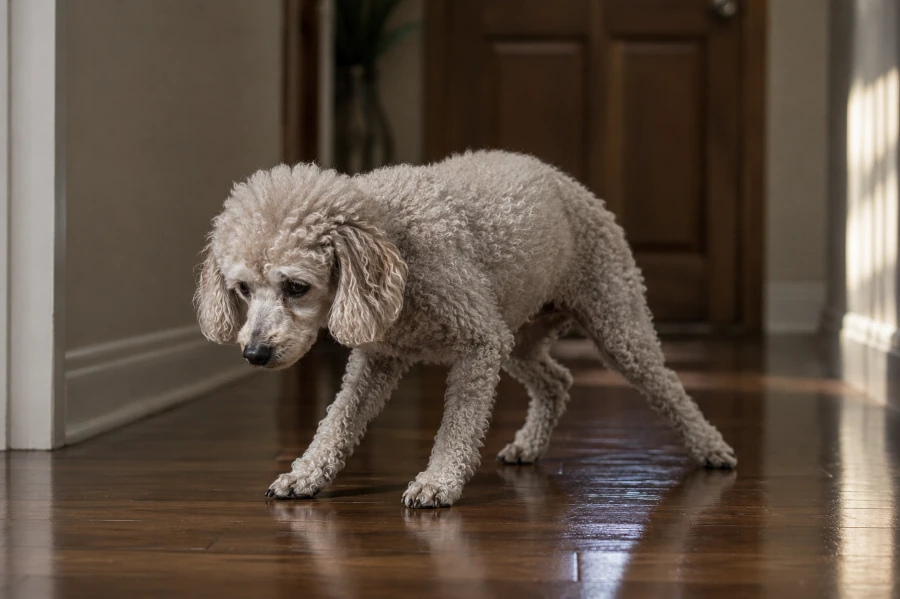
Slippery floors can turn mild weakness into a daily problem.
A dog with strong back legs can usually compensate on tile, wood, or laminate. He may slide a little, correct himself, and keep going.
But a senior dog with weaker rear legs has less margin.
When the paws slide outward, the hips and lower back have to work harder. The dog may tense up, lower his body, or avoid walking across that area altogether.
Over time, this can create fear.
Your dog may start refusing certain rooms, hesitating near doorways, or waiting for you before crossing the floor. It may look like stubbornness, but often it is memory.
He remembers slipping.
And once a senior dog loses confidence on a surface, every step becomes more stressful.
This is why traction matters so much. A few rugs, runners, or non-slip surfaces that improve stability can change the entire feeling of the house.
Not because they fix the legs.
But because they give your dog something solid to trust.
How to Tell If Weakness Is Getting Worse
Back leg weakness often changes slowly, so it helps to watch for patterns instead of single bad days.
A senior dog can have a tired day without the condition truly worsening. What matters is whether the difficult days become more frequent.
Pay attention to changes like:
- taking longer to stand up
- needing more help on stairs
- slipping more often
- shorter walks becoming tiring
- back legs shaking more frequently
- avoiding rooms or surfaces he used to cross
- struggling more after sleep
One useful habit is to compare your dog week by week, not hour by hour.
Daily changes can be misleading. A bad morning may improve by afternoon. But if you notice that your dog is consistently less stable than he was two or three weeks ago, that is more meaningful.
This does not mean panic.
It means adjust sooner.
The earlier you respond, the easier it is to protect comfort, confidence, and mobility, especially when trying to keep a senior dog active safely.
What You Can Do at Home
You cannot stop aging completely.
But you can reduce strain and improve stability.
Improve traction
Slippery floors are one of the biggest problems for dogs with weak back legs.
Use:
- rugs
- non-slip mats
- carpet runners
Help with standing
Some dogs benefit from gentle support when getting up.
Adjust exercise
Movement still matters.
But long, exhausting walks are often less helpful than:
- shorter walks
- controlled movement
- frequent low-impact activity
Maintain healthy weight
Extra weight dramatically increases stress on joints and muscles.
Improve sleeping comfort
Soft supportive bedding helps reduce stiffness after rest and contributes to better daily comfort for senior dogs.
Keep nails trimmed
Long nails reduce stability on smooth surfaces.
When Back Leg Weakness Becomes Severe
In some senior dogs, weakness progresses beyond instability or hesitation.
The back legs may eventually stop supporting weight completely.
This can happen gradually or suddenly depending on the underlying cause, especially with severe spinal disease, neurological conditions, advanced arthritis, or paralysis-related problems.
For many owners, this stage feels overwhelming at first.
Simple routines suddenly become physically difficult:
- standing up
- going outside
- changing sleeping position
- avoiding urine accidents
- moving safely across the house
But even in more advanced cases, comfort and dignity can often still be improved significantly with the right support.
The goal changes.
You stop focusing on “normal movement” and start focusing on:
- reducing strain
- preventing injuries
- preserving confidence
- supporting daily comfort
- maintaining as much independence as possible
Daily Support for Dogs With Severe Rear Leg Weakness
Dogs who cannot properly use their back legs often need more environmental support throughout the day.
Helpful adjustments may include:
- orthopedic bedding to reduce pressure sores
- non-slip flooring throughout key walking areas
- ramps instead of stairs
- raised food and water bowls
- frequent assisted bathroom breaks
- keeping essentials close to resting areas
Some owners also use supportive mobility aids such as rear support harnesses or adjustable lifting slings.
In more advanced cases, dog wheelchairs or rear support carts may help certain dogs maintain limited mobility and outdoor access.
These tools do not “fix” the condition.
But they can reduce frustration, improve safety, and help dogs stay mentally engaged with daily life.
Why Muscle Loss Accelerates Quickly
Once a dog stops using the rear legs normally, muscle loss often accelerates rapidly.
Less movement leads to:
- weaker muscles
- poorer balance
- more instability
- even less movement
This cycle can progress surprisingly fast in senior dogs.
Gentle assisted movement, short supported walks, and physical therapy exercises may sometimes help preserve mobility longer, depending on the underlying condition and veterinary guidance.
Supplements That May Help Support Mobility
Supplements cannot reverse severe weakness.
But some may help support joints, inflammation management, and overall mobility in certain dogs.
Common options often discussed with veterinarians include:
- glucosamine and chondroitin
- omega-3 fatty acids
- green-lipped mussel supplements
- joint-support formulations
- senior mobility supplements
Some owners also explore supportive products specifically designed for aging joints and mobility decline.
The important part is consistency and realistic expectations.
Supplements usually work gradually, not immediately.
And in severe cases, environmental support often matters even more than supplementation alone.
The Emotional Reality of Advanced Mobility Loss
This stage can be emotionally exhausting.
Not only because of physical care.
But because you start realizing how much of daily life depends on movement.
And yet many dogs still want connection, routine, and closeness even when mobility becomes limited.
They still want to follow you with their eyes.
They still want comfort.
They still recognize familiar routines.
Sometimes quality of life is no longer about restoring strength.
Sometimes it becomes about reducing fear, discomfort, and frustration while preserving calm moments that still matter.
When Weakness Requires Veterinary Attention
Some mobility decline is gradual and manageable.
Other situations deserve faster evaluation.
Contact a vet if you notice:
- sudden collapse
- rapid worsening
- dragging back legs
- loss of bladder or bowel control
- severe pain
- inability to stand
- major coordination problems
These symptoms may indicate:
- spinal disease
- neurological injury
- severe arthritis
- other serious medical conditions
Some of these warning signs can overlap with serious pain-related symptoms.
Sudden changes are especially important to take seriously.
Common Mistakes Owners Make
Mobility problems are often misunderstood at first.
Assuming it’s “just old age”
Age contributes, but specific conditions may still need treatment.
Reducing movement too much
Complete inactivity often worsens weakness.
Encouraging too much activity
Pushing an older dog beyond physical limits can increase pain and instability.
Ignoring slippery surfaces
Floor traction can completely change how safe movement feels.
Waiting too long to adapt the environment
Small home adjustments often make a huge difference.
Supporting Independence Instead of Perfection
This is one of the most important mindset shifts.
Your goal is not to make your dog move like a young dog again.
It is to preserve:
- confidence
- comfort
- safety
- independence for as long as possible
Sometimes very small changes improve quality of life dramatically.
A rug near the bed.
A ramp instead of stairs.
A shorter walk that feels successful instead of exhausting.
Dogs adapt surprisingly well when the environment supports them.
The Part That Changes How You See Aging
Weak back legs are often one of the first changes that make aging feel physically real.
Not because of pain alone.
But because movement affects everything.
The way your dog follows you.
The way he stands up.
The way he approaches everyday routines.
You begin noticing effort where there used to be ease.
And that realization can hurt.
But it also teaches something important.
Aging is not always about dramatic decline.
Sometimes it’s about smaller adjustments happening quietly over time.
A slower step.
A moment of hesitation.
A careful turn instead of a quick jump.
And when you respond with patience instead of frustration, your dog feels that difference immediately.
Because even when strength changes, trust does not have to.