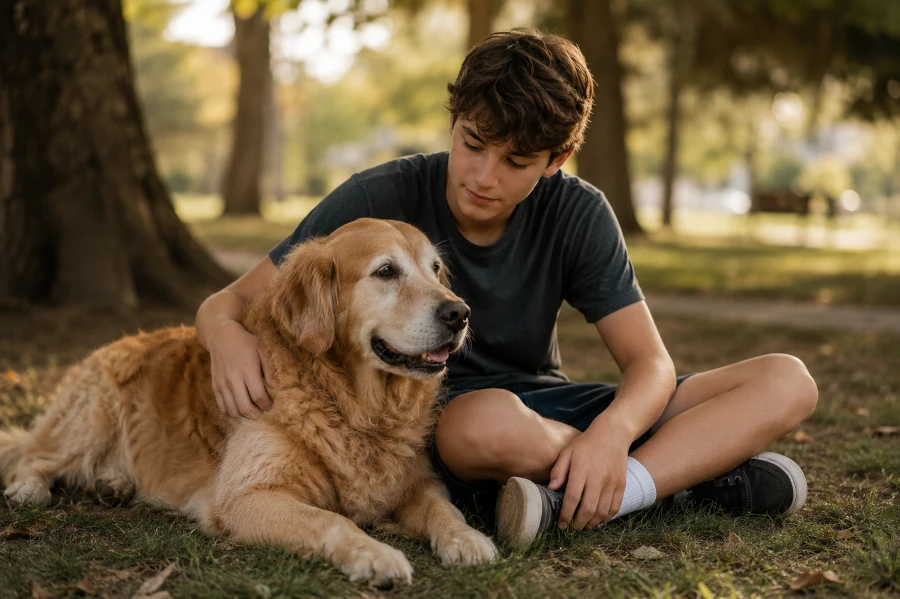
I found the lump by accident.
I was petting my dog the same way I always did, slowly running my hand along his side while he rested beside me. Then my fingers stopped.
There was something there.
Small. Firm. Hidden beneath the fur.
And instantly, my mind went to the worst possible place.
Cancer.
That’s what happens to most of us when we find a lump on an older dog. Even before we know what it is, fear arrives first.
The difficult part is that lumps and tumors are extremely common in senior dogs, especially as part of the physical changes that happen with aging.
Some are harmless.
Some are not.
And from the outside, they can look almost identical.
In this guide we will cover:
- why lumps become more common with age
- the difference between lumps and tumors
- warning signs to watch carefully
- when a lump may be harmless
- when you should contact a vet
- common mistakes owners make
Why Older Dogs Develop More Lumps
As dogs age, changes happen throughout the body.
Cells repair themselves less efficiently. The immune system changes. Tissues become less stable over time.
This increases the likelihood of abnormal growths.
Some growths are:
- fatty
- cyst-like
- inflammatory
Others involve abnormal cell growth that may become cancerous.
The important thing to understand is this:
Finding a lump does not automatically mean cancer.
But ignoring it completely is not the right approach either, especially when dealing with common medical conditions in senior dogs.
The Difference Between a Lump and a Tumor
People often use these words as if they mean the same thing.
They don’t.
A lump is simply:
- a bump
- swelling
- abnormal growth under or on the skin
A tumor is a type of abnormal growth caused by uncontrolled cell growth.
And tumors can be:
- benign (non-cancerous)
- malignant (cancerous)
This distinction matters because many senior dogs develop benign growths as they age.
Some dogs live for years with harmless fatty lumps called lipomas.
Others develop tumors that require treatment.
Unfortunately, appearance alone is often not enough to know the difference.
Common Types of Lumps in Senior Dogs
There are several types of growths commonly seen in older dogs.
Lipomas
These are soft fatty lumps under the skin.
They are usually:
- slow-growing
- movable under the skin
- painless
Many lipomas are harmless.
Cysts
Cysts are small sacs filled with fluid or material.
They may:
- change size
- rupture
- become irritated
Warts and skin growths
Older dogs commonly develop:
- small skin tags
- wart-like growths
- raised bumps
Not all of these are dangerous.
Mast cell tumors
These are one of the more concerning skin tumors in dogs.
They can vary dramatically in appearance.
Some look harmless at first.
Other cancerous growths
Certain tumors may:
- grow rapidly
- bleed
- ulcerate
- spread internally
These changes are often associated with warning signs that should never be ignored.
This is why monitoring changes is so important.
Signs You Should Pay Attention To
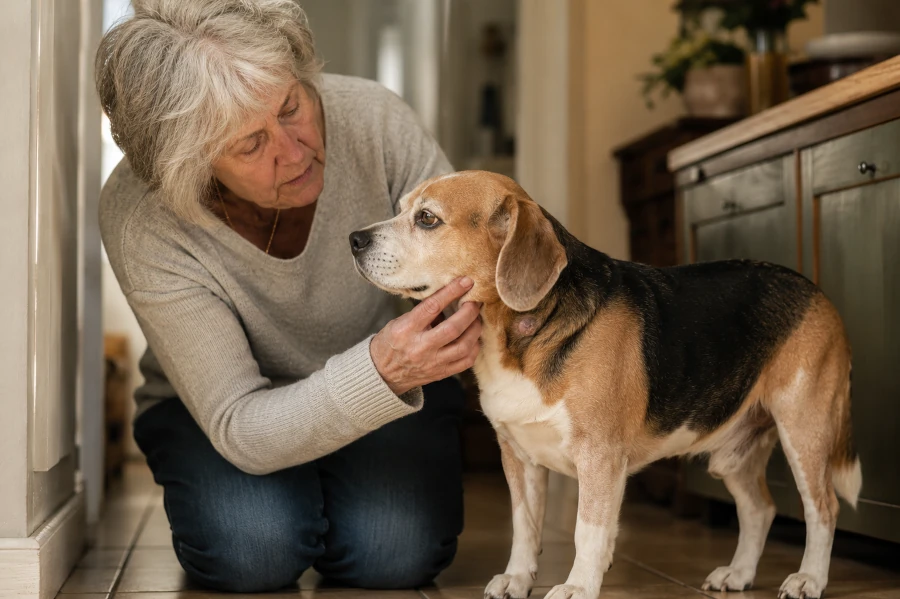
Not every lump is an emergency.
But some features deserve closer attention.
You should monitor:
- rapid growth
- bleeding
- firmness
- pain when touched
- changes in color
- irregular shape
- ulceration
- discharge
Location also matters.
A small lump in one area may be less concerning than a growth affecting:
- movement
- eating
- breathing
- bathroom habits
One of the most important things is noticing change over time.
A stable lump is different from a changing one, particularly when combined with changes in energy and physical condition.
Why Owners Often Panic (Or Ignore It Completely)
Most people react in one of two ways.
Panic immediately
Every lump feels like a death sentence.
This creates enormous stress before any real information exists.
Ignore it entirely
Some owners avoid checking because they are afraid of what they might find.
Both reactions are understandable.
But neither is ideal.
The healthiest approach is observation without denial.
Notice the lump.
Monitor it.
Get professional evaluation when appropriate.
Fear alone should not drive decisions.
When You Should Contact a Vet
You do not need emergency care for every small bump.
But some situations should absolutely be evaluated.
Contact a vet if:
- the lump grows quickly
- your dog seems uncomfortable
- the skin becomes irritated or open
- the lump affects walking or movement
- appetite or energy changes suddenly
- bleeding occurs
- multiple new lumps appear rapidly
Some of these symptoms can overlap with signs of pain and discomfort .
In many cases, vets recommend:
- measuring the lump over time
- needle aspiration
- biopsy
- imaging if needed
And sometimes, the result is far less serious than owners expect.
The Emotional Weight of Finding a Lump
This is the part people rarely talk about.
Once you discover a lump, you start checking constantly.
Every touch becomes loaded with anxiety.
You wonder:
- “Was it always this size?”
- “Did it grow?”
- “Am I missing something?”
And because senior dogs already remind us of aging and mortality, lumps often feel symbolic of something bigger.
Not just illness.
Time.
That emotional reaction is normal.
But it’s important not to let fear erase perspective.
Many senior dogs live comfortably for years with benign growths.
What You Can Do at Home
You cannot diagnose tumors at home.
But you can monitor responsibly.
Check your dog regularly
Run your hands gently over:
- sides
- chest
- legs
- neck
- belly
Consistency helps you notice new changes earlier.
Track changes
If you find a lump:
- note size
- location
- texture
- whether it changes over time
Photos can help.
Avoid constant poking
Repeated touching can irritate certain growths and increase your own anxiety.
Focus on overall quality of life
A lump matters.
But so does:
- appetite
- comfort
- energy
- mood
- mobility
Your dog is more than one physical finding, and maintaining overall daily comfort matters just as much.
Focus on overall quality of life
Lumps create fear, and fear often leads to bad decisions.
Assuming every lump is cancer
This creates unnecessary panic.
Assuming every lump is harmless
The opposite mistake is equally risky.
Waiting too long after obvious changes
Rapid growth or bleeding should not be ignored.
Obsessively checking the lump
Constant monitoring increases stress without improving outcomes.
Focusing only on the lump itself
Sometimes the overall condition of the dog matters far more than the lump itself.
Supporting Your Dog Through Uncertainty
One of the hardest parts of senior dog care is uncertainty.
You don’t always get immediate answers.
Sometimes you monitor.
Sometimes you wait for results.
Sometimes you simply observe and adapt.
That uncertainty can be emotionally exhausting.
But your dog does not experience the future the way you do.
He experiences:
- comfort
- safety
- routine
- connection
Right now.
And while medical information matters, emotional stability matters too.
Your dog still needs calmness from you.
Still needs normal moments.
Still needs to feel that life is continuing, not collapsing around one frightening possibility, especially during emotionally difficult moments with a senior dog.
The Part That Changes You
Finding a lump on your dog changes something inside you.
Even if the result is benign.
Because suddenly, aging feels more real.
You stop petting casually.
You start searching carefully.
You become aware of how fragile time really is.
And yet, strangely, this awareness can also deepen the relationship.
You pay closer attention.
You appreciate ordinary moments more.
You become more present.
Not because everything is perfect.
But because you understand that nothing stays exactly the same forever.
And sometimes, caring for a senior dog means learning how to live with uncertainty without letting it steal every peaceful moment you still have together.