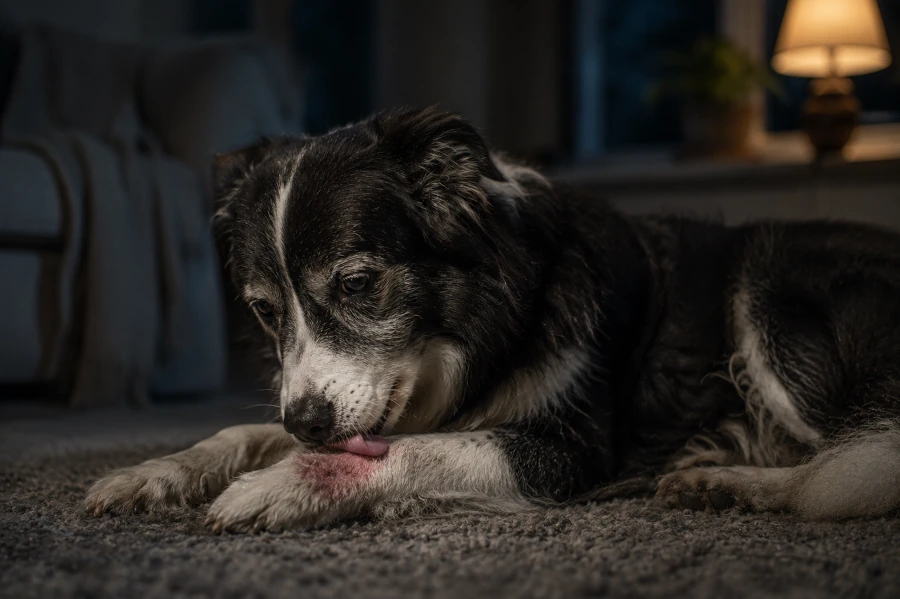
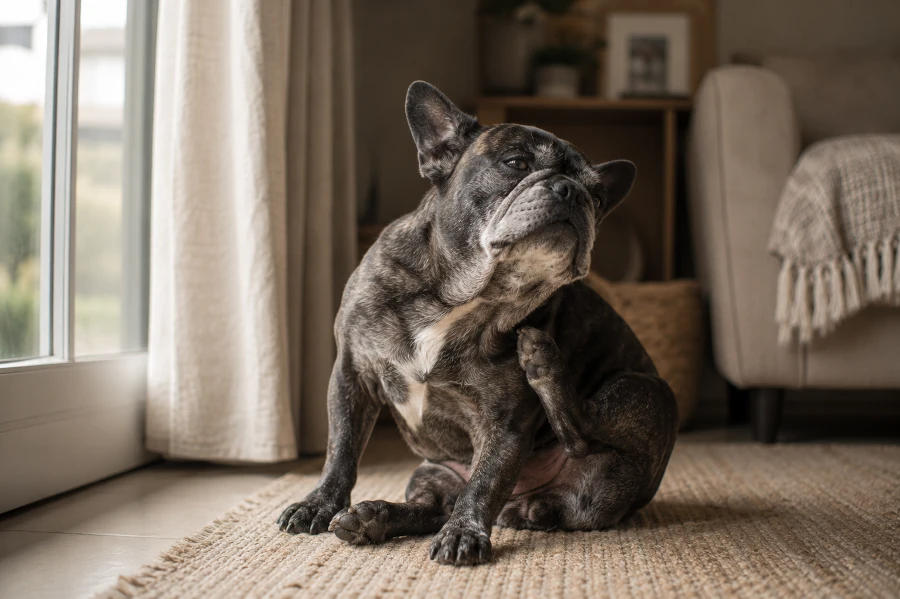
It was simply a quick scratch after waking up. A little licking before sleep. Nothing unusual.
At first, it seemed harmless.
Dogs scratch sometimes. That’s normal.
But then it became more frequent.
My dog started stopping during walks to scratch his side. He licked his paws longer than before. Sometimes he seemed restless at night, unable to fully settle down.
And when I finally looked closely beneath his fur, I realized something had changed.
The skin looked thinner. Redder in some areas. Dry in others.
That’s the difficult thing about skin problems in aging dogs: they often develop slowly enough that you stop seeing them clearly.
You adapt to the changes little by little.
Until one day, you realize your dog has probably been uncomfortable for much longer than you thought.
In this guide we will cover:
- why skin changes happen in older dogs
- common skin problems in senior dogs
- early signs many owners miss
- how skin issues affect behavior and comfort
- practical things you can do at home
- when skin problems may indicate something more serious
Why Skin Changes With Age
A senior dog’s skin is not the same as it was years ago, especially because of physical changes linked to aging.
As dogs age:
- skin becomes thinner
- natural oil production changes
- healing slows down
- the coat may become less dense
- sensitivity increases
This makes older dogs more vulnerable to:
- dryness
- irritation
- infections
- pressure sores
- allergies and inflammation
The immune system also changes with age.
That means the body may react differently to bacteria, allergens, or even small irritations that younger dogs would barely notice.
And because these changes happen gradually, many owners mistake them for “normal aging” instead of manageable problems.
Early Signs Most Owners Ignore
Skin problems rarely begin dramatically.
Usually, the first signs are subtle.
You might notice:
- increased scratching
- licking paws more often
- rubbing against furniture
- flaky skin
- unusual odor
- redness between toes
- thinning fur
- scabs or crusty areas
- small bald patches
A dog with irritated skin may:
- sleep less comfortably
- become restless at night
- seem more irritable
- avoid touch in certain areas
This discomfort is often constant, even if it looks mild from the outside.
Common Skin Problems in Senior Dogs
There are several skin issues commonly seen in older dogs.
Dry skin
Older dogs often produce less natural oil.
This can lead to:
- flaky skin
- itching
- dull coat texture
Dry indoor air, frequent bathing, and dehydration can make it worse.
Allergies
Some dogs become more sensitive with age.
Allergies may trigger:
- itching
- redness
- chronic licking
- recurring ear or skin irritation
Skin infections
Bacteria and yeast thrive in irritated skin.
Signs may include:
- strong odor
- greasy fur
- inflamed skin
- persistent licking
These symptoms can overlap with persistent discomfort and irritation.
Pressure sores
Dogs with mobility issues sometimes develop sores where the body rests against hard surfaces.
These areas commonly appear:
- on elbows
- hips
- joints
Lumps and skin growths
Not every bump is dangerous, but new growths should always be monitored carefully, especially when dealing with new lumps or abnormal growths.
The Connection Between Skin and Comfort
Skin problems are often underestimated because they don’t always look serious.
But chronic irritation changes daily life.
Imagine never fully escaping:
- itching
- burning
- discomfort
Even mild irritation becomes exhausting over time.
A dog dealing with skin discomfort may:
- struggle to relax
- wake up repeatedly at night
- lose interest in activity
- become emotionally stressed
And because dogs hide discomfort so well, owners often realize the severity only after treatment begins and behavior improves.
How Skin Problems Affect Sleep and Mood
Skin discomfort does not stay in one place.
It spreads into the rest of your dog’s day.
A senior dog with itchy, irritated, or painful skin may not sleep deeply. He may lie down, shift position, scratch, lick, sigh, and try again. From the outside, it can look like restlessness. But often, he is simply trying to get comfortable in a body that keeps bothering him.
Nighttime can make this more obvious.
When the house is quiet, there are fewer distractions. The itching becomes more noticeable. The licking becomes louder. The discomfort that seemed mild during the day suddenly feels constant.
Over time, poor sleep can affect mood.
Your dog may seem:
- more impatient
- less interested in play
- more sensitive to touch
- slower to settle
- less tolerant of noise or handling
This does not mean his personality is changing.
It means discomfort is wearing him down.
That’s why skin problems should not be judged only by how they look. A small red area, a dry patch, or a recurring itchy spot can affect comfort far more than it seems.
If your dog is sleeping worse, reacting differently, or struggling to relax, the skin may be part of the reason, especially in dogs already dealing with changes in sleep patterns.
And when the skin becomes calmer, the whole dog often becomes calmer too.
Why Some Dogs Suddenly Develop Skin Problems
This confuses many owners.
Your dog may have had healthy skin for years, then suddenly develop problems late in life.
Why?
Because aging changes the balance of the body.
Several things can contribute:
- weaker immune response
- hormonal changes
- reduced grooming ability
- underlying disease
- diet changes
- chronic inflammation
Sometimes the skin issue itself is not the primary problem.
It can be a signal that something deeper is happening internally, including common medical conditions in senior dogs.
That’s why recurring skin problems should not be ignored.
What You Can Do at Home
You cannot solve every skin problem yourself.
But there are many ways to reduce discomfort and support healthier skin.
Check the skin regularly
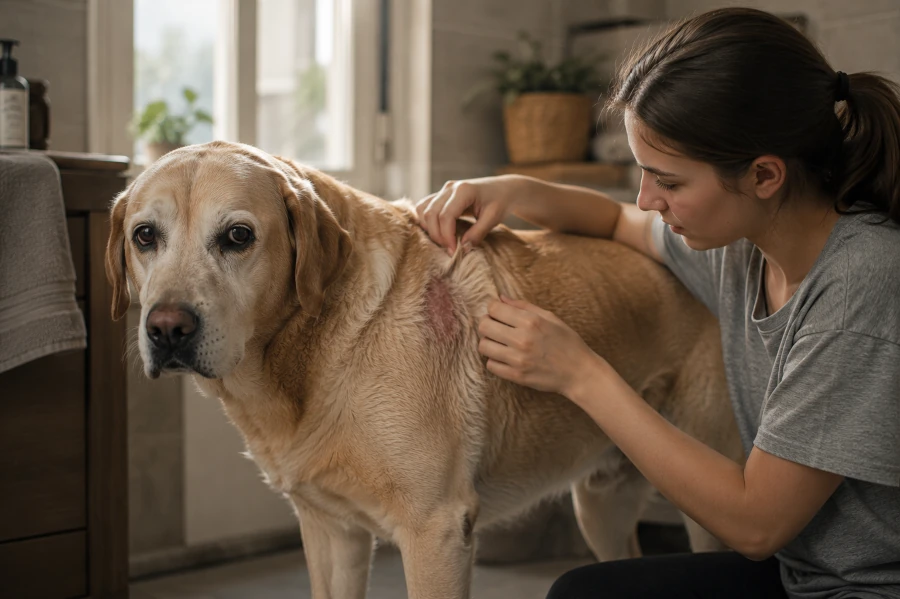
Part the fur gently and look for:
- redness
- flaky areas
- unusual bumps
- moisture or irritation
Early detection matters.
Avoid overbathing
Too many baths can dry the skin further.
Use gentle dog-specific shampoos when necessary.
Improve sleeping surfaces
Soft bedding reduces friction and pressure.
This is especially important for dogs with mobility issues and for making your dog more comfortable at home.
Keep paws clean and dry
Moisture trapped between toes can worsen irritation and infections.
Support hydration
Skin health is closely connected to hydration.
Watch for patterns
Notice:
- seasonal flare-ups
- food-related reactions
- worsening after certain activities
Patterns often reveal triggers.
When Skin Problems Need Veterinary Attention
Some skin issues are minor.
Others are signs of something more serious.
You should contact a vet if you notice:
- bleeding skin
- open sores
- rapid hair loss
- persistent odor
- swelling
- discharge
- excessive scratching that does not improve
- sudden new lumps or growths
These symptoms may indicate:
- infection
- severe allergies
- hormonal disease
- tumors or other medical conditions
Waiting too long often makes treatment harder.
Common Mistakes Owners Make
Skin problems are easy to underestimate.
Assuming scratching is “normal”
Occasional scratching is normal.
Persistent scratching is information.
Bathing too often
More cleaning does not always mean healthier skin.
Ignoring emotional stress
Stress can worsen skin problems significantly.
Waiting until the skin looks severe
Discomfort usually starts before visible damage becomes dramatic.
Focusing only on the skin itself
Sometimes the skin is reflecting a deeper issue inside the body.
Supporting Your Dog Long-Term
Managing skin problems is often about consistency, not quick fixes.
Your goal is not perfect skin.
It is comfort.
That means:
- reducing irritation
- identifying triggers
- improving rest
- protecting sensitive areas
- noticing changes early
Small improvements matter more than owners sometimes realize.
A dog who scratches less:
- sleeps better
- relaxes more easily
- feels calmer
- enjoys daily life more fully
And over time, those small improvements add up.
The Part That’s Easy to Miss
Skin problems are rarely dramatic enough to demand immediate attention.
That’s why they linger.
A little scratching here.
A little licking there.
A patch of dry skin you plan to check later.
But discomfort accumulates quietly.
And older dogs often tolerate far more than we realize.
That’s what makes careful observation so important.
Because when your dog cannot explain what feels wrong, the smallest details become meaningful.
The way he settles down.
The way he reacts to touch.
The way he scratches the same spot again and again.
These are not random habits.
They are communication.
And when you start paying attention to those small signals early, you can often improve your dog’s comfort long before the problem becomes severe.
Sometimes that’s what caring for a senior dog really is.
Not waiting for big emergencies.
But noticing the quiet changes before they become impossible to ignore.