
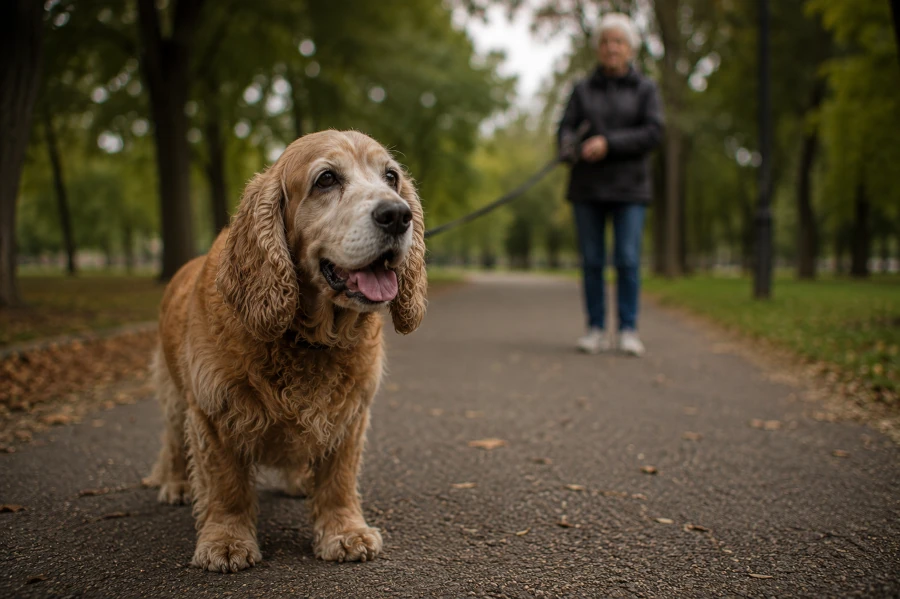
After a normal walk, I thought my dog was just tired.
We had not done anything intense. Just a simple walk as usual. But when we came back home, he stood still in the hallway, breathing harder than usual.
Not dramatically.
Not like an emergency.
Just… different.
His breathing sounded heavier. Slower in some moments, faster in others. That night, I noticed it again while he was sleeping beside me. A strange rhythm. A deeper effort behind every breath.
And once you notice your dog struggling to breathe — even slightly — it becomes impossible to ignore.
Breathing problems in senior dogs can range from mild age-related changes to serious medical conditions. The difficult part is that the signs are often subtle at first.
Many owners assume:
- “he’s just slowing down”
- “he’s out of shape”
- “it’s normal aging”
Sometimes it is normal aging.
But sometimes, it’s something much more important.
In this guide we will cover:
- common causes of breathing problems in older dogs
- early warning signs
- when breathing changes become serious
- what you can do at home
- how breathing affects daily life
- common mistakes owners make
Why Breathing Changes With Age
A senior dog’s body works differently than it used to, especially because of physical changes linked to aging.
Muscles weaken. Energy changes. Recovery becomes slower.
The respiratory system is no exception.
As dogs age:
- lung efficiency may decrease
- airway tissues can become less flexible
- stamina drops
- the heart may work less efficiently
This means your dog may:
- pant more easily
- recover more slowly after activity
- struggle in heat or humidity
- breathe differently during sleep
Some of these changes are mild and manageable.
Others are signs of disease.
That’s why context matters so much.
Early Signs Most Owners Miss
Breathing problems rarely begin with dramatic distress.
In many cases, they start quietly.
You might notice:
- heavier breathing after mild activity
- panting indoors without heat
- coughing occasionally
- noisy breathing during sleep
- reduced stamina on walks
- reluctance to exercise
- unusual sleeping positions
- breathing faster than normal at rest
One subtle sign many owners overlook is posture, particularly in dogs already dealing with low energy and physical fatigue.
A dog struggling to breathe comfortably may:
- stretch his neck forward
- sleep sitting up more often
- avoid certain resting positions
These adjustments are not random.
They are attempts to make breathing easier.
Common Causes of Breathing Problems in Senior Dogs
There are many possible causes, and some overlap.
Heart disease
When the heart becomes less efficient, fluid can build up or oxygen circulation may decrease.
This often leads to symptoms commonly associated with heart-related conditions in senior dogs, including:
- coughing
- fatigue
- exercise intolerance
- heavier breathing
Chronic airway issues
Older dogs may develop inflammation or narrowing in the airways.
This can cause:
- wheezing
- noisy breathing
- chronic coughing
Obesity
Extra weight places more pressure on the lungs and heart.
Even moderate weight gain can affect breathing significantly in older dogs.
Laryngeal paralysis
This condition affects the structures that help open the airway.
Dogs may:
- breathe noisily
- struggle in warm weather
- tire quickly
Anxiety and stress
Not all breathing changes are purely physical.
Stress can also increase:
- panting
- pacing
- shallow breathing
This is especially common in older dogs dealing with discomfort or confusion.
When Panting Is Not Normal
Panting is normal in dogs.
But context changes everything.
Normal panting usually happens:
- after exercise
- during heat
- during excitement
Abnormal panting may happen:
- while resting
- during cool temperatures
- at night without reason
- alongside weakness or anxiety
This distinction matters.
A dog who pants constantly while lying down is very different from a dog panting after a walk, especially when combined with signs of pain or discomfort.
One of the most important things you can do is observe patterns.
When does it happen?
How long does it last?
What else changes at the same time?
These details help separate normal aging from something more serious.
How Breathing Problems Affect Daily Life
Breathing difficulties change more than oxygen intake.
They change behavior.
A dog who struggles to breathe comfortably may:
- avoid activity
- become quieter
- sleep more
- hesitate on stairs
- lose interest in walks
This can look like broader behavioral and emotional changes:
- laziness
- depression
- “slowing down”
But often, your dog is simply conserving energy.
Breathing requires effort.
And when every movement feels heavier, daily life changes too.
You may notice your dog choosing comfort over excitement more often.
That is not weakness.
It is adaptation.
What You Can Do at Home
You cannot treat every breathing problem at home.
But you can reduce stress on your dog’s body.
Keep the environment cool

Heat makes breathing harder.
Provide:
- airflow
- shade
- cool resting areas
Reduce overexertion
Shorter, calmer walks are often better than long, intense activity.
Maintain healthy weight
Reducing excess strain on the body is also important when dealing with weight gain in older dogs.
Weight management can dramatically improve breathing comfort.
Avoid smoke or irritants
Strong scents, smoke, and dusty environments can worsen symptoms.
Watch resting breathing rate
A consistently elevated breathing rate during sleep or rest can be an important warning sign.
Stay calm
Dogs respond to your energy.
If you panic every time your dog pants, you may increase his stress.
Observation is more useful than panic.
When to Contact a Vet Immediately
According to veterinary guidance, early signs are often subtle and easy to overlook.
Some breathing symptoms should never be ignored.
Seek veterinary attention quickly if you notice:
- blue or pale gums
- severe breathing effort
- collapse or weakness
- gasping
- persistent coughing
- breathing with the mouth wide open at rest
- sudden worsening of symptoms
These can indicate serious heart or respiratory problems.
Waiting is not the right strategy in these situations.
Common Mistakes Owners Make
Breathing changes are often misunderstood.
Assuming it’s “just old age”
Age changes breathing, but persistent symptoms deserve attention.
Exercising too hard
Some owners try to “keep the dog active” without recognizing physical limits.
Ignoring weight gain
Extra weight affects breathing more than many people realize.
Waiting for dramatic symptoms
By the time distress becomes obvious, the condition may already be advanced.
Panicking constantly
Anxious reactions can increase stress for both you and your dog.
Supporting Comfort Instead of Chasing Perfection
This is one of the hardest mindset shifts for owners.
You may want your dog to breathe exactly the way he used to.
Move the way he used to.
Handle walks the way he used to.
But aging changes the body.
Sometimes the goal is not returning to “normal,” especially when managing long-term chronic conditions.
It is preserving comfort.
That means:
- adjusting activity
- respecting limits
- noticing small changes early
- reducing unnecessary strain
And surprisingly, many dogs remain happy with these adjustments.
They do not measure life by intensity.
They measure it by comfort, safety, routine, and connection.
The Part That Stays With You
There is something deeply emotional about listening to your dog breathe.
Maybe because breathing feels so connected to life itself.
When it changes, you notice.
A slower recovery after a walk.
A heavier sound during sleep.
A pause halfway up the stairs.
Small things.
But meaningful ones.
And while those changes can be painful to witness, they also sharpen your attention in a different way.
You begin noticing comfort more carefully.
You appreciate quiet moments more.
You stop expecting your dog to be who he was years ago, and start focusing on who he is now.
Still present.
Still trusting you.
Still finding peace beside you.
And sometimes, helping a senior dog breathe a little easier is not about fixing everything.
It is simply about making the world feel calmer, gentler, and less difficult to move through.