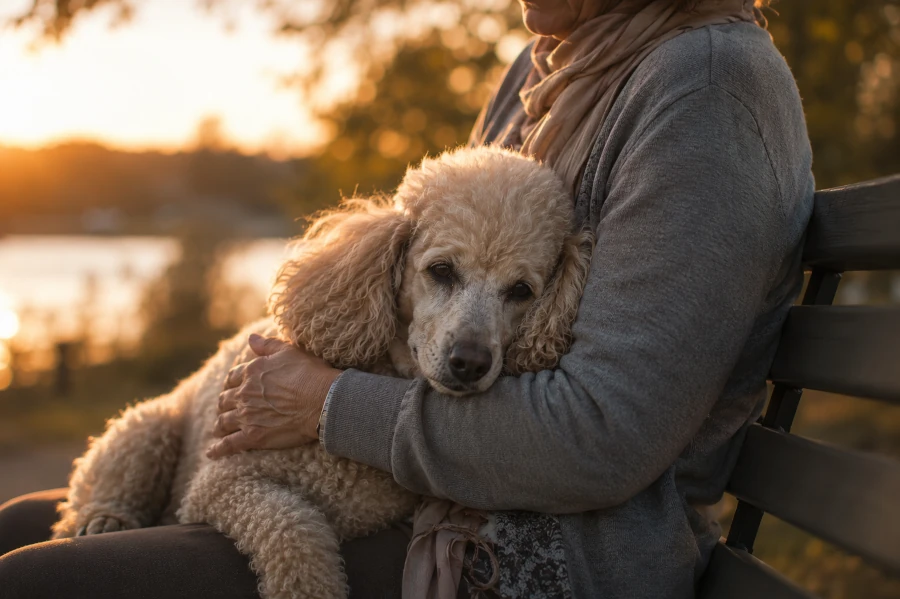
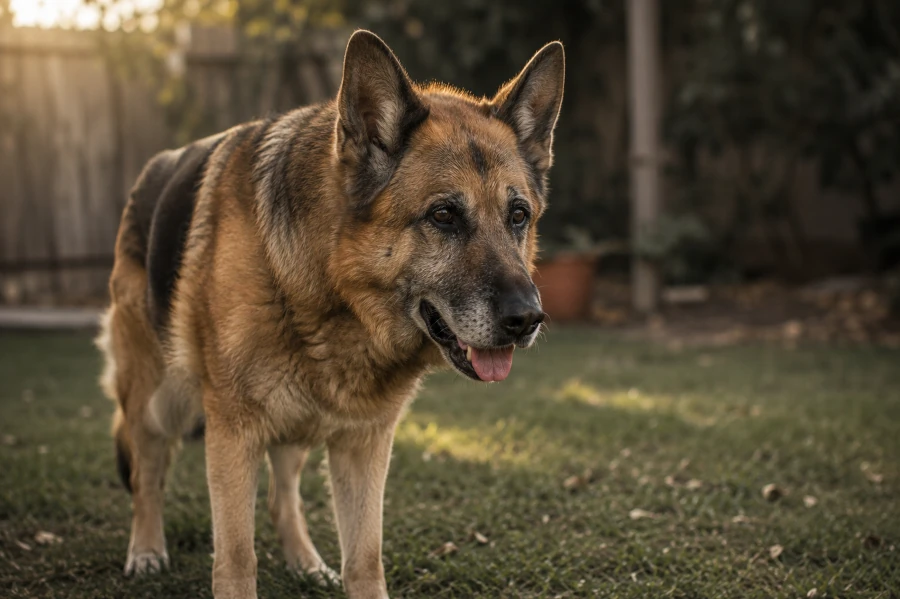
I noticed it during a normal walk.
Same route. Same pace. Same everything.
Except… we stopped earlier.
He wasn’t pulling like usual. Not even sniffing much. Just slowing down, looking at me as if to say, “That’s enough for today.”
At first, I told myself it was just age.
But then it happened again. And again. And that quiet doubt started to grow.
If your dog has been changing in small, almost unnoticeable ways, you’re not imagining it. And sometimes, those changes don’t come from the joints or muscles.
Sometimes, they come from the heart.
In this guide we will cover:
- How heart problems develop in senior dogs
- The early signs most owners overlook
- What changes are normal vs. concerning
- What daily life looks like with a heart condition
- What you can do to help your dog feel better
What Happens to a Dog’s Heart With Age
Just like the rest of the body, the heart changes over time.
It may become:
- less efficient at pumping blood
- slightly enlarged
- affected by valve deterioration
One of the most common issues is valve disease, especially in smaller breeds. The valves no longer close properly, causing blood to flow backward instead of forward.
This doesn’t cause an immediate collapse.
It creates a slow, progressive strain on the heart.
And because this process is gradual, many dogs adapt quietly — until the signs become harder to ignore.
There’s also something else that matters.
The heart doesn’t work alone.
When it starts to struggle, the whole body adjusts:
- breathing becomes less efficient
- energy levels drop
- recovery takes longer
This is why heart problems often feel “general” at first, not specific.
The Early Signs Most People Miss
According to veterinary sources, this condition often develops slowly and may go unnoticed at first.
Heart problems rarely start with something obvious.
They begin with small changes that are easy to dismiss.
You might notice:
- your dog gets tired faster than usual
- walks become shorter without a clear reason
- mild coughing, especially at night or after activity
- slightly heavier or faster breathing
- less enthusiasm for things they used to enjoy
None of these scream “heart problem.”
That’s what makes them dangerous.
They blend into what looks like normal aging.
But when these signs repeat, they’re worth paying attention to.
There’s a pattern many owners miss.
The change is not sudden.
It’s a slow reduction.
Your dog doesn’t stop doing things.
He just does less of them.
Less distance. Less energy. Less initiative.
And because it’s gradual, your brain keeps adjusting with it.
Until one day, you realize how much has changed.
The Signs That Shouldn’t Be Ignored
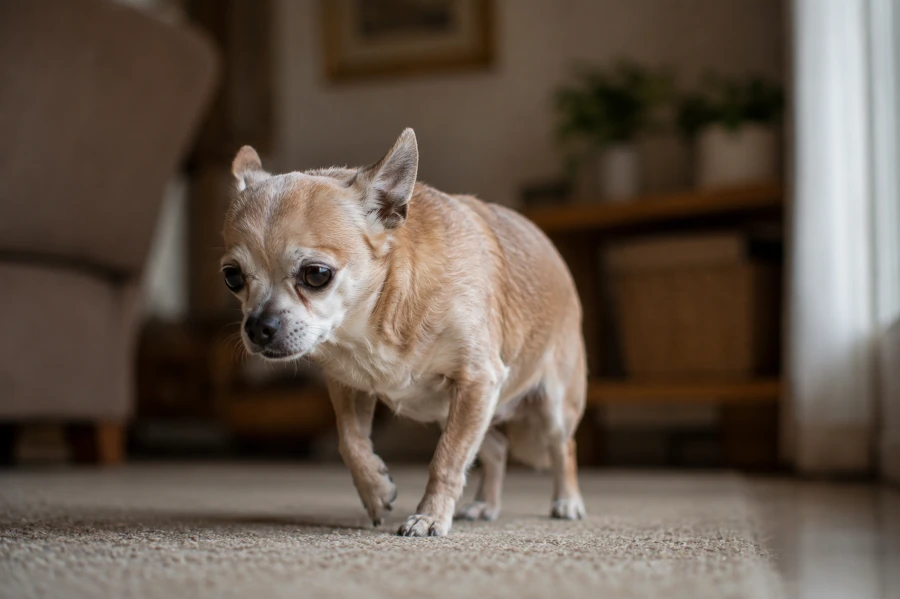
As the condition progresses, the signs become clearer.
This is when the body is struggling more to compensate.
Watch for:
- persistent coughing (not occasional)
- noticeable breathing effort, even at rest
- panting without heat or exercise
- weakness or occasional collapse
- swollen abdomen (fluid buildup)
At this stage, it’s no longer about guessing.
It’s time to act.
Another detail that often gets overlooked is recovery time.
Pay attention to how long it takes your dog to “go back to normal” after activity.
If recovery is slower than it used to be, that’s often an early indicator that something is not working efficiently.
How It Affects Your Dog’s Daily Life
Heart disease doesn’t just change physical ability.
It changes rhythm.
Your dog may:
- choose to rest more often
- avoid stairs or jumping
- sleep in different positions to breathe more easily
- follow you more slowly, or not at all
And sometimes, the hardest part is this:
They still want to do things.
They just can’t do them the same way anymore.
That gap — between desire and ability — is where frustration can quietly appear.
Not loud. Not dramatic. Just… there.
You might also notice something subtle.
Your dog may become more “selective” with effort.
He starts choosing when something is worth it.
He may still greet you at the door.
But skip the extra movement.
This is not laziness.
It’s energy management.
Why Early Awareness Changes Everything
There’s something most people don’t realize until later.
It’s not just about what your dog has.
It’s about when you notice it.
The earlier you recognize a change, the more options you have.
More ways to help.
More ways to adjust.
More ways to make your dog comfortable without turning everything upside down.
But when things go unnoticed for too long, your choices become more limited.
Not because you did something wrong.
Just because time passed quietly.
That’s why awareness isn’t about anxiety.
It’s about staying connected.
Noticing the small shifts:
- the way your dog gets up
- the way he reacts to touch
- the way he rests during the day
These details might seem insignificant.
But they’re often the first language your dog uses to tell you something is changing: subtle behavioral shifts like these are often connected to deeper changes over time.
And when you learn to read that language…
you don’t just react better.
You care better.
What You Can Do Right Now
You don’t need to solve everything today.
But there are things you can do that truly help.
Start simple:
- adjust exercise, don’t eliminate it
- watch breathing patterns daily
- create a low-stress environment
- keep weight under control
- stay consistent with routines
- talk to your vet early, not late
If you’re not sure where to start, simplify everything.
You don’t need a perfect plan. You need a consistent one.
Focus on small, repeatable checks:
- watch how your dog moves after resting
- notice if he hesitates before doing something he used to do easily
- pay attention to changes in routine, not just isolated moments
And one thing that helps more than people expect:
Create a mental “baseline.”
How does your dog normally behave today?
Energy levels
Appetite
Movement
Sleep
Because once you have that baseline, even small changes become easier to recognize.
Without it, everything feels uncertain.
And uncertainty is what makes people wait too long.
Small adjustments matter more than drastic changes.
Also, consistency matters more than intensity.
A calm, predictable routine reduces stress on the heart far more than occasional bursts of activity.
Try to avoid:
- sudden excitement spikes
- long inactive periods followed by intense movement
Balance is everything here.
Common Mistakes to Avoid
These are easy to fall into, especially with subtle symptoms:
- assuming it’s just old age
- ignoring mild but repeated coughing
- pushing normal activity levels
- waiting for something “serious” to happen
Heart conditions don’t usually start with emergencies.
They build quietly.
And the earlier you notice, the more you can do.
Another common mistake is comparing your dog to how he used to be.
That comparison often delays action.
What matters is not the past.
It’s the change.
The Part That Stays With You
There’s something about heart problems that feels… different.
Maybe it’s because the heart is not just a muscle.
It’s something we associate with life itself.
So when your dog slows down because of it, you feel it more deeply.
You start noticing his breathing. The pauses. The way he settles down.
You become more aware of every small detail.
And yes, that awareness can be heavy.
But it also brings something else.
You start matching his pace.
You stop rushing walks.
You sit a little longer.
You pay attention in a way you didn’t before.
And in that slower rhythm, something unexpected happens.
You don’t just see what’s changing.
You see what’s still there.
And that… is what stays.