Many owners try to reassure themselves in the initial stage.
“He’s just getting older.”
“Maybe he’s eating a little less.”
“He’s always been skinny.”
And sometimes, small weight changes really are manageable.
But there comes a point when weight loss stops being a normal adjustment and starts becoming a warning sign.
The difficult part is that dangerous weight loss in senior dogs rarely announces itself dramatically at the beginning.
It often starts quietly.
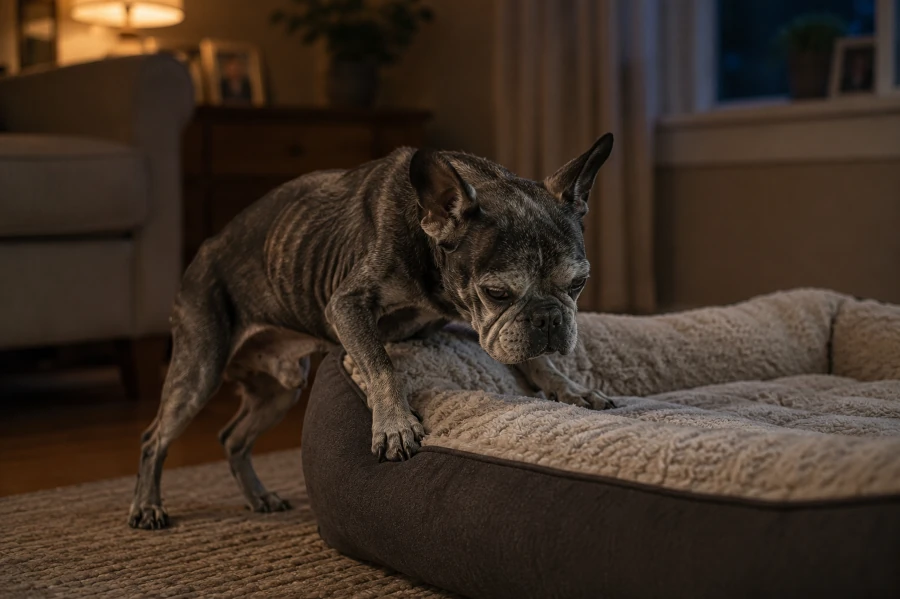
A little more spine showing.
A little less muscle around the hips.
A harness fitting differently than before.
And because these changes happen slowly, people adapt to them without realizing how serious the decline may be becoming.
I remember reaching that point with my own dog.
At first, I was focused mostly on appetite. He still ate something, so I convinced myself things were probably okay.
But one day I noticed how fragile he felt when I touched him.
That was different.
Not thinner.
Fragile.
That’s when I understood that dangerous weight loss is not only about numbers on a scale.
It is about what the body is losing:
- strength
- muscle
- resilience
- stability
- energy reserves
In this guide we will cover:
- how to recognize dangerous weight loss
- why severe weight loss happens in senior dogs
- warning signs that deserve attention
- how body condition affects quality of life
- when veterinary support becomes urgent
- common mistakes owners make
Why Severe Weight Loss Is Different From Normal Aging
Some body changes are expected with age.
Older dogs may:
- lose some muscle
- become slightly leaner
- eat more selectively
- move less efficiently
These gradual shifts are often related to physical changes linked to aging.
But dangerous weight loss goes beyond ordinary aging.
The body starts struggling to maintain itself.
Muscles shrink noticeably.
Energy drops significantly.
Recovery becomes harder.
Mobility weakens.
At this stage, the issue is no longer cosmetic.
It becomes physical vulnerability.
That vulnerability affects almost every aspect of daily life.
Warning Signs That Weight Loss May Be Serious
Some signs deserve closer attention immediately.
You may notice:
- prominent ribs and spine
- visible hip bones
- rapid muscle loss
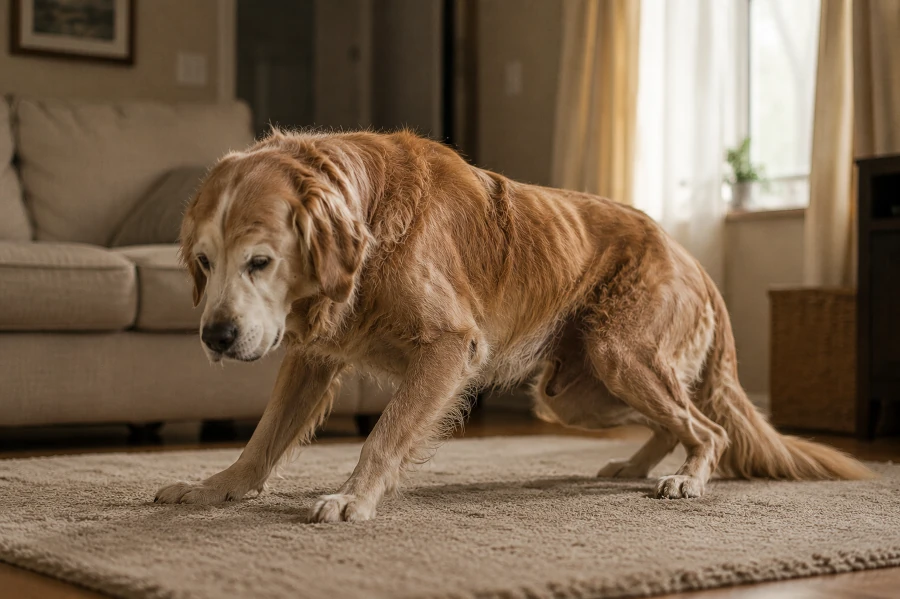
- weakness in the back legs
- lower stamina
- reduced appetite
- vomiting or diarrhea
- slower recovery after activity
- difficulty standing
- exhaustion after mild effort
One especially important sign is muscle loss around the hips and thighs.
This often affects:
- balance
- mobility
- confidence while walking
These symptoms frequently overlap with weakness of back legs.
And once muscle loss becomes severe, rebuilding strength becomes much harder.
Common Causes of Dangerous Weight Loss
There are many possible causes.
Often, several overlap at the same time.
Chronic disease
Conditions involving:
- kidneys
- liver
- heart
- cancer
- digestive function
can all reduce body condition significantly.
These problems are commonly associated with diseases frequently seen in older dogs.
Reduced appetite
Some dogs simply stop eating enough consistently to maintain healthy weight.
Poor nutrient absorption
Even when eating normally, the body may struggle to use nutrients effectively.
Chronic pain
Pain increases stress on the body and often reduces:
- appetite
- movement
- energy conservation
Severe muscle loss from inactivity
Reduced movement accelerates physical decline.
Why Muscle Loss Matters More Than Fat Loss
This is one of the most misunderstood parts of senior dog care.
Owners often focus mainly on body fat.
But muscle loss is usually far more dangerous.
Muscle supports:
- movement
- balance
- stability
- stamina
- recovery
A dog losing muscle may:
- fall more easily
- struggle standing up
- become exhausted quickly
- lose independence
This loss of strength often contributes to fatigue and low energy symptoms.
And because muscle loss can happen gradually, it is easy to underestimate until mobility suddenly declines sharply.
How Dangerous Weight Loss Affects Quality of Life
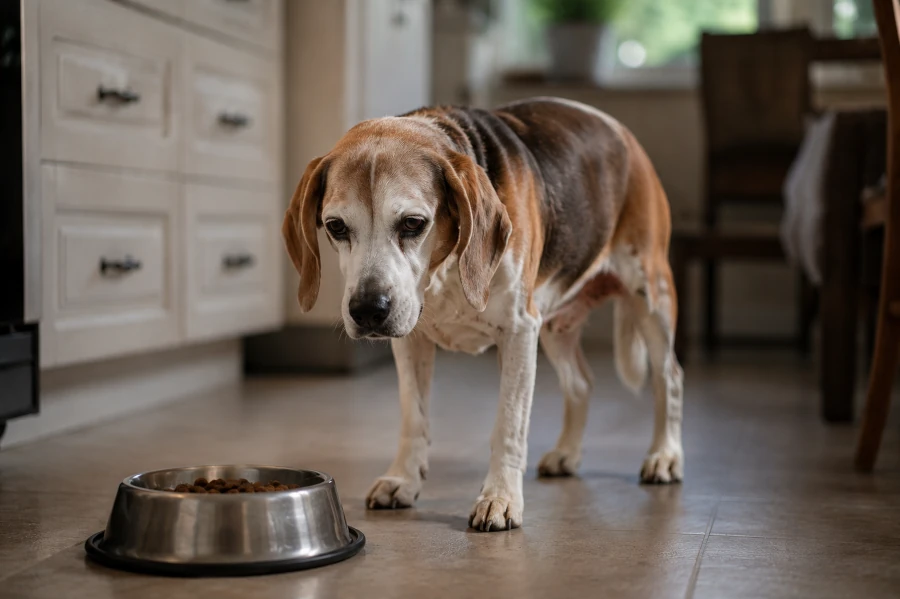
Severe weight loss changes how a dog experiences ordinary life.
Simple movements require more effort.
The body has fewer reserves.
Recovery becomes slower after:
- walks
- standing
- climbing stairs
- illness
- stress
You may notice your dog:
- sleeping more deeply
- avoiding activity
- isolating more often
- moving cautiously
- losing confidence physically
And because weakness increases vulnerability, even small setbacks become harder for the body to handle.
The Emotional Side of Watching a Dog Become Frail
This is one of the hardest experiences for many owners.
Weight loss changes how your dog feels physically in your hands.
The body becomes:
- sharper
- lighter
- more delicate
And those physical changes create emotional weight too.
Because they make aging feel undeniable.
You start noticing:
- every bone
- every slower movement
- every sign of fatigue
And even when your dog still enjoys affection, routines, and closeness, the physical fragility becomes impossible to fully ignore.
When Veterinary Attention Becomes Urgent
Some gradual decline can be monitored carefully.
But certain situations deserve prompt veterinary evaluation.
You should seek help if you notice:
- rapid ongoing weight loss
- severe muscle wasting
- refusal to eat
- vomiting or diarrhea
- collapse or severe weakness
- inability to stand comfortably
- breathing difficulty
- major behavior changes
Some of these symptoms may overlap with signs of pain or physical distress.
At this point, identifying the underlying cause matters enormously.
Because dangerous weight loss is usually a symptom of something deeper happening inside the body.
What You Can Do at Home
You cannot solve severe weight loss alone.
But supportive care still matters greatly.
Monitor body condition consistently
Look beyond the number on the scale.
Pay attention to:
- muscle tone
- mobility
- strength
- posture
- recovery after activity
Support easier eating
Some dogs benefit from:
- softer food
- smaller meals
- more frequent feeding
- warming food slightly
This can be especially useful for dogs dealing with loss of appetite.
Protect mobility
Weak dogs need:
- stable footing
- easier movement through the home
- softer resting areas
Reduce unnecessary strain
Conserving energy becomes increasingly important.
Focus on comfort as much as calories
A comfortable dog often eats and rests better.
Common Mistakes Owners Make
Dangerous weight loss is emotionally difficult, which often leads to mistakes.
Waiting too long
Owners sometimes normalize serious decline because the changes happen slowly.
Focusing only on food quantity
Eating more does not always solve the underlying problem.
Ignoring muscle loss
Muscle decline affects survival and quality of life directly.
Pushing activity too hard
Weak dogs can become exhausted very quickly.
Panicking constantly
Stress helps neither the owner nor the dog.
Calm observation matters more than fear.
Supporting Strength, Dignity, and Comfort
There comes a point when the goal shifts.
Not from caring…
but from chasing “normal.”
Sometimes the body cannot fully recover the way we wish it could.
At that stage, the focus becomes:
- preserving comfort
- supporting movement
- protecting dignity
- reducing exhaustion
- maintaining connection
These adjustments are closely tied to the need of apport more comfort .
And those things matter deeply.
A dog does not measure life by body weight alone.
He experiences:
- comfort
- safety
- affection
- familiarity
- closeness
Right now.
The Part That Stays With You
Watching a dog become physically frail changes the way you see time.
You notice how carefully he moves.
How gently he lowers himself to rest.
How much effort ordinary things now require.
And sometimes, that reality feels overwhelming because you remember the stronger body he once had so clearly.
But there is another truth hidden inside these moments too.
Even in weakness, dogs continue seeking connection.
They still lean toward you.
Still recognize routines.
Still respond to comfort and reassurance.
And sometimes, helping a senior dog through dangerous weight loss is not about fighting aging itself.
It is about making sure that even during physical decline, your dog still feels protected, understood, and deeply loved.