
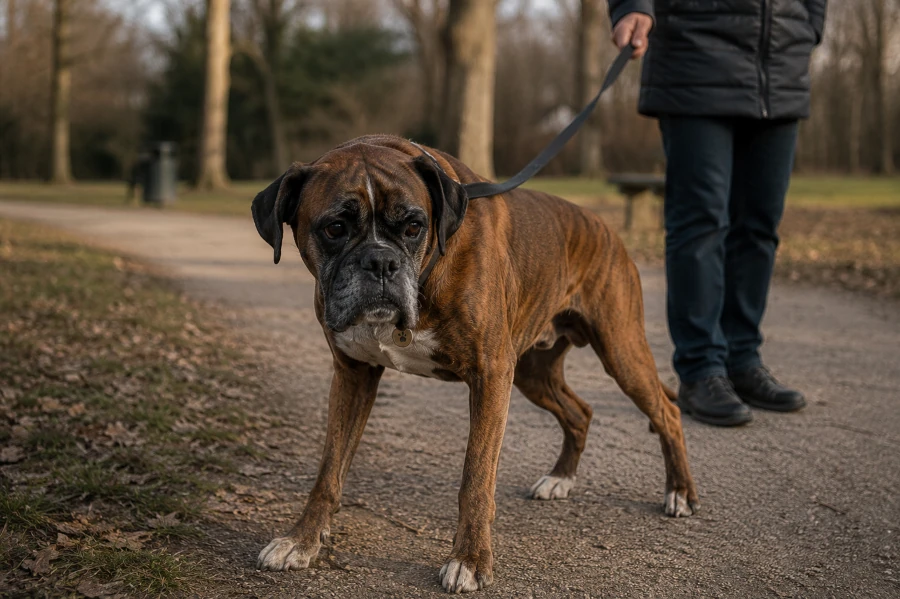
Chronic pain rarely arrives all at once.
That’s what makes it so difficult to recognize in senior dogs.
Most owners expect pain to look dramatic:
- crying
- limping severely
- refusing to move
- obvious distress
But chronic pain usually looks quieter than that.
It looks like hesitation.
A slower walk.
Less excitement.
More sleeping.
A dog who pauses before standing up instead of jumping to his feet immediately.
And because those changes happen gradually, many people mistake pain for “normal aging.”
I did too.
At first, I thought my dog was simply becoming calmer with age. More relaxed. Less energetic.
But over time, I realized something important:
He was not choosing to slow down.
His body was asking him to.
Managing chronic pain in senior dogs is not only about medication. It is about understanding how pain changes movement, mood, behavior, sleep, confidence, and quality of life.
In this guide we will cover:
- what chronic pain actually looks like in older dogs
- common causes of long-term pain
- subtle warning signs many owners miss
- how pain affects daily life
- practical ways to reduce discomfort
- when pain management becomes essential
What Chronic Pain Really Means
Chronic pain is ongoing pain that persists over time instead of resolving quickly.
Unlike sudden injuries, chronic pain often develops slowly.
The body adapts gradually.
The dog adapts gradually.
And the owner adapts gradually too.
That is why chronic pain is so often underestimated.
A senior dog living with daily discomfort may still:
- eat
- wag his tail
- go outside
- follow routines
But functioning is not the same as feeling comfortable.
Many dogs continue doing normal activities while silently compensating for pain.
Common Causes of Chronic Pain in Senior Dogs
Several conditions can create long-term discomfort.
Arthritis
This is one of the most common causes.
Joint inflammation creates:
- stiffness
- soreness
- reduced mobility
- pain after activity or rest
These symptoms are strongly connected to joint pain and stiffness in older dogs .
Hip and spinal problems
Conditions affecting the hips or spine can create:
- nerve pain
- weakness
- instability
- movement hesitation
Old injuries
Past injuries may become more painful with age as tissues weaken and inflammation increases.
Dental disease
Mouth pain is often overlooked because dogs still try to eat despite discomfort.
This can overlap with dental issues.
Chronic disease
Certain illnesses affecting organs or inflammation levels can create ongoing physical discomfort throughout the body.
Early Signs Owners Often Miss
Chronic pain usually appears through behavior changes, not dramatic reactions.
You may notice:
- slower movement
- difficulty standing up
- hesitation before stairs or jumping
- increased sleeping
- irritability
- panting during rest
- reduced interest in walks
- stiffness after naps
- reluctance to be touched in certain areas
One important sign is recovery time.
A dog in pain may recover much more slowly after:
- walks
- play
- climbing stairs
- long periods standing
And because the decline happens gradually, owners often normalize it without realizing how uncomfortable the dog has become, especially when combined with evidence of fatigue and low energy.
Why Dogs Hide Pain So Well
This confuses many people.
“How can my dog still wag his tail if he hurts?”
Because dogs are extremely adaptable.
Many continue seeking:
- affection
- food
- routine
- closeness
even while uncomfortable.
Pain does not erase personality instantly.
Instead, it slowly reshapes behavior around physical limitations.
That is why observing small changes matters so much.
Noticing:
- hesitation
- stiffness
- altered routines
- mood shifts
often reveals more than waiting for dramatic symptoms.
How Chronic Pain Affects Daily Life
Pain changes how a dog experiences ordinary moments.
Simple activities may become physically expensive.
Things like:
- standing up
- lying down
- turning around
- walking across slippery floors
- climbing stairs
can require significantly more effort.
Over time, many dogs begin conserving energy automatically.
You may notice:
- shorter walks
- slower pace
- less exploration
- avoiding certain rooms
- reduced interaction
This is not laziness.
It is adaptation.
The body starts protecting itself from discomfort.
The Emotional Side of Living With Pain
Pain affects emotional behavior too.
A dog living with chronic discomfort may:
- become quieter
- seem withdrawn
- react more irritably
- avoid touch
- seek isolation more often
And because these changes can happen slowly, they are often misunderstood as:
- personality changes
- aging alone
- stubbornness
But emotional behavior and physical comfort are deeply connected.
Imagine waking up uncomfortable every day.
Even small frustrations would feel heavier.
That is why pain management improves more than mobility alone.
It often improves emotional stability too, especially in dogs experiencing anxiety and restlessness in older age.
Why Good Days and Bad Days Can Be Misleading
One of the hardest parts of chronic pain is inconsistency.
Your dog may seem:
- much better one day
- noticeably worse the next
This creates confusion.
Owners often think:
“Maybe it’s not serious after all.”
But fluctuating symptoms are extremely common with chronic pain.
Factors like:
- weather
- activity levels
- sleep quality
- inflammation
- stress
can all influence discomfort levels.
This is why patterns matter more than isolated good days.
How Chronic Pain Slowly Changes Movement
One of the most important things to understand about chronic pain is this:
Dogs often change the way they move long before owners realize how uncomfortable they are.
The body naturally tries to avoid painful motions.
A dog with chronic discomfort may:
- shift weight away from sore joints
- walk more carefully
- turn more slowly
- avoid sudden movements
- hesitate before sitting or lying down
At first, these adjustments can look minor.
But over time, they create a chain reaction throughout the body.
When one area hurts, other muscles and joints work harder to compensate. This extra strain can eventually create:
- more stiffness
- faster fatigue
- muscle soreness
- worsening instability
This often contributes to serious mobility problems.
That is why chronic pain rarely stays isolated to one single area forever.
The entire movement pattern changes gradually around the discomfort.
And because these changes happen slowly, owners often adapt unconsciously too.
You stop asking your dog to jump into the car.
You choose shorter walks.
You avoid slippery areas.
You help more often without even realizing it.
These adjustments are not failures.
They are part of learning how your dog’s body now works.
And sometimes, recognizing those quiet movement changes early is one of the best ways to protect comfort before pain becomes much more severe.
How to Reduce Pain at Home
You cannot eliminate every source of discomfort yourself.
But small changes often improve quality of life dramatically.
Improve traction
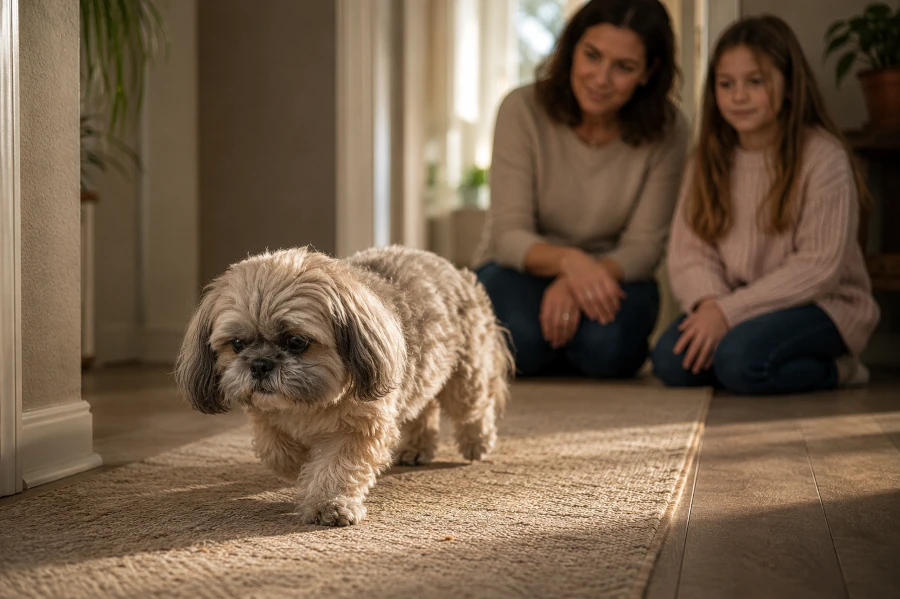
Slippery floors increase strain and instability.
Rugs and non-slip surfaces for safer movement help movement feel safer.
Support comfortable sleep
Soft supportive bedding reduces pressure on painful joints.
Adjust activity
Gentle consistent movement is usually better than:
- complete inactivity
- exhausting exercise
Maintain healthy weight
Extra weight increases stress on painful joints significantly.
This becomes especially important in dogs dealing with weight gain [Weight Gain in Senior Dogs].
Reduce unnecessary stairs and obstacles
Small environmental changes conserve energy and reduce strain.
Watch recovery after activity
The goal is not pushing through pain.
The goal is preserving comfortable movement.
When Pain Requires Veterinary Support
Some discomfort can be managed with environmental adjustments.
But persistent pain deserves professional attention.
You should contact a vet if you notice:
- ongoing mobility decline
- severe stiffness
- crying or vocalizing
- major behavior changes
- refusal to move
- appetite decline
- worsening sleep
- signs of distress during normal movement
Pain management may include:
- medication
- physical therapy
- weight management
- mobility support
- lifestyle adjustments
And in many cases, proper pain control dramatically improves quality of life.
Common Mistakes Owners Make
Chronic pain is often misunderstood.
Assuming slowing down is “just age”
Aging and pain overlap, but they are not identical.
Waiting for dramatic signs
Most chronic pain begins subtly.
Avoiding all movement
Too little movement often worsens stiffness and weakness.
Overexercising on good days
Some dogs push beyond comfortable limits when they temporarily feel better.
Ignoring emotional changes
Mood changes are often part of physical discomfort.
Supporting Comfort Instead of Chasing Perfection
This mindset shift matters enormously.
Your goal is not creating a pain-free young dog again.
It is preserving:
- comfort
- dignity
- stability
- mobility
- emotional well-being
Sometimes success looks small:
- easier standing
- calmer sleep
- more relaxed movement
- less hesitation
But those changes can completely transform daily life for a senior dog.
The Part That Changes Your Perspective
Living beside a dog with chronic pain teaches patience differently than almost anything else.
You begin noticing effort in places where you once saw ease.
The careful way he stands up.
The slower turns.
The hesitation before jumping onto something he once reached effortlessly.
And at first, those changes can feel heartbreaking.
But over time, you also begin noticing something else.
Resilience.
Dogs continue seeking comfort, routine, affection, and connection even while adapting to physical limitations.
They continue trying.
And sometimes, managing chronic pain is not about “fixing” aging.
It is about making everyday life feel gentler, safer, and more manageable for a body that now needs more understanding than it once did.