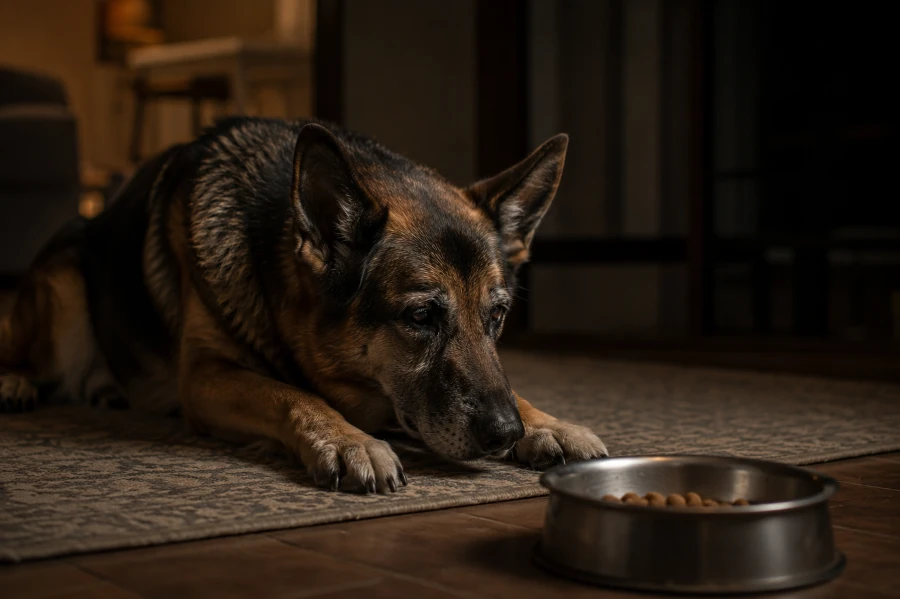
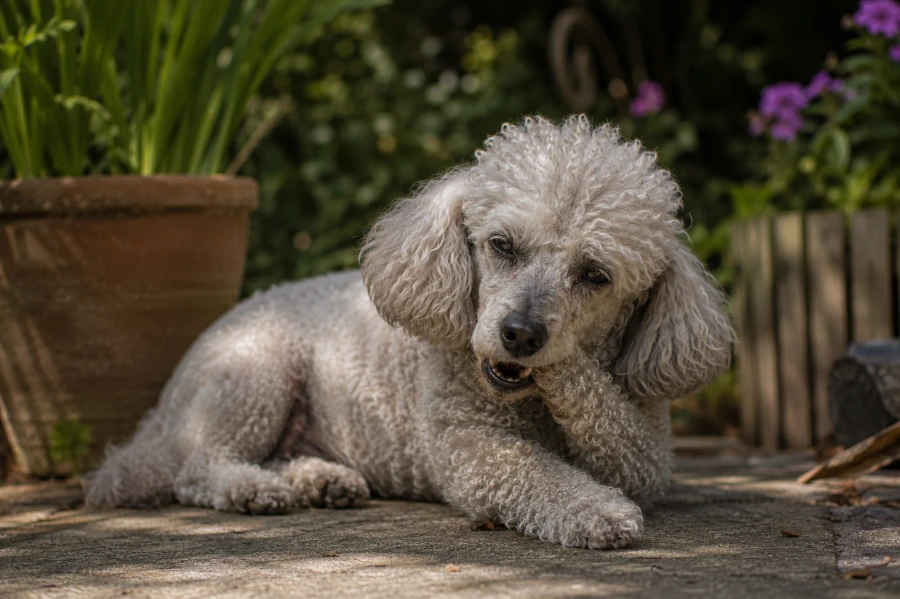
I still remember the moment I noticed it.
My dog came closer than usual, resting his head on my knee like he often did. It was a quiet, normal moment… until he yawned.
The smell hit me immediately.
Not just “dog breath.” Something stronger. Sour. Almost metallic.
I brushed it off at first. Maybe it was just time for a dental treat. Maybe I was overthinking, like always.
But then I started noticing other things.
He chewed more slowly.
He dropped pieces of food.
Sometimes he walked away from his bowl, even though I knew he was hungry.
And that’s when it clicked.
It wasn’t just breath.
It was pain.
Dental disease in senior dogs is one of the most common — and most ignored — problems. Not because owners don’t care, but because the signs are easy to miss or dismiss.
In this guide we will cover:
- the early signs of dental disease in senior dogs
- what is actually happening inside your dog’s mouth
- how dental problems affect behavior and appetite
- what you can do at home right now
- when to involve a vet
- common mistakes to avoid
What Dental Disease Really Means
When we hear “dental disease,” we often think of dirty teeth.
But in dogs, it goes much deeper than that, often as part of a wider group of age-related conditions.
It usually starts with plaque — a thin layer of bacteria on the teeth. Over time, this hardens into tartar. Once tartar builds up, it irritates the gums, leading to inflammation.
This stage is called gingivitis.
If it continues, it becomes periodontal disease, where:
- gums start to recede
- teeth become loose
- infection can spread below the gumline
At that point, it is not just a mouth problem anymore.
Bacteria can enter the bloodstream and potentially affect organs like the heart and kidneys.
But your dog will not tell you any of this.
He will just… adapt.
Early Signs Most Owners Overlook
Dental disease rarely starts with obvious pain.
Instead, it shows up in small, almost invisible ways.
You might notice:
- bad breath that does not go away
- yellow or brown buildup on teeth
- red or swollen gums
- drooling more than usual
- chewing on one side
- dropping food while eating
- reluctance to eat hard food
- pawing at the mouth
- subtle changes in mood
One of the most misleading signs is appetite, something also connected to changes in eating behavior.
Your dog may still be hungry, but eating becomes uncomfortable.
So he hesitates.
Or eats slower.
Or avoids certain foods.
This is why dental disease is often confused with general appetite issues. But the cause is very different.
How Dental Pain Changes Behavior
Pain in the mouth is difficult to detect because dogs are extremely good at hiding it, much like other subtle signs of discomfort.
They don’t cry.
They don’t complain.
They adjust.
A dog with dental pain may:
- become quieter
- avoid toys he used to love
- stop chewing bones or treats
- seem less enthusiastic about meals
- pull away when you touch his face
- become slightly irritable
Sometimes the change is so gradual that you only notice it when you look back.
“He used to love this toy.”
“He used to finish his food faster.”
Dental pain doesn’t always look dramatic.
Often, it looks like a slow fading of normal behavior.
The Link Between Teeth and Eating Problems
This is where many owners get confused.
If a dog is not eating well, the first thought is often:
- stomach issues
- aging
- food quality
But the mouth is the first step of eating, and problems here can contribute to digestive difficulties in older dogs.
If chewing hurts, everything that comes after is affected.
You might see:
- refusal of dry kibble
- preference for soft food
- chewing and then spitting food out
- eating only small amounts at a time
In some cases, the dog still wants to eat but cannot do it comfortably.
That creates frustration.
And sometimes, that frustration looks like disinterest.
What You Can Do at Home (Right Now)
You don’t need to solve everything immediately.
But there are simple things you can start doing today.
Check your dog’s mouth (gently)
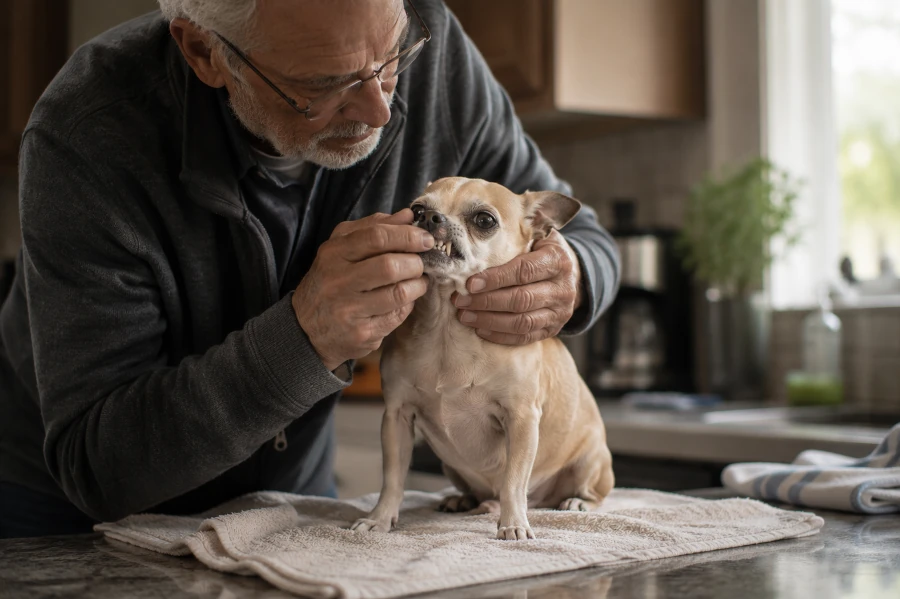
This simple habit is part of a consistent daily care routine.
Look for:
- tartar buildup
- redness along the gumline
- missing or loose teeth
Do not force it if your dog resists. Pain may already be present.
Adjust food if needed
If your dog is struggling with hard food:
- soften kibble with warm water
- try wet food temporarily
- avoid very hard treats
This does not fix the problem, but it reduces discomfort.
Introduce basic dental care
If your dog tolerates it:
- use a soft dog toothbrush
- use dog-specific toothpaste
- start slowly, even just touching the teeth at first
Consistency matters more than intensity.
Observe behavior closely
Changes in:
- eating
- chewing
- mood
are often your best indicators of progression.
When You Need a Vet
At-home care helps, but it has limits.
You should contact a vet if you notice signs that may indicate more serious health problems:
- persistent bad breath
- visible tartar covering large areas
- bleeding gums
- swelling in the mouth or face
- loose teeth
- refusal to eat
- signs of pain when chewing
Professional dental cleaning may be necessary.
This usually involves anesthesia, which can worry many owners — especially with senior dogs.
But untreated dental disease can be worse.
Your vet can evaluate the risks and guide you.
Common Mistakes Owners Make
Dental disease is often underestimated, and that leads to mistakes.
Assuming bad breath is normal
It’s not.
Strong, persistent odor is often a sign of infection.
Waiting too long
Because the signs are subtle, many owners delay action.
By the time it is obvious, the disease is often advanced.
Relying only on treats or chews
Dental treats can help, but they are not a complete solution.
Avoiding the vet out of fear of anesthesia
This is understandable, but avoiding treatment can prolong pain.
Ignoring small behavior changes
Subtle shifts are often the earliest warning signs.
Helping Your Dog Feel Better
The goal is not just clean teeth.
It is comfort.
A dog without dental pain, much like one free from chronic discomfort issues:
- eats more easily
- plays more willingly
- rests more peacefully
- interacts more naturally
Sometimes, after dental treatment, owners say the same thing:
“It’s like he’s younger again.”
Not because the dog changed.
But because the pain is gone.
The Part That’s Easy to Miss
Dental disease is quiet.
It does not demand attention like a limp or a visible injury.
It stays in the background, slowly changing how your dog experiences everyday life.
Eating becomes harder.
Chewing becomes uncomfortable.
Small joys become less appealing.
And because it happens gradually, it is easy to accept it as “just aging.”
But it isn’t.
It is something you can notice.
Something you can manage.
Something you can improve.
Your dog may never tell you his mouth hurts.
But he will show you, in small ways.
And once you see it, you can’t unsee it.
And that is where you can make the biggest difference.