I used to think vaccinations were something you “finished” when your dog was young.
Puppy shots. Boosters. Done.
After that? Just routine life.
But as my dog got older, I started hearing something different from my vet:
“Prevention becomes more important, not less.”
At first, it didn’t make sense.
If his immune system is weaker… shouldn’t we avoid stressing it with vaccines?
If he rarely meets other dogs… does he still need protection?
If he’s mostly at home… what are we really preventing?
These questions are normal.
And if you’re asking them, it means you’re paying attention.
In this guide we will cover:
- Whether senior dogs still need vaccinations
- Which vaccines matter most in older age
- How prevention changes as your dog gets older
- Risks vs benefits (without confusion or fear)
- Other essential preventive care beyond vaccines
- Common mistakes that can quietly put your dog at risk
Do Senior Dogs Still Need Vaccinations?
Short answer: yes—but not blindly.
This is where many owners get it wrong.
There are two extremes:
- “He’s old, stop everything.”
- “Just keep doing the same schedule forever.”
Neither is correct.
Senior dogs still need protection, but their care should be more individualized.
Because aging changes how the immune system responds:
- It may be less reactive
- It may need support
- It may not require the same frequency as before
So the goal is not “more vaccines.”
The goal is smart protection.
Core Vaccines vs Lifestyle-Based Vaccines
Not all vaccines are equal.
And understanding this changes everything.
Core Vaccines (Usually Still Recommended)
These protect against serious, widespread diseases:
- Distemper
- Parvovirus
- Adenovirus (hepatitis)
- Rabies (often legally required)
These diseases are dangerous—even for older dogs.
And age does not guarantee immunity.
In many cases, vets recommend continuing these vaccines, but:
- Possibly with extended intervals
- Based on medical history
- After evaluating overall health
Non-Core Vaccines (Depends on Lifestyle)
These depend on your dog’s environment:
- Kennel cough (Bordetella)
- Leptospirosis
- Lyme disease
If your senior dog:
- Rarely meets other dogs
- Doesn’t travel
- Lives in a low-risk environment
Some of these may no longer be necessary.
But if he:
- Goes to dog parks
- Travels
- Stays in boarding facilities
Then they might still matter.
This is why there is no “one-size-fits-all” answer.
The Balance: Protection vs Over-Vaccination
One of the biggest concerns owners have is:
“Am I doing too much?”
It’s a fair question.
Because while vaccines are generally safe, senior dogs are more sensitive.
This is where your vet’s judgment becomes essential.
In some cases, they may suggest:
- Titer testing (to check existing immunity)
- Spacing out vaccines
- Skipping non-essential ones
- Monitoring more closely after vaccination
The goal is always the same:
Protect without overwhelming.
Prevention Is Much Bigger Than Vaccines
Here’s something many people don’t realize:
Vaccines are only a small part of preventive care.
And as your dog ages, other forms of prevention become even more important.
Parasite Control (Still Essential)
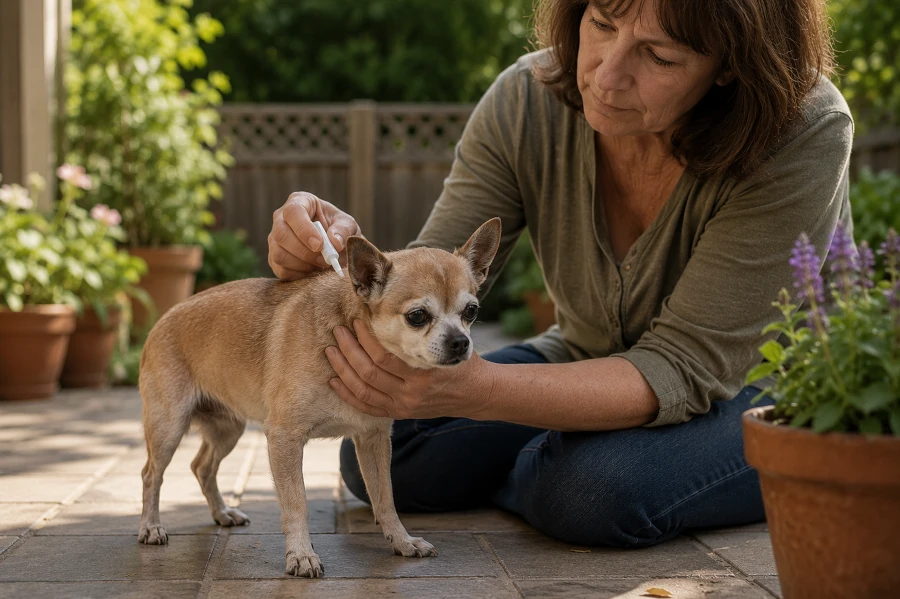
Even if your dog stays mostly indoors, risks remain:
- Fleas
- Ticks
- Heartworms (depending on region)
- Intestinal parasites
Older dogs may struggle more with infections.
And what used to be a minor issue can become serious faster.
Consistent prevention is key.
Dental Care as Prevention
This is often underestimated.
But dental disease is one of the most common problems in senior dogs.
And it doesn’t stay in the mouth.
It can affect:
- Heart
- Kidneys
- Overall health
Prevention here includes:
- Regular checks
- Cleaning when needed
- Daily or weekly maintenance
Weight Management
Not usually seen as “prevention”… but it is.
Excess weight increases:
- Joint stress
- Heart strain
- Risk of diabetes
- Reduced lifespan
And in senior dogs, losing weight becomes harder.
Which means prevention is easier than correction.
Regular Screening
Prevention also means monitoring before symptoms appear.
This includes:
- Blood tests
- Urine tests
- Physical exams
Because many diseases don’t show signs early on.
How Aging Changes Risk
Here’s where things shift.
A younger dog might:
- Recover quickly
- Fight infections easily
- Show clear symptoms
A senior dog might:
- Develop issues slowly
- Show subtle signs
- Struggle more with recovery
This changes how you should think about prevention.
It’s no longer about reacting fast.
It’s about staying ahead quietly.
When to Be More Cautious
There are situations where vaccination plans need extra attention.
If your dog has:
- Chronic illness
- Immune-related conditions
- Cancer
- History of vaccine reactions
Then decisions become more nuanced.
In these cases, your vet may:
- Adjust schedules
- Skip certain vaccines
- Monitor closely
This is not about avoiding protection.
It’s about adapting it.
Common Mistakes Owners Make
Not out of neglect.
But because these things are rarely explained clearly.
Stopping Everything Too Early
Assuming age means “no more vaccines” can expose your dog to preventable diseases.
Following Puppy Schedules Forever
Not adapting care to age can lead to unnecessary interventions.
Ignoring Lifestyle Changes
A dog that no longer socializes may not need the same protection.
But many people never reassess this.
Skipping Parasite Prevention
Thinking “he’s indoors now” often leads to problems later.
Avoiding the Vet Out of Fear
Some owners delay visits because they don’t want to hear bad news.
But prevention depends on information.
What You Can Do Right Now
If you want to simplify everything, start here.
- Review your dog’s vaccination history
- Talk to your vet about what is still necessary
- Reassess your dog’s lifestyle (risk level)
- Keep parasite prevention consistent
- Schedule regular checkups
- Monitor small changes in behavior
You don’t need to overthink.
You just need to stay aware.
The Emotional Side of Prevention
There’s something subtle that happens as your dog gets older.
You start becoming more protective.
More attentive.
More aware that time is… different now.
And sometimes, that leads to hesitation:
- “What if this is too much for him?”
- “What if I stress him?”
- “What if I make the wrong decision?”
These thoughts come from care.
But they can also lead to inaction.
And inaction is often the bigger risk.
Protection Is a Form of Love
Vaccinations. Prevention. Checkups.
They don’t feel emotional.
They’re not the moments you remember.
They’re not like walks, or cuddles, or quiet evenings together.
But they support all of those moments.
They protect them.
They extend them.
And in a way, they say something very simple:
“I’m not leaving this to chance.”
In the End, It’s About Quiet Responsibility
Your dog won’t understand vaccines.
He won’t understand prevention.
He won’t connect those actions to the extra time he gets.
But you will.
And that’s enough.
Because being responsible for a senior dog isn’t about doing everything.
It’s about doing the right things—consistently, thoughtfully, and without panic.
Not too much.
Not too little.
Just what he needs.
And when you find that balance…
You’re not just protecting his health.
You’re protecting your time together.