The first time my vet suggested “more frequent checkups,” I almost brushed it off.
My dog looked fine.
He was eating, walking, even wagging his tail like always.
So I thought: Why fix something that isn’t broken?
But that’s the trap.
Because with senior dogs, things rarely break all at once.
They change slowly. Quietly. Almost invisibly.
And by the time something becomes obvious… it’s often been there for a while.
If you’re wondering how often you should take your senior dog to the vet—and what those visits actually prevent—this guide will give you a clear, realistic answer.
In this guide we will cover:
- How often senior dogs should really see the vet
- What changes with age (and why checkups matter more now)
- What happens during a senior dog exam
- The most important tests you shouldn’t skip
- Warning signs that mean “don’t wait”
- How to make vet visits less stressful for your dog
Why Vet Checkups Matter More With Age
When your dog was younger, vet visits were mostly about:
- Vaccinations
- Occasional issues
- General reassurance
Now, things are different.
Aging changes how the body works.
Organs become less efficient.
Recovery slows down.
Problems develop gradually, without clear symptoms.
That’s why regular checkups shift from “optional maintenance” to something much more important:
Because many of the most common conditions in senior dogs don’t show clear signs at the beginning:
- Kidney disease
- Heart issues
- Arthritis
- Hormonal imbalances
- Dental disease
And here’s the key point:
Catching these early doesn’t just improve treatment.
It often extends your dog’s life—and makes that life more comfortable.
How Often Should a Senior Dog See the Vet?
The general recommendation is simple:
At least twice a year.
That’s every 6 months.
It might sound like a lot if you’re used to annual visits.
But think about it this way:
Dogs age faster than we do.
Roughly speaking, 6 months for a senior dog can be like several years for a human.
A lot can change in that time.
When “Twice a Year” Isn’t Enough
Some dogs need more frequent monitoring.
Especially if they already have:
- Chronic conditions
- Ongoing medications
- Mobility issues
- Noticeable behavioral changes
In these cases, your vet might recommend:
- Every 3–4 months
- Or even more often for specific conditions
This isn’t overkill.
It’s how you stay ahead of problems instead of reacting to them.
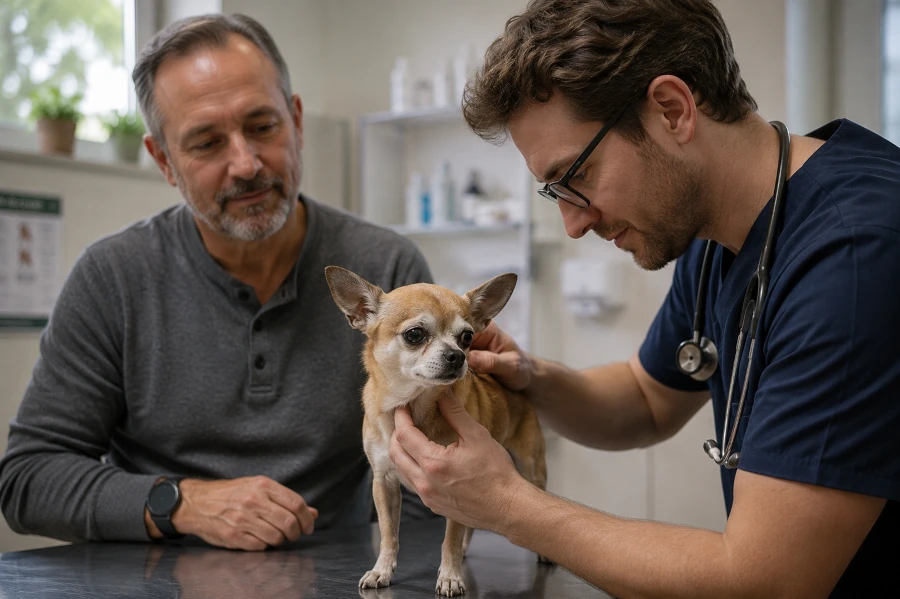
What Actually Happens During a Senior Checkup
If you’ve ever wondered what your vet is really looking for, here’s a breakdown.
A senior checkup is more than a quick look.
It’s a structured evaluation of your dog’s entire condition.
Physical Examination
Your vet will assess:
- Weight and body condition
- Muscle mass (loss is a key aging sign)
- Joints and mobility
- Heart and lung sounds
- Eyes and vision
- Ears
- Skin and coat
- Mouth and teeth
Nothing here is random.
Each detail helps build a picture of how your dog is aging.
Behavioral and Lifestyle Questions
This part is often underestimated.
But your answers matter.
You might be asked:
- Has your dog slowed down?
- Any changes in appetite?
- Drinking more or less water?
- Sleeping differently?
- Any accidents in the house?
These small observations often reveal more than tests alone.
The Most Important Tests for Senior Dogs
Not every visit requires every test.
But there are some key screenings that become increasingly important.
Blood Tests
These are essential.
They help detect:
- Kidney function changes
- Liver issues
- Blood sugar levels
- Hormonal imbalances
And the important part?
Many of these changes happen before symptoms appear.
Urinalysis
Often paired with blood tests.
It provides insight into:
- Kidney health
- Infections
- Hydration status
X-rays or Imaging (When Needed)
Used to evaluate:
- Joint degeneration
- Heart size
- Internal abnormalities
Not always necessary—but extremely valuable in the right context.
Dental Evaluation
Dental health is often overlooked.
But infections in the mouth can affect:
- Appetite
- Pain levels
- Even internal organs over time
Weight Tracking Over Time
Not just a number.
Trends matter.
- Weight loss can signal disease
- Gradual gain can increase strain on joints and organs
Even with regular checkups, there are moments when you shouldn’t wait.
If you notice any of these, it’s better to act sooner:
- Sudden loss of appetite
- Rapid weight loss
- Excessive thirst or urination
- Difficulty standing or walking
- Persistent coughing
- Disorientation or confusion
- Unusual aggression or withdrawal
- Vomiting or diarrhea that doesn’t resolve
These are not “just aging.”
They are signals.
And acting early can make a significant difference.
Making Vet Visits Easier (For Both of You)
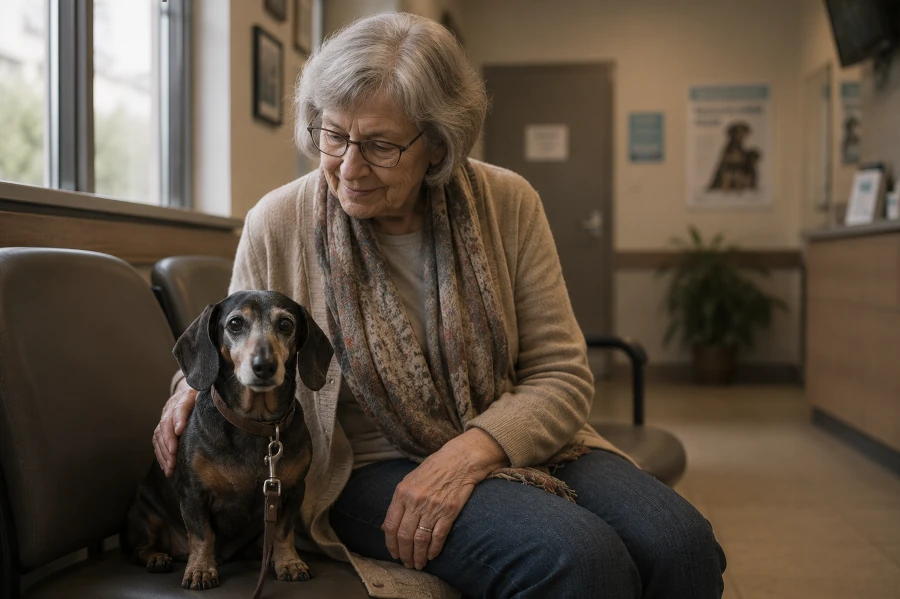
Let’s be honest.
Most dogs don’t love going to the vet.
And for senior dogs, stress can hit harder.
But you can make it easier.
Before the Visit
- Keep the routine calm
- Bring familiar items (blanket, toy)
- Avoid rushing or tension
Dogs pick up on your energy.
During the Visit
- Stay close and reassuring
- Let the vet guide the interaction
- Speak calmly
After the Visit
- Give your dog time to decompress
- Offer something positive (rest, comfort, gentle attention)
The goal isn’t to make your dog love the vet.
It’s to make it feel manageable.
Common Mistakes Owners Make
Not because they don’t care.
But because these things are easy to misunderstand.
“He’s Old, It’s Normal”
Yes, aging brings changes.
But not everything is “normal aging.”
Pain, discomfort, and disease are not things your dog should just endure.
Waiting for Clear Symptoms
By the time something is obvious, it’s often advanced.
Prevention always beats reaction.
Skipping Checkups Because “Nothing Changed”
That’s exactly when checkups matter most.
Because internal changes don’t always show externally.
Underestimating Small Changes
Small shifts are often the first clues.
And they’re easy to dismiss—until they’re not.
What These Checkups Really Give You
It’s not just about medical data.
It’s about time.
Time to:
- Catch problems early
- Adjust care before things worsen
- Reduce pain before it becomes constant
- Keep your dog active and comfortable longer
And maybe most importantly:
Time without regret.
The Part No One Talks About
There’s a quiet fear behind all of this.
You go to the vet…
and a part of you doesn’t want to hear bad news.
That’s normal.
But avoiding checkups doesn’t prevent reality.
It just delays your ability to respond to it.
And when you do face something difficult, you’ll want to know you didn’t miss the chance to act earlier.
A Different Way to See Vet Visits
Try to see them not as something you do when there’s a problem…
But as part of how you care for your dog every day.
Like feeding him.
Like walking him.
Like being there.
Because that’s what they really are:
An extension of your responsibility.
And your love.
In the End, It’s About Being Present
One day, your dog won’t be as strong as he used to be.
He won’t move the same.
He won’t react the same.
But he will still look at you the same way.
With trust.
And that trust means something.
It means:
“I rely on you to notice what I can’t explain.”
“I rely on you to take care of me when I can’t do it myself.”
Regular vet checkups are part of that promise.
Not dramatic.
Not emotional.
But deeply important.
Because they’re one of the ways you say:
“I’m paying attention.”
“I’m not guessing.”
“I’m here for you, even in the things you don’t show.”
And in the long run, that’s what makes the difference.
Not just in how long your dog lives.
But in how well he lives beside you.