
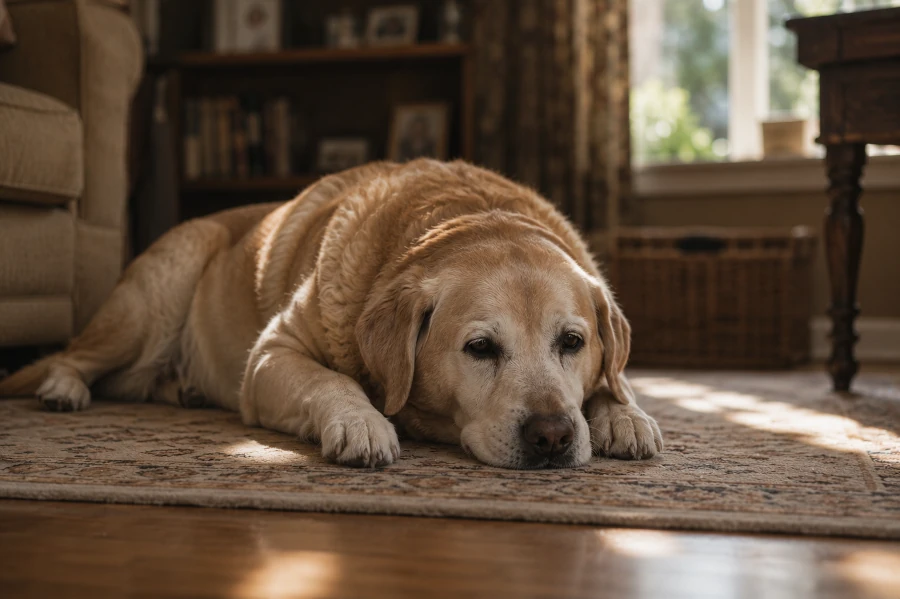
It simply looked like laziness.
My dog slept longer in the morning. He moved slower after naps. Sometimes he stayed lying down while I walked into another room instead of following me immediately like he always used to.
Nothing dramatic.
No sudden collapse.
No obvious illness.
Just less energy.
And because he was getting older, I told myself it was normal.
That’s what makes fatigue in senior dogs difficult to understand. Some slowing down is expected with age. But sometimes, what looks like “normal aging” is actually discomfort, illness, pain, or physical exhaustion building quietly in the background.
The hardest part is that fatigue rarely appears all at once.
It arrives gradually.
A shorter walk here.
A longer nap there.
A little less enthusiasm every week.
Until one day you realize your dog is no longer living with the same energy he once had.
In this guide we will cover:
- why older dogs lose energy
- the difference between normal slowing down and concerning fatigue
- common causes of low energy in senior dogs
- how fatigue affects daily life
- practical things you can do at home
- when low energy deserves veterinary attention
Why Senior Dogs Naturally Slow Down
Aging changes how the body produces and uses energy.
As dogs get older:
- muscles weaken
- joints become stiffer
- recovery takes longer
- sleep patterns change
- chronic inflammation may increase
Even healthy senior dogs usually become:
- less explosive physically
- slower to recover after activity
- more selective about movement
This is normal to a degree.
The important question is not:
“Is my dog slower?”
The important question is:
“How much has daily life changed?”
A healthy senior dog may still:
- enjoy walks
- engage with family
- respond enthusiastically to routines
Even if he moves more slowly than before.
The Difference Between Tiredness and Fatigue
This distinction matters more than many owners realize.
Tiredness is temporary.
Fatigue is persistent.
A tired dog rests and recovers.
A fatigued dog may:
- seem drained even after rest
- lose interest in normal activities
- move reluctantly
- sleep excessively without seeming refreshed
This difference becomes especially noticeable over time.
If your dog consistently seems “low” day after day, there may be more happening than simple aging.
Early Signs Many Owners Miss
Fatigue often appears in subtle ways before becoming obvious.
You might notice:
- sleeping more during the day
- slower walking pace
- hesitation before activity
- reduced interest in play
- slower response to routines
- less enthusiasm around food or walks
- difficulty standing after rest
- increased resting during walks
One overlooked sign is reduced social engagement.
Some dogs with low energy:
- interact less
- stop following owners around the house
- avoid busy environments
- seem emotionally distant at times
This is not always emotional withdrawal.
Sometimes the body simply feels too exhausted to stay fully engaged, especially in dogs already experiencing physical changes linked to aging [How a Dog’s Body Changes With Age].
Common Causes of Low Energy in Senior Dogs
Many different issues can contribute to fatigue.
Pain
Chronic pain drains energy constantly.
Dogs dealing with:
- arthritis
- joint pain
- spinal problems
often appear “lazy” when they are actually exhausted from discomfort.
These symptoms frequently overlap with signs of chronic pain in senior dogs.
Muscle loss
Loss of strength makes ordinary movement harder.
Simple tasks require more effort than before.
Heart problems
Reduced circulation and oxygen delivery can lower stamina dramatically.
Breathing difficulties
If breathing becomes harder, energy drops quickly.
Poor nutrition
Inadequate nutrition or reduced appetite may leave the body without enough fuel.
Chronic disease
Conditions involving:
- kidneys
- liver
- metabolism
- inflammation
can all reduce energy levels over time.
How Fatigue Changes Everyday Life
Low energy affects more than activity.
It changes routines.
You may notice:
- shorter walks
- more sleeping
- less excitement around familiar events
- slower movement through the house
- hesitation with stairs or jumping
And because these changes happen gradually, owners often adapt automatically.
Without realizing it, you may:
- shorten outings
- help more frequently
- avoid activities your dog struggles with
Eventually, the entire rhythm of life becomes quieter.
Not necessarily unhappy.
But slower.
Why Fatigue Can Affect Mood
Physical exhaustion influences emotional behavior too.
A dog who constantly feels tired may:
- become more irritable
- seem withdrawn
- lose patience more easily
- avoid interaction
- sleep in isolated places
This can be confusing because owners sometimes interpret fatigue as:
- sadness
- depression
- stubbornness
But often, exhaustion itself is shaping behavior.
Imagine feeling physically drained every day.
Even pleasant activities would become harder to enjoy fully.
These emotional shifts can resemble behavioral changes in senior dogs.
The Cycle Between Fatigue and Inactivity
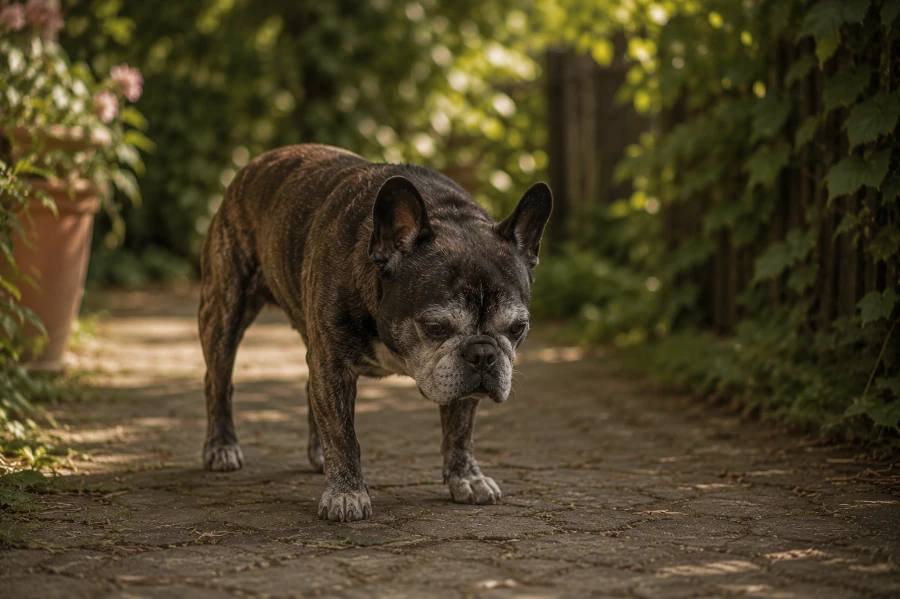
This is one of the biggest challenges in senior dogs.
Low energy reduces movement.
Reduced movement weakens muscles.
Weaker muscles increase fatigue.
And the cycle continues.
That’s why complete inactivity usually makes things worse over time.
The goal is not intense exercise.
It is maintaining enough movement to preserve:
- mobility
- circulation
- strength
- confidence
Even short gentle walks can help interrupt the cycle.
Why Rest Does Not Always Fix Fatigue
One confusing part of fatigue is that more rest does not always make your dog seem better.
You may think:
“He slept all afternoon. Why does he still look tired?”
But in senior dogs, fatigue is not always solved by sleep alone.
If the body is dealing with pain, inflammation, poor circulation, breathing effort, digestive strain, or chronic disease, rest may reduce the immediate demand on the body, but it may not remove the underlying burden.
That is why some older dogs sleep a lot and still seem drained.
They are not simply “catching up on rest.”
They may be living with a constant physical load that never fully disappears.
This can show up as:
- waking up stiff or slow
- needing time to “warm up”
- sleeping deeply but recovering poorly
- seeming tired after very small efforts
- losing interest even after long naps
This does not mean rest is useless.
Rest matters.
But if rest no longer restores your dog the way it used to, that is information, especially when combined with changes in sleep quality and routines.
It tells you the fatigue may be coming from something deeper than ordinary tiredness.
How to Adjust Activity Without Overdoing It
Helping a tired senior dog stay active is a delicate balance.
Too much activity can leave him exhausted.
Too little activity can make weakness worse.
The goal is to find the middle ground: enough movement to maintain strength, but not so much that the body struggles to recover.
A good approach is to think in smaller pieces.
Instead of one longer walk, your dog may do better with:
- two or three shorter walks
- slower routes
- more sniffing breaks
- fewer stairs
- flatter surfaces
- rest before and after activity
The walk does not need to look impressive.
It needs to feel successful.
A successful walk is one your dog can finish without looking depleted afterward.
Watch what happens after activity, not just during it.
If your dog seems fine on the walk but crashes for the rest of the day, the activity may still be too much.
If he comes home, drinks, rests, and then seems comfortable, the level is probably closer to right.
This kind of adjustment protects both energy and confidence, especially when trying to keep a senior dog active safely.
Because the real goal is not pushing through fatigue.
It is helping your dog keep moving in a way his older body can still trust.
What You Can Do at Home
You cannot eliminate aging.
But you can reduce unnecessary exhaustion.
Adjust exercise instead of stopping it
Shorter, more manageable activity is often better than long exhausting sessions.
Improve sleeping comfort
Supportive bedding can reduce stiffness and improve recovery.
Watch eating and hydration
Energy depends heavily on:
- nutrition
- hydration
- digestion
These factors become even more important in dogs dealing with dehydration in older age.
Reduce physical obstacles
Ramps, rugs, and easier access to important areas conserve energy.
Observe patterns carefully
Notice:
- when fatigue worsens
- what activities drain energy most
- whether recovery is changing over time
Patterns reveal more than isolated bad days.
When Fatigue Deserves Veterinary Attention
Some slowing down is normal.
But persistent or worsening fatigue deserves attention.
Contact a vet if you notice:
- sudden energy decline
- collapse or weakness
- major appetite changes
- breathing difficulty
- confusion
- severe exercise intolerance
- rapid weight loss
- inability to recover after mild activity
Fatigue is not a diagnosis.
It is a signal.
And persistent signals matter.
Common Mistakes Owners Make
Fatigue is easy to misunderstand.
Assuming “old dogs just sleep more”
Some increase in sleep is normal.
Extreme lethargy is not always normal.
Stopping activity completely
Too little movement often worsens weakness and fatigue.
Ignoring pain
Pain is one of the most common hidden causes of low energy.
Expecting youthful behavior
Senior dogs have different physical limits.
Waiting too long to investigate changes
Gradual decline still deserves attention.
Supporting Energy Instead of Chasing Youth
One of the most important mindset shifts is understanding this:
Your goal is not turning your senior dog into a young dog again.
It is preserving:
- comfort
- engagement
- stability
- manageable energy for daily life
Sometimes success looks small.
A comfortable walk.
A calmer recovery after activity.
A dog who still enjoys being part of everyday routines.
Those things matter deeply.
The Part That’s Hard to Watch
Fatigue changes the atmosphere of daily life.
You notice the silence more.
The longer naps.
The slower steps.
The pauses before movement.
And for many owners, that gradual quietness feels emotional because it contrasts so strongly with the energy their dog once had.
But there is something important hidden inside these slower moments too.
Connection does not disappear when energy fades.
Your dog still notices your presence.
Still follows familiar routines.
Still finds comfort beside you.
The relationship simply changes pace.
And sometimes, caring for a tired senior dog means learning to appreciate gentler moments instead of constantly comparing the present to the past.
Because even when energy declines, companionship can remain remarkably strong.