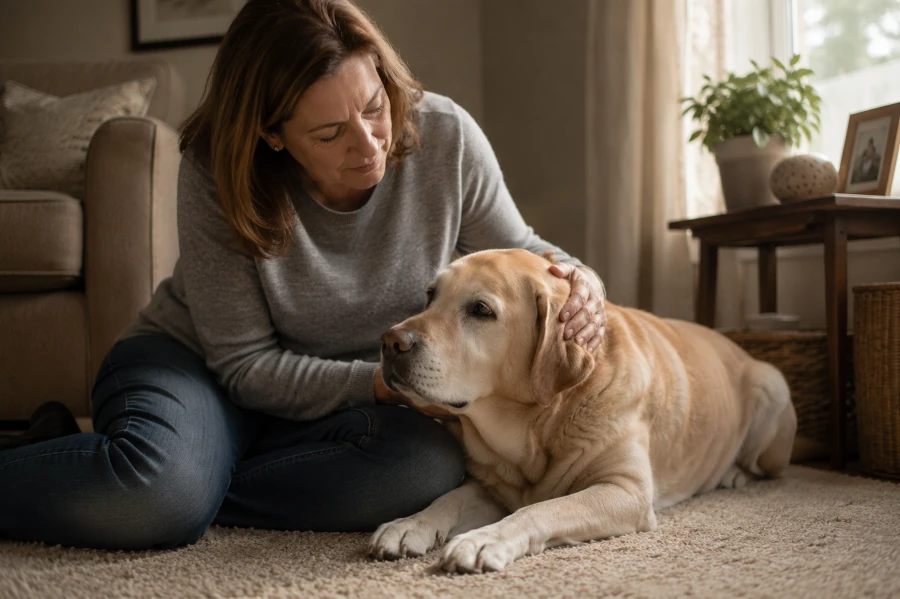
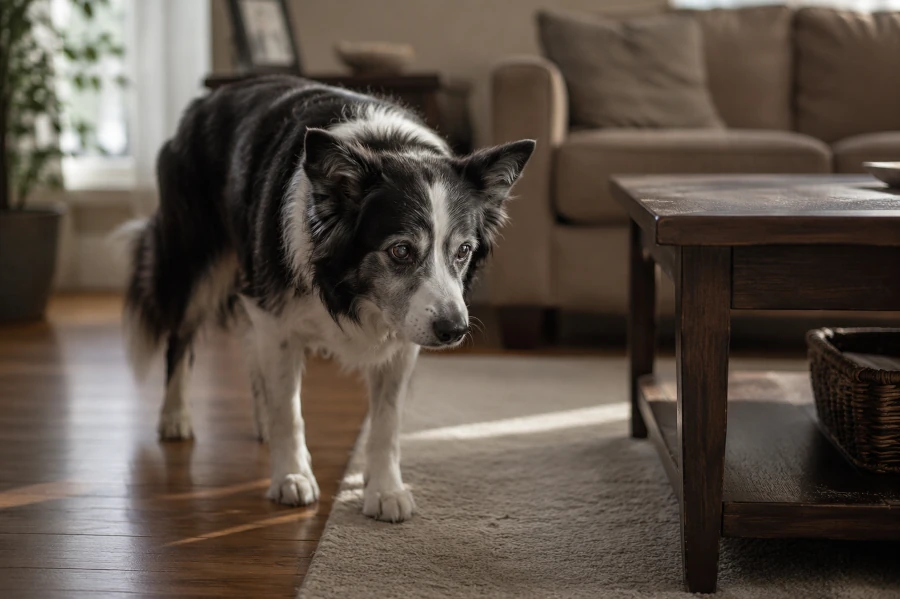
Most dogs do not suddenly go blind.
You notice something smaller.
Your dog hesitates before entering a room. He pauses at the top of the stairs. He bumps lightly into a chair that has always been there. Or he stops finding his toy unless you place it right in front of him.
At first, it is easy to explain it away.
Maybe he is tired.
Maybe the light is bad.
Maybe he is just getting old.
And sometimes that is partly true. Aging does change how a dog moves, reacts, and understands his surroundings. But when vision starts fading, there is often a different feeling to it. Your dog may not simply be slower. He may seem less certain.
That uncertainty can hurt to watch.
Because you remember the dog who used to run across the room without thinking, leap into the car, follow every movement of your hand, and look at you with eyes that seemed to understand everything.
Now those same eyes may look cloudy, distant, or confused.
But vision loss does not mean your dog’s life is suddenly over. It does not mean he cannot feel safe, happy, or connected to you. Many senior dogs adapt much better than their owners expect.
The important thing is to notice what is changing, understand what your dog needs, and make his world easier to navigate.
In this guide we will cover:
- the early signs of vision loss in senior dogs
- common causes of poor eyesight or blindness
- how vision loss affects daily life
- what you can do at home to help
- when to speak with your vet
- common mistakes that can make things harder
What Vision Loss Can Look Like at First
Vision loss does not always look dramatic.
Your dog may not suddenly walk into walls or seem completely blind. In many cases, the first signs are small and inconsistent.
You may notice that he is fine in familiar rooms but nervous in new places. He may walk confidently during the day but become hesitant at night. He may still recognize your voice and smell, but not react when you wave from across the room.
Some early signs include:
- bumping into furniture or doorframes
- hesitating before going up or down stairs
- missing treats when you place them on the floor
- becoming startled when touched unexpectedly
- avoiding dark rooms or shadowy areas
- staying closer to you on walks
- seeming confused in unfamiliar places
- struggling to find his bed, bowl, or toys
One of the biggest signs is a loss of confidence.
A senior dog with vision problems may still want to move, explore, and follow you, but he does it with more caution. He may lower his head, slow his steps, or pause before crossing a doorway.
This is not stubbornness.
It is not laziness.
It is often uncertainty.
This kind of uncertainty often connects to broader physical changes explained in.
And when you understand that, your reaction changes. Instead of pushing him forward, you begin to guide him.
Why Senior Dogs Lose Vision
There are several reasons an older dog may begin to lose his sight. Some are part of aging. Others are medical conditions that need attention.
One common cause is cataracts. Cataracts make the lens of the eye cloudy, so light cannot pass through clearly. You may notice a white or milky appearance in the eye. Some cataracts progress slowly, while others can interfere with vision more seriously.
Another common age-related change is nuclear sclerosis. This can make the eyes look bluish or cloudy, but it does not always cause major vision loss. Many owners mistake it for cataracts, which is why a vet check matters.
Glaucoma is more urgent. It involves pressure inside the eye and can be painful. A dog with glaucoma may squint, rub his eye, have redness, or seem very uncomfortable. This is not something to watch casually.
Some dogs also develop retinal problems, where the part of the eye that receives visual information gradually stops working well. In some cases, vision loss can happen slowly. In others, it can feel sudden.
Diabetes can also affect the eyes, especially if it leads to cataracts.
The important thing is this: you cannot know the cause just by looking at your dog.
Cloudy eyes do not always mean blindness.
Clear eyes do not always mean perfect vision.
Behavior often tells you as much as appearance.
Many of these conditions are part of a wider group.
How Vision Loss Affects Your Dog Emotionally
This is the part many owners feel deeply.
A dog losing vision may become more cautious, but that does not always mean he is suffering. Dogs rely heavily on smell, hearing, memory, and routine. Vision matters, but it is not their whole world.
Still, vision loss can make a dog feel less secure, especially at first.
He may startle more easily. He may dislike sudden touches. He may become clingier because your presence helps him orient himself. He may seem more anxious in busy spaces, around fast-moving dogs, or in places where the layout is unfamiliar.
You might also notice that he avoids situations he once enjoyed.
Maybe he no longer wants to walk on a certain path. Maybe he refuses stairs. Maybe he stops jumping onto the sofa. Maybe he waits for you before entering the garden.
It can feel like fear.
Sometimes it is.
But often it is your dog saying, in the only way he can:
“I need more information before I move.”
That is where you become his guide. Some of these changes can overlap with patterns seen.
Not by treating him like he is broken, but by making the world easier to read.
Daytime Vision, Night Vision, and Strange In-Between Moments
Vision loss is not always the same in every situation.
Some dogs struggle first in low light. They may move well during the day but become unsure in the evening. Shadows, dark corners, and reflective surfaces can confuse them.
Other dogs have trouble with depth. They may misjudge steps, curbs, or gaps. They may hesitate before getting into the car or stepping onto a different floor surface.
Some dogs can still detect movement but not details. So they may notice you walking across the room, but fail to find a small treat on the floor.
This is why vision loss can seem inconsistent.
One day your dog appears almost normal. The next day he bumps into a table leg.
That does not mean he is pretending or being difficult. It means his remaining vision may depend on light, contrast, distance, and familiarity. In some cases, this confusion is similar to what happens.
A familiar hallway is easy.
A dim staircase is not.
A room with furniture moved around can feel like a maze.
Practical Changes That Help at Home
You do not need to redesign your entire house.
In fact, one of the best things you can do is keep things the same.
A dog with reduced vision builds a mental map of his environment. He remembers where the sofa is, where the water bowl sits, where the door opens, and how many steps lead to the garden.
When you move furniture, bowls, beds, or rugs, you erase part of that map.
Start with simple changes:
- keep furniture in the same place
- avoid leaving bags, shoes, or boxes in walking paths
- use rugs or mats to create texture cues
- place water and food bowls in consistent spots
- keep stairs blocked if they become risky
- use night lights in dark hallways
- speak before touching your dog
- approach from the front or side, not suddenly from behind
Your voice becomes more important now.
Simple words can help your dog understand what is happening. You can use short, consistent cues like:
- “step”
- “wait”
- “careful”
- “here”
- “slow”
- “up”
- “down”
Do not overload him with words. Use the same few cues again and again. Over time, they become part of his safety system.
Creating this kind of stable environment is a key part.
Helping Your Dog on Walks
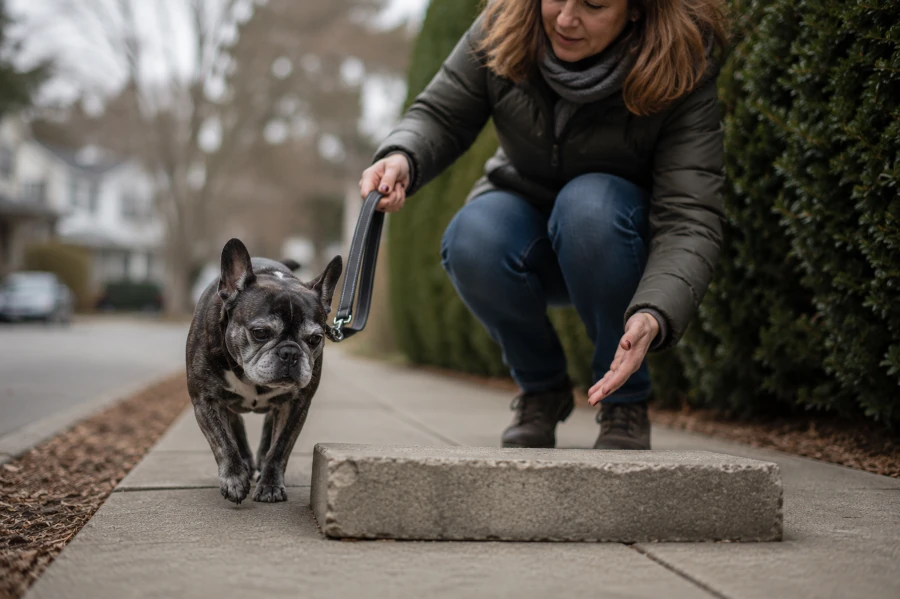
Walks may need to change, but they do not always need to stop.
A senior dog with vision loss can still enjoy fresh air, smells, routine, and time with you. But he may need slower, more predictable walks.
Choose familiar routes when possible. Avoid chaotic areas with fast bikes, loose dogs, or sudden obstacles. Keep him on a secure leash and give him time to sniff.
Sniffing is not wasted time. For a dog with poor eyesight, scent becomes even more important. It helps him understand where he is.
You may need to slow your pace. That can be frustrating if you are used to walking quickly, but for your dog, the walk is not about distance anymore. It is about information, comfort, and connection.
Watch for signs that the walk is too much:
- stopping repeatedly
- pulling back toward home
- trembling
- panting without heat or exertion
- refusing curbs or steps
- staying glued to your leg
If this happens, shorten the walk. Make it easier. Let him succeed.
Confidence matters more than mileage.
Understanding how much activity is still appropriate is part of it.
When Vision Loss Changes Behavior
Sometimes vision loss looks like a behavior problem.
A dog may become snappy if touched suddenly. He may bark at shapes, shadows, or people approaching too fast. He may become more clingy, restless, or nervous.
This does not mean his personality has changed completely.
It may mean he feels less in control of his surroundings.
Imagine resting peacefully, then being touched without warning because you did not see someone coming. Even a gentle dog can react.
That is why everyone in the home needs to adjust.
Children should be taught not to surprise him. Visitors should let him smell them before touching him. Other dogs should not be allowed to rush into his space.
Your senior dog may need more patience, more predictability, and more personal space.
That is not spoiling him.
That is respecting the fact that his world has become harder to read.
When You Should Call the Vet
Any noticeable change in vision deserves a vet conversation, especially if it appears suddenly.
Call your vet promptly if you notice:
- sudden blindness or severe disorientation
- red, swollen, or painful-looking eyes
- squinting or keeping one eye closed
- pawing at the eye
- cloudy eyes that seem to worsen quickly
- bumping into things suddenly
- major behavior changes
- signs of diabetes, such as increased thirst or urination
Some causes of vision loss are not reversible, but others may be treatable or manageable. Even when vision cannot be restored, diagnosis still helps.
It tells you what your dog is dealing with.
And once you know that, you can make better choices.
Learning to notice subtle signals early is also essential.
Common Mistakes to Avoid
The first mistake is rearranging everything to “make it better.”
It feels helpful, but it often makes things worse. Your dog depends on memory. Keep his world stable.
The second mistake is overprotecting him too much.
If you carry him everywhere, block every movement, and prevent all exploration, he may lose confidence faster. Safety matters, but so does independence.
The third mistake is assuming he is miserable because he cannot see well.
Your grief is real. But your dog may be adapting better than you think. Do not project only human fear onto his experience.
The fourth mistake is ignoring pain.
Vision loss itself may not always hurt, but some eye conditions do. Redness, squinting, pressure, or rubbing should never be dismissed.
The fifth mistake is getting impatient.
A blind or visually impaired senior dog may need more time. More pauses. More reassurance.
He is not trying to make your life harder.
He is trying to understand his.
The Part That Matters Most
Vision loss changes things.
There is no point pretending it does not.
It changes how your dog moves through the house. It changes how he handles stairs, walks, visitors, shadows, and sudden touch. It changes your routine too.
But it does not erase your relationship.
Your dog still knows your voice.
He still knows your smell.
He still knows the feeling of you nearby.
And often, that becomes more important than ever.
You may become his landmark. His reassurance. His familiar point in a world that sometimes feels uncertain.
So speak to him before you touch him. Keep his paths clear. Let him move at his own pace. Celebrate the small moments when he finds his way, settles into his bed, or follows your voice across the room.
He does not need a perfect world.
He needs a predictable one.
And he does not need you to panic over everything he has lost.
He needs you to help him trust what remains.
Because even when his sight fades, the bond between you can stay clear, steady, and bright.