
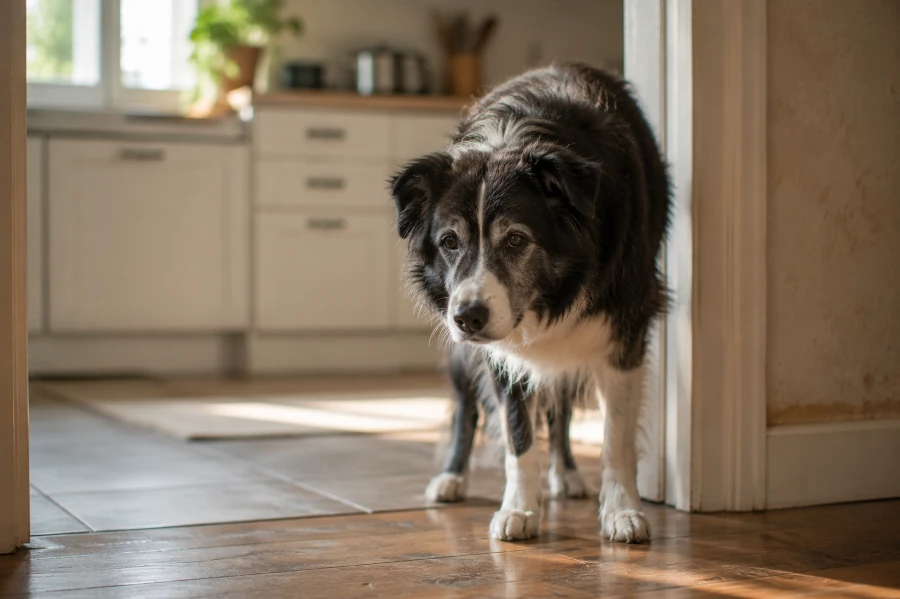
It wasn’t the symptom itself that caught my attention first.
There was no sudden collapse. No dramatic change that made me stop everything and panic.
It was more subtle than that.
He was still eating, but not with the same interest. Still moving, but with less energy. Still present, but somehow… quieter.
At first, it was easy to explain.
Maybe just a bad day. Maybe the weather. Maybe age.
But then those small changes didn’t go away.
They stayed. And slowly, they started to feel connected.
If your dog has been acting “slightly different” in a way you can’t fully explain, you’re not imagining it. And sometimes, those changes don’t come from muscles or joints.
Sometimes, they come from something deeper.
In this guide we will cover:
- What liver problems actually mean in older dogs
- The early signs that are easy to miss
- How these issues can affect behavior and daily life
- What changes are normal vs. concerning
- What you can realistically do right now
What Liver Problems Really Mean
The liver is one of those organs you rarely think about — until something changes.
It works quietly in the background, helping with:
- filtering toxins
- processing nutrients
- supporting digestion
- maintaining overall balance in the body
When the liver isn’t working properly, the effects don’t always show up immediately.
That’s part of what makes liver problems so difficult to recognize.
In senior dogs, these issues often develop gradually.
The liver becomes less efficient over time. It doesn’t fail all at once. It slows down.
And because many other systems are also changing with age, it’s not always clear where the problem is coming from.
That overlap creates confusion.
You see a change, but you’re not sure what it means.
Why It’s So Easy to Miss
Liver problems rarely begin with clear, specific symptoms.
They tend to show up as general changes.
You might notice:
- reduced appetite
- mild weight loss
- lower energy
- occasional digestive issues
- subtle behavioral shifts
- in some casese, itching or skin-related changes.
None of these scream “liver problem.”
That’s why they’re often overlooked.
They look like normal aging.
And when something looks normal, we don’t question it.
But the body doesn’t always separate things neatly.
A small internal imbalance can create a chain of subtle effects.
And over time, those effects become more noticeable.
The difficulty is not seeing the signs.
It’s understanding what they mean.
Early Signs That Are Easy to Dismiss
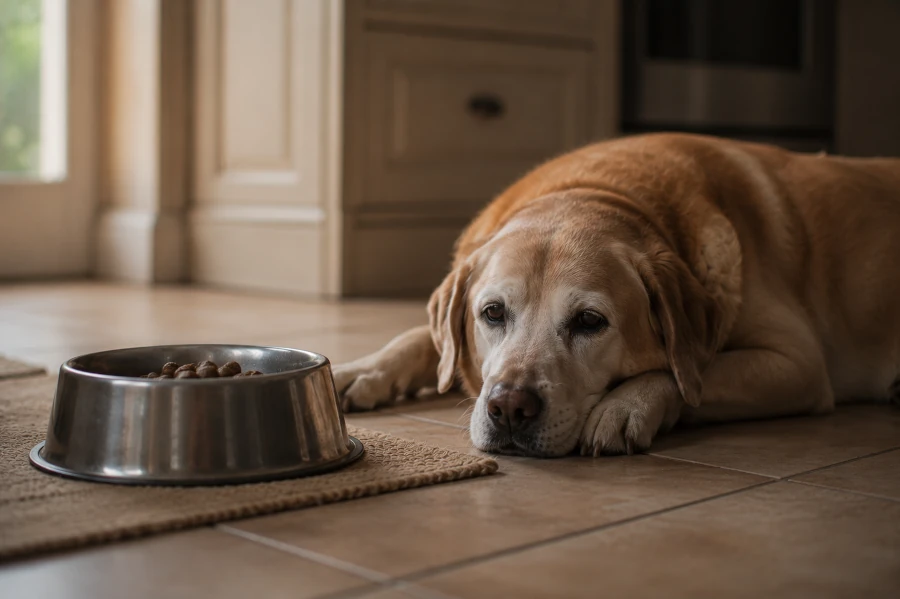
In the early stage, everything feels manageable.
Your dog may:
- eat a little less
- seem slightly more tired
- have occasional stomach sensitivity
- lose interest in certain foods
Nothing extreme.
Nothing urgent.
And that’s exactly why it slips under the radar.
You adjust.
You adapt.
You start to think, “This is just how things are now.”
But when these changes repeat, they stop being random.
They become a pattern.
And patterns matter.
They tell you that something is shifting — even if you don’t yet know what.
When It Starts Affecting Daily Life
As liver function declines further, the changes tend to become more consistent.
You may notice:
- more noticeable weight loss
- irregular eating habits
- vomiting or digestive discomfort
- increased tiredness that doesn’t improve with rest
Some dogs also show behavioral changes.
They may seem less engaged, less responsive, or slightly disoriented at times.
Others become more restless, as if they can’t fully settle.
This stage is often confusing.
Because the signs are still not specific enough to point clearly in one direction.
It still feels like a collection of small issues.
But together, they form something bigger.
How It Progresses Over Time
Liver problems don’t follow a perfectly predictable path.
But there is a general pattern.
At first:
- mild, inconsistent symptoms
- small changes in appetite and energy
Then:
- more regular digestive issues
- noticeable weight changes
- clearer behavioral differences
In more advanced stages, signs can become more serious:
- significant lethargy
- persistent vomiting
- visible discomfort
- more pronounced confusion or disorientation
But progression is not always linear.
Some days seem better.
Others feel worse.
That variability can be misleading.
It can make you think things are improving — when in reality, they are fluctuating.
Understanding that pattern helps you stay grounded.
It prevents you from overreacting to single moments, but also from ignoring consistent change.
What You Can Actually Do
You don’t need to manage everything perfectly.
But there are things that make a real difference.
Start with the basics.
Support hydration
A body that is not functioning efficiently needs support.
Make sure your dog has easy access to fresh water at all times.
Encourage drinking without forcing it.
Simplify feeding
Appetite can fluctuate.
Instead of pushing large meals:
- offer smaller portions
- keep meals consistent
- reduce unnecessary changes
The goal is not to control every bite.
It’s to make eating easier, not stressful.
Keep routines steady
Consistency reduces strain.
Try to keep:
- feeding times regular
- rest areas comfortable
- daily rhythm predictable
A stable environment helps the body cope better.
Reduce unnecessary stress
Physical and emotional stress can make everything harder.
Avoid sudden changes, chaotic environments, or intense activity.
Calm, predictable days help more than you might expect.
Common Mistakes to Avoid
These are very common:
- assuming it’s just aging
- ignoring repeated mild symptoms
- changing too many things at once
- reacting emotionally to every small fluctuation
- waiting for a clear, dramatic sign
Liver problems rarely give you a dramatic starting point.
They build slowly.
And the earlier you recognize the pattern, the more options you have.
What many owners don’t realize is that this isn’t always just normal aging.
What You Can Do Right Now
If something feels off, start here:
- observe patterns over several days
- pay attention to appetite and energy
- notice changes in behavior
- keep the environment simple and stable
- speak with your vet if changes persist
You don’t need to panic.
But you shouldn’t ignore consistent changes either.
Awareness is what allows you to act at the right time.
Conclusion (the part that matters most)
Liver problems don’t announce themselves.
They show up quietly, through small changes that are easy to explain away.
A meal skipped here. A slower movement there. A day with less energy.
Individually, they don’t seem important.
Together, they tell a story.
And once you begin to see that story, everything shifts.
You stop looking for one big sign.
You start paying attention to patterns.
And that changes how you respond.
Not with panic.
Not with perfection.
But with steady, attentive care.
Because your dog doesn’t need you to solve everything at once.
He needs you to notice.
To adapt.
To stay present.
And even when things feel uncertain, even when you’re not sure what’s happening…
that presence is something he still feels.
And that matters more than you think.