

I started noticing it slowly.
My dog still ate with enthusiasm, but something felt different. He no longer finished meals as quickly as before. Some days he seemed hungrier. Other days he walked away from the bowl after only a few bites.
At first, I assumed it was normal aging.
But over time, I realized something important: aging changes the way a dog relates to food.
Not just physically.
Emotionally too.
Food becomes less about excitement and more about comfort, digestion, energy, and routine.
And that means the diet that worked perfectly at five years old may no longer support the same dog at eleven.
That realization can feel overwhelming at first. There are endless opinions online, conflicting advice, and constant pressure to feed “the perfect diet.”
But proper nutrition for senior dogs is often simpler than people think.
It starts with paying attention.
In this guide we will cover:
- how nutritional needs change with age
- common feeding mistakes with senior dogs
- signs your dog’s diet may no longer work
- how weight affects long-term health
- practical feeding adjustments that help
- when diet changes should happen slowly
Why Nutrition Changes as Dogs Age
Aging affects almost every system in a dog’s body.
Metabolism slows down.
Muscle mass decreases more easily.
Digestion becomes less efficient.
Hydration becomes more important.
At the same time, many older dogs become less active than they once were.
That creates a difficult balance.
Some dogs gain weight easily because they burn fewer calories. Others lose weight because illness, dental problems, or digestive changes reduce appetite.
This is why senior nutrition should never be based only on age.
The same diet may work perfectly for one older dog and completely fail for another.
Dogs experiencing broader physical changes often benefit from understanding how the aging process affects the entire body.
The Biggest Mistake Owners Make
One of the most common mistakes is continuing the exact same feeding routine for years without reassessing it.
Many owners think:
“He has always eaten this food, so why change?”
But aging changes nutritional needs gradually.
A dog who tolerated rich treats at six years old may struggle with them at twelve.
An older digestive system often becomes more sensitive over time, especially in dogs dealing with stomach and intestinal discomfort in later years.
Signs Your Dog’s Diet May No Longer Be Working
Nutritional problems rarely appear suddenly.
The signs are usually subtle at first.
You may notice:
- weight gain
- weight loss
- lower energy
- softer stool
- constipation
- increased gas
- dry skin
- dull coat
- reduced appetite
- slower recovery after activity
Sometimes owners blame aging itself when the real issue is that the current diet no longer matches the dog’s needs.
Patterns matter more than isolated bad days.
Weight Matters More Than Many Owners Realize
Extra weight becomes harder on the body with age.
Even a few additional pounds can increase stress on:
- joints
- heart
- lungs
- mobility
- energy levels
Older dogs carrying excess weight often struggle more with stiffness and fatigue.
Dogs dealing with mobility changes may already be placing additional strain on their bodies, especially those experiencing difficulty walking.
At the same time, sudden or unexplained weight loss should never be ignored.
In senior dogs, weight loss can sometimes indicate underlying illness rather than simple aging.
How Activity Level Changes Nutritional Needs
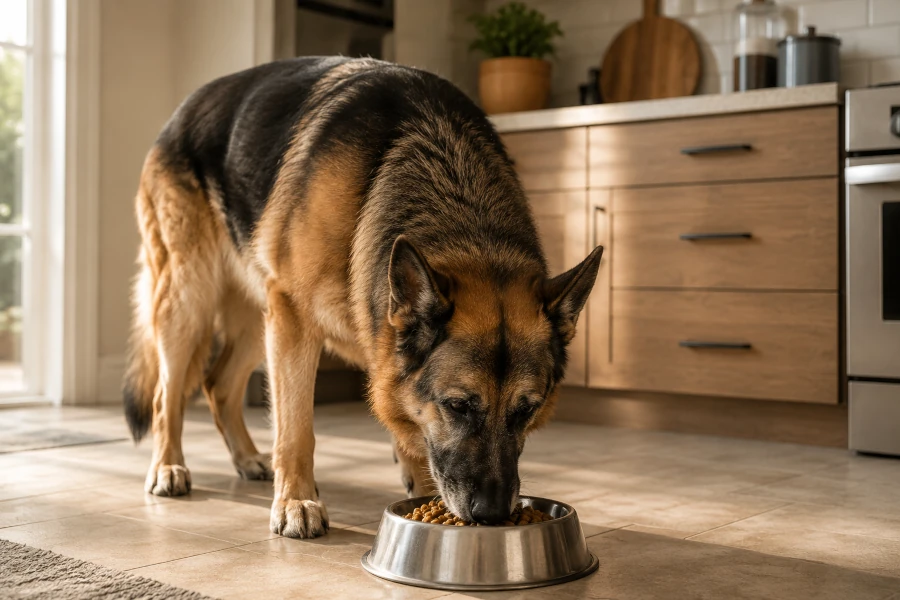
One of the reasons senior nutrition becomes confusing is that aging does not affect every dog the same way.
Some older dogs remain active well into their later years.
Others slow down dramatically within a short period of time.
And that difference changes how the body uses calories.
A highly active senior dog may still need substantial nutritional support to maintain muscle mass and energy.
Meanwhile, a dog who spends most of the day resting may gain weight quickly on the exact same food.
This is why feeding guidelines printed on bags are only a starting point.
Your dog’s real condition matters more than generic charts.
Pay attention to:
- body shape
- energy levels
- muscle tone
- stamina during walks
- changes in mobility
Many owners continue feeding based on old habits even after their dog’s daily activity has changed significantly.
But reduced movement affects much more than weight.
It also affects:
- joint stress
- digestion
- sleep quality
- cardiovascular health
- overall comfort
Dogs who are becoming less active often benefit from adjustments that go beyond food alone, especially when owners start focusing on safe movement routines for aging dogs.
At the same time, underfeeding an active senior dog can accelerate weakness and muscle loss.
The goal is not simply “less food because he’s old.”
The goal is balance.
And balance changes as your dog changes.
Protein Is Still Important
Many people assume older dogs automatically need low-protein diets.
That is not always true.
Healthy senior dogs still need protein to maintain muscle mass and strength.
In fact, inadequate protein may contribute to muscle loss and weakness over time.
The important thing is balance and individual needs.
Some medical conditions require dietary adjustments, but reducing protein unnecessarily can create new problems.
Digestion Often Becomes More Sensitive
Aging digestive systems usually tolerate inconsistency less effectively.
Sudden food changes, rich table scraps, or excessive treats may cause:
- diarrhea
- vomiting
- bloating
- discomfort after meals
This is why stability becomes extremely important.
Consistent meals often help more than constantly switching foods searching for perfection.
Dogs with chronic stomach sensitivity sometimes benefit from foods designed specifically for easier digestion in older dogs.
Why Sudden Diet Changes Often Backfire
When owners notice digestive issues or appetite changes, the instinct is often immediate action.
New food.
New treats.
New supplements.
New feeding schedules.
The intention is good.
But older digestive systems usually handle sudden changes poorly.
Even switching to a “better” food too quickly can trigger:
- diarrhea
- vomiting
- gas
- food refusal
- stomach discomfort
This creates a frustrating cycle.
The owner changes food because the dog feels unwell.
Then the sudden food change creates even more digestive stress.
In many cases, gradual transitions are far safer.
That means introducing changes slowly over several days while monitoring:
- stool quality
- appetite
- energy
- behavior after meals
Patience matters more than speed.
And consistency matters more than constantly chasing the newest recommendation online.
Dogs with sensitive digestion may especially benefit from understanding how to switch foods without upsetting the stomach.
Sometimes the best nutritional decision is not a dramatic overhaul.
Sometimes it is simply making fewer sudden changes.
Hydration Is Part of Nutrition
Many owners focus entirely on food and forget water.
But hydration becomes increasingly important with age.
Older dogs are more vulnerable to dehydration because they may:
- drink less
- absorb water less efficiently
- experience chronic illness
- lose fluids more easily
Poor hydration affects:
- digestion
- kidney function
- energy
- stool quality
If hydration becomes difficult, simple habits like refreshing water frequently and placing bowls in easier-to-reach areas can help significantly.
Feeding Routine Matters Too
Nutrition is not only about ingredients.
Routine matters.
Older dogs often do better when meals happen:
- at consistent times
- in calm environments
- without stress or interruptions
Some dogs also digest food more comfortably with smaller meals spread throughout the day.
Predictability reduces digestive stress.
And for senior dogs, reduced stress often improves appetite too.
Common Feeding Mistakes
Overfeeding treats
Treats add up quickly, especially when activity levels decline.
Changing foods too often
Frequent changes can create digestive instability.
Ignoring small appetite changes
Subtle hesitation around food may signal discomfort.
Feeding based only on marketing
Expensive food is not automatically better for every dog.
Assuming all seniors need the same diet
Nutritional needs vary enormously depending on health, weight, and activity.
When a Vet Should Be Involved
Diet adjustments at home are reasonable for mild situations.
But veterinary guidance becomes important if you notice:
- persistent vomiting
- chronic diarrhea
- rapid weight loss
- refusal to eat
- severe lethargy
- major appetite changes
- difficulty chewing
- signs of pain
Sometimes nutrition problems are actually symptoms of deeper medical conditions.
The Emotional Side of Feeding an Older Dog
Food becomes emotional as dogs age.
Owners often express love through feeding.
So when a senior dog stops eating normally, it can feel frightening in a very personal way.
You start watching every meal.
Every bite.
Every hesitation.
And sometimes that anxiety leads people to overreact, constantly changing foods or offering endless extras trying to “fix” the situation immediately.
But older dogs usually benefit more from calm consistency than frantic experimentation.
Small thoughtful adjustments matter far more than dramatic changes.
What Proper Nutrition Really Means
Proper nutrition is not about chasing perfection.
It’s about supporting your dog’s real daily life.
Comfort.
Energy.
Digestion.
Mobility.
Stability.
A good diet helps your dog feel better physically, but it also helps preserve routines, enjoyment, and quality of life.
And in senior years, those things become deeply connected.
Because when you feed an older dog well, you are not simply filling a bowl.
You are helping him move through aging with a little more strength, a little more comfort, and a little more dignity every single day.