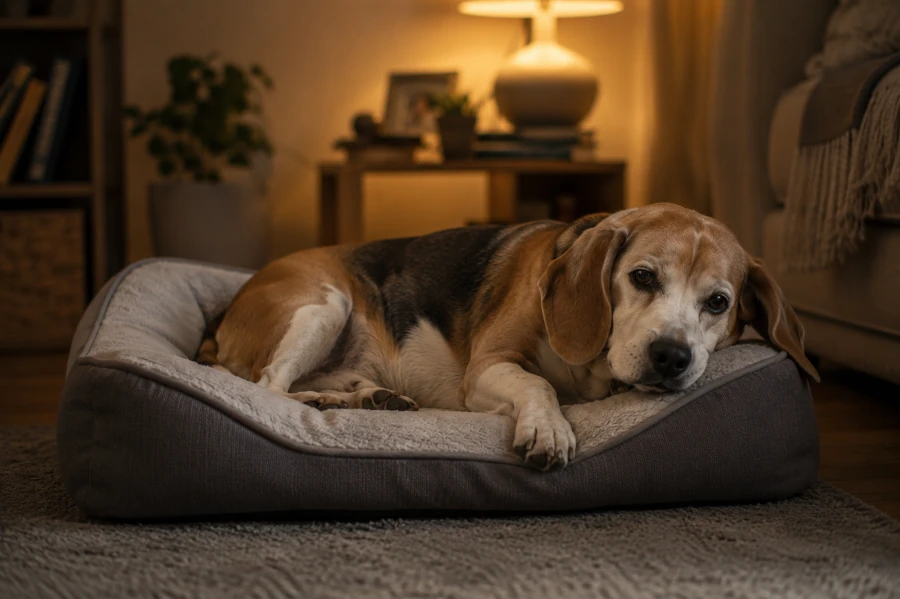
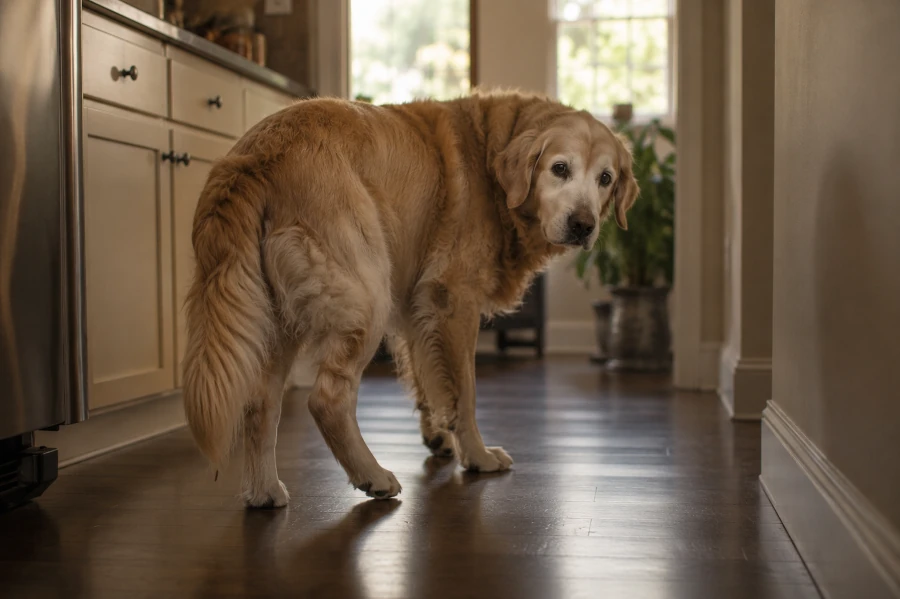
I thought it wasn’t a serious issue initially.
He was still walking, still following me from room to room, still reacting when I called his name. Nothing dramatic. Nothing that made me stop and think, “Something is wrong.”
But there were small moments.
A pause before getting up. A slower turn when changing direction. That slight hesitation before jumping onto the couch — followed by a quiet decision not to try.
No whining. No limping. Just… a different way of moving.
At first, it’s easy to ignore.
You tell yourself it’s normal. That he’s just getting older. That it’s nothing to worry about.
But when those small moments start repeating, something inside you notices.
If you’re here, you’ve probably seen something similar.
And you’re trying to understand whether what you’re seeing is just aging… or something more.
In this guide we will cover:
- What hip dysplasia really is
- Why it often becomes more visible in older dogs
- The early signs most people miss
- How it progresses over time
- What actually helps
What Hip Dysplasia Really Is
Hip dysplasia is a problem in how the hip joint fits together.
In a healthy joint, the ball and socket move smoothly. The motion is stable, controlled, and almost effortless.
With hip dysplasia, that fit isn’t perfect.
The joint becomes slightly unstable. Movement creates friction. And over time, that friction leads to wear, inflammation and discomfort.
What’s important to understand is that this condition usually doesn’t start in old age.
Many dogs that show signs later in life have had it for years — sometimes since they were young.
What changes over time is not just the joint.
It’s the body’s ability to deal with it.
When a dog is younger, muscles help stabilize the joint. Movement feels easier. Recovery is faster.
As he ages, things shift:
- muscle mass decreases
- joint stability declines
- inflammation becomes more common
And what was once manageable slowly becomes noticeable.
Why It Becomes More Visible Over Time
One of the most confusing things about hip dysplasia is how it appears.
It can feel sudden.
You might think, “He was fine before.”
But it’s rarely sudden.
It’s gradual.
Over time, your dog adapts in small ways:
- shifting weight slightly
- avoiding certain movements
- compensating with other muscles
These adjustments are subtle.
So subtle that you don’t notice them at first.
In many cases, what looks like a minor issue can actually point to a more complex internal problem.
But eventually, the body can’t compensate the same way anymore.
That’s when you begin to see changes:
- stiffness
- reduced mobility
- different posture
Not because the problem just appeared, but because it reached a point where it can no longer stay hidden.
The Early Signs Most People Miss
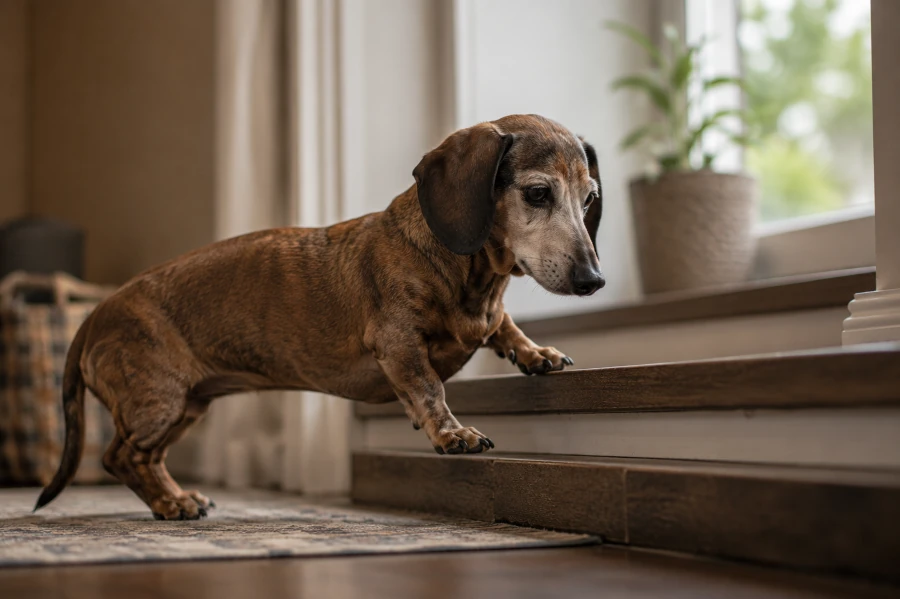
Hip dysplasia doesn’t usually start with obvious pain.
It starts with hesitation.
You might notice:
- a pause before jumping
- reluctance to use stairs
- slower transitions from lying down to standing
- less enthusiasm during walks
Sometimes the clearest sign is not what your dog does.
It’s what he stops doing.
That’s easy to overlook.
Because there’s no single moment where everything changes.
Just a slow shift.
There are also smaller details:
- stiffness after rest
- taking longer to settle down
- choosing softer places to lie
- moving more carefully than before
Each of these signs, on its own, doesn’t seem important.
But together, they form a pattern of early decline.
And that pattern often tells you more than any single symptom.
How It Progresses Over Time
If nothing changes, hip dysplasia tends to get worse gradually.
At first:
- mild stiffness
- occasional hesitation
Then:
- more consistent discomfort
- reduced activity
- visible effort when moving
Later on:
- difficulty getting up
- shorter, slower walks
- muscle loss in the hind legs
- possible irritability when touched
But progression is not always steady.
Some days feel better.
Others feel worse.
Weather, activity, and rest all influence how your dog feels.
This can be confusing.
You might see a good day and think everything is fine.
But fluctuation is part of the condition.
It doesn’t mean the problem is gone.
It just means it’s not constant yet.
What Actually Helps
You don’t need to fix everything at once.
And you don’t need extreme solutions.
What matters most is consistency.
Movement, but controlled
Movement is still important.
Avoiding activity completely can actually make things worse.
What helps:
- short, regular walks
- a steady pace
- flat, predictable surfaces
What to limit:
- jumping
- sudden bursts of activity
- long, exhausting walks
It’s not about doing less.
It’s about doing things differently.
Weight management
Even a small amount of extra weight puts additional pressure on the hips.
And because that pressure is constant, it adds up.
Keeping your dog at a healthy weight can significantly reduce stress on the joints.
Daily comfort
Your dog’s environment plays a bigger role than you might think.
Simple adjustments can make movement easier:
- softer resting areas
- easier access to favorite spots
- reducing the need to use stairs
- improving traction on slippery floors
These small changes reduce effort throughout the day.
And that reduction makes a real difference over time.
Support options
Depending on the situation, additional support may help:
- joint supplements
- anti-inflammatory medications (with veterinary guidance)
- physical therapy
Not every dog needs all of these.
But most dogs benefit from some kind of support.
Common Mistakes to Avoid
These are very common:
- assuming it’s “just aging”
- waiting for obvious pain
- stopping activity completely instead of adapting it
- ignoring repeated small signs
- underestimating weight gain
These mistakes don’t come from lack of care.
They come from not recognizing what the signs really mean.
What You Can Do Right Now
If you suspect hip dysplasia, start simple:
- observe how your dog gets up
- notice hesitation before movement
- reduce high-impact activities
- make small adjustments at home
- talk to your vet if signs continue
You don’t need a perfect plan.
You just need awareness.
And small, consistent changes.
Conclusion (the part that matters most)
Hip dysplasia doesn’t usually arrive as a clear moment.
It shows up in small decisions your dog begins to make.
The pause before moving.
The slower walk.
The quiet choice to avoid something that used to be easy.
And those moments are easy to ignore.
Until they repeat.
Until they become a pattern.
But once you see that pattern, everything changes.
Not because the situation gets worse.
But because you understand it better.
And that understanding allows you to adapt.
To make things easier.
To meet your dog where he is now, instead of expecting what used to be.
He may move differently.
He may slow down.
But he’s still there.
Still following you.
Still watching you.
Still choosing to stay close.
And that, more than anything else, is what matters.