
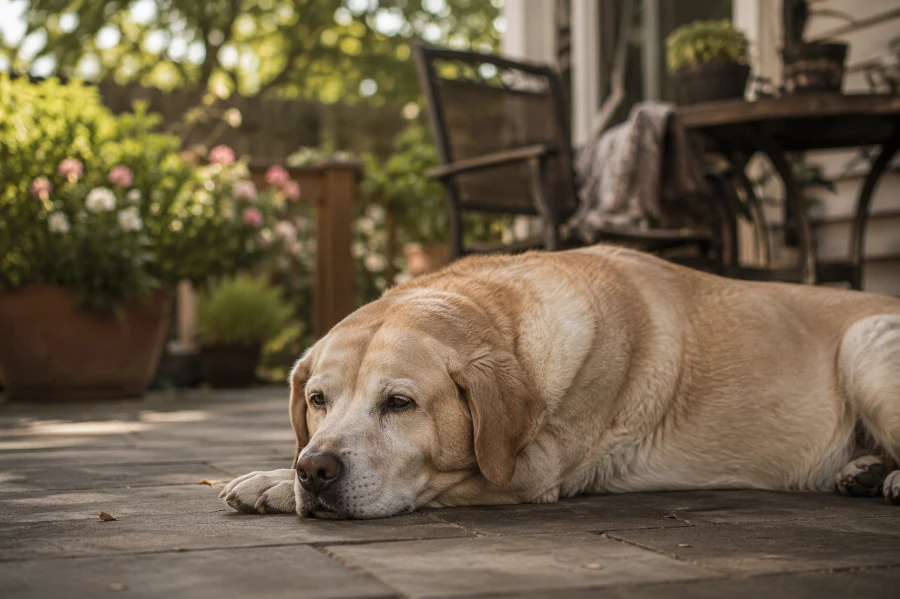
At first, it didn’t look like pain.
He just hesitated.
There was a moment — right before jumping onto the couch — where he stopped, looked at it, and then chose not to try. No whining. No limping. Just a quiet decision.
I remember thinking, “That’s strange.”
But then it happened again the next day. And the day after.
And slowly, without any clear moment where everything changed, something started to feel different.
If your dog has begun moving more slowly, avoiding things he used to do without thinking, or simply “not acting like himself,” arthritis may already be part of his life.
And in many cases, by the time it becomes obvious, it has already been there for a while.
That’s the tricky part.
It doesn’t arrive loudly.
It builds quietly.
And if you don’t know what to look for, it’s easy to miss the early signals — the ones that actually matter the most.
In this guide we will cover:
- What arthritis really is in dogs
- The early signs most owners miss
- How it progresses over time
- What actually helps (and what doesn’t)
- How to keep your dog comfortable every day
What Arthritis Really Is (Without the Complicated Stuff)
Arthritis is, simply put, inflammation in the joints.
Inside every joint, there are smooth surfaces that allow bones to move without friction. Over time, those surfaces begin to wear down.
Movement becomes less fluid.
Friction increases.
And discomfort starts to appear.
But this doesn’t happen all at once.
It’s a slow process.
Often so slow that you don’t notice when it begins.
Your dog doesn’t suddenly struggle to move.
He just… starts moving differently.
And that difference is subtle.
Many owners don’t realize that these symptoms are often linked to underlying medical conditions rather than normal aging.
One of the most important things to understand is this:
Arthritis is not just a physical problem.
It changes how your dog experiences movement itself.
Every jump becomes something to evaluate.
Every step becomes slightly more intentional.
Over time, this creates behavioral changes.
Your dog may start avoiding certain actions not because he’s tired — but because he has learned, quietly, that those actions lead to discomfort.
That’s why arthritis is often misunderstood.
It’s not always about visible pain.
It’s about invisible adaptation.
And most of the time, what you see is only a small part of what’s actually happening.
Why Dogs Hide Pain (And Why Arthritis Is Easy to Miss)
Dogs are extremely good at hiding discomfort.
Not because they want to.
Because it’s part of their instinct.
In nature, showing weakness can make an animal vulnerable.
And even though your dog lives in a safe home, that instinct doesn’t disappear.
So instead of showing pain clearly, your dog adapts.
He avoids.
He slows down.
He changes habits.
And this creates confusion.
Because nothing looks “wrong.”
There’s no limping. No crying. No obvious signs.
Just small changes that are easy to explain away.
“He’s getting older.”
“He’s just tired.”
“He doesn’t feel like it today.”
But when these small changes repeat, they’re not random.
They are signals.
And recognizing them early is what makes the biggest difference.
The Early Signs Most People Overlook
This is where most people get it wrong.
They wait for limping.
But arthritis usually starts much earlier — and much quieter.
You might notice:
- Stiffness after sleeping or resting
- Slower movements, especially in the morning
- Hesitation before jumping or climbing
- Less interest in walks or play
- Sitting or lying down more carefully
Sometimes it’s not even what your dog does.
It’s what he stops doing.
That’s often the clearest sign.
Because stopping something that used to be automatic is rarely random.
There are also micro-changes that are easy to miss:
- taking longer to settle down
- shifting position more often
- choosing softer or different resting spots
- following you more slowly
Each of these, on its own, doesn’t seem important.
But together, they create a pattern.
And that pattern is often the earliest sign that something is changing.
How Arthritis Progresses Over Time
If nothing changes, arthritis tends to follow a gradual path.
At first:
- mild stiffness
- occasional hesitation
Then:
- more consistent discomfort
- reduced activity
- visible effort in movement
Later on:
- difficulty standing up
- shorter walks
- possible irritability when touched
But progression is not always linear.
Some days feel better.
Others feel worse.
This inconsistency can be misleading.
You might think:
“Today he’s fine.”
But variability is part of the condition.
Inflammation fluctuates.
Activity levels change.
Even temperature can have an impact.
Cold and humidity, for example, often increase stiffness.
So “good days” don’t mean the problem is gone.
They just mean it’s not constant yet.
Another important aspect is emotional impact.
Chronic discomfort changes behavior.
A dog may become quieter.
Less reactive.
Less interested in interaction.
Not because he wants to.
Because he’s adapting to something that doesn’t feel the same anymore.
Where It Shows Up Most
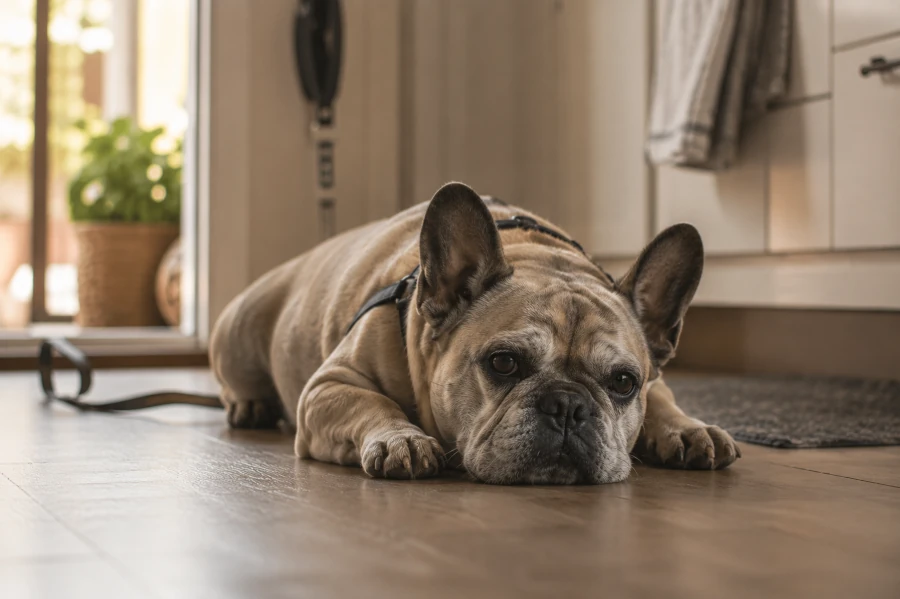
Arthritis can affect different joints, but some areas are more commonly involved:
- hips
- knees
- elbows
- lower back
And depending on the area, the signs may look different.
Hip discomfort often affects jumping and stairs.
Elbow issues can show up when lying down or getting up.
Back discomfort may appear as stiffness or reluctance to turn.
You might notice your dog:
- shifting weight from one side to another
- avoiding certain positions
- struggling more on slippery surfaces
These are small details.
But they tell you a lot.
Because your dog is constantly adjusting to reduce discomfort — even if you don’t immediately notice it.
What Actually Helps (And Makes a Real Difference)
You don’t need to do everything.
In fact, doing too much at once can create confusion.
Focus on what actually helps.
Movement (but the right kind)
Movement is essential.
Joints need controlled activity to stay functional.
What helps:
- short, regular walks
- slow, steady pace
- flat surfaces
What to avoid:
- sudden bursts of activity
- jumping whenever possible
- long, exhausting walks
It’s not about doing less.
It’s about doing things differently.
Also pay attention to transitions:
- getting up
- lying down
- changing position
These are often the hardest moments.
Helping your dog move more comfortably during these transitions — even just by slowing things down — can reduce strain more than you expect.
Weight control
Extra weight puts constant pressure on joints.
Even a small increase can make a difference.
And because weight changes gradually, it’s easy to underestimate its impact.
Managing weight is one of the simplest and most effective ways to reduce stress on joints.
Daily comfort
Your dog’s environment plays a huge role.
Simple changes can completely change how your dog moves:
- softer resting areas
- easy access to favorite spots
- stable, non-slip surfaces
- reducing unnecessary effort
Hard floors, for example, can make movement harder and less stable.
Adding traction can immediately improve confidence.
Support and treatment options
Depending on the situation, additional support may help:
- joint supplements
- anti-inflammatory medications (with vet guidance)
- physical therapy
Not every dog needs everything.
But most dogs benefit from something.
Small Adjustments That Make a Big Difference
When people think about arthritis, they often imagine big solutions.
But in reality, small adjustments often have the biggest impact.
For example:
- raising food and water bowls reduces strain on the front joints
- placing rugs on slippery floors improves stability
- keeping essential areas close reduces unnecessary movement
Even temperature matters.
Cold environments can increase stiffness.
Warm, comfortable spaces can make movement easier.
Another important factor is time.
Let your dog move at his own pace.
Rushing him — even unintentionally — can increase discomfort.
These changes may seem small.
But together, they shape your dog’s entire daily experience.
What You Can Do Right Now
If you suspect arthritis, don’t wait.
Start with simple observation:
- watch how your dog gets up after resting
- notice hesitation before movement
- reduce high-impact activities
- make small adjustments at home
- schedule a vet check if signs repeat
You’re not overreacting.
You’re paying attention.
And that matters.
Also, stop comparing everything to the past.
Instead, focus on your dog today.
How he moves.
How he reacts.
How he behaves now.
That’s what gives you real information.
When to Take It Seriously (And Not Wait)
Some signs should never be ignored.
Even if they seem mild.
Pay attention if you notice:
- consistent difficulty getting up
- clear reluctance to move
- visible discomfort when touched
- sudden behavioral changes
These are not just age.
They are signals.
And acting early gives you more options.
Waiting often means dealing with a more advanced situation later.
Common Mistakes to Avoid
These are extremely common:
- assuming “it’s just age”
- waiting for limping
- reducing all activity instead of adapting it
- ignoring repeated small changes
- allowing gradual weight gain
These mistakes don’t come from lack of care.
They come from not knowing what to look for.
And once you understand the signs, they become much easier to avoid.
Conclusion (the MOST important part)
Arthritis doesn’t just change how your dog moves.
It changes how you live together.
Walks become slower.
Movements become more intentional.
You start noticing things you never paid attention to before.
And yes, sometimes that brings a quiet sense of loss.
But something else happens too.
You adapt.
You learn his rhythm.
You stop expecting what used to be easy — and start appreciating what’s still there.
Because even if he doesn’t jump on the couch anymore…
He still walks next to you.
Still looks at you.
Still chooses to stay close.
And in the end, that’s what really matters.