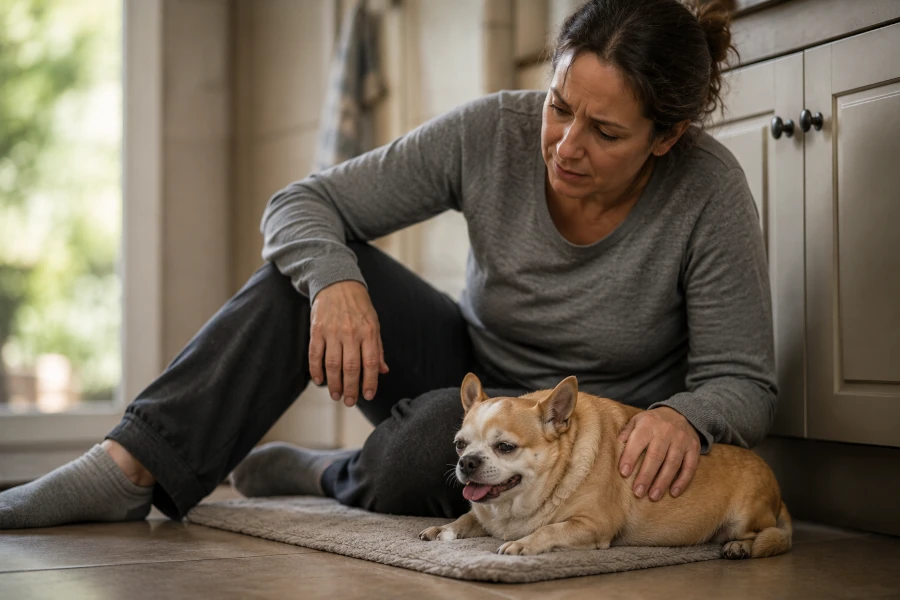
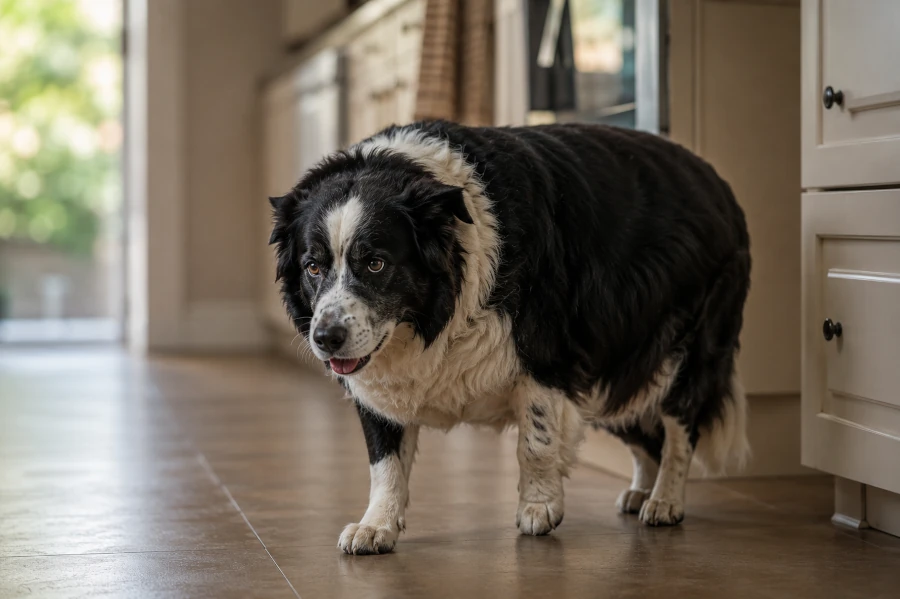
The extra weight didn’t seem important.
My dog still walked.
Still ate normally.
Still greeted me at the door.
Maybe he looked a little heavier than before, but older dogs slow down anyway, right?
That’s what I told myself.
And honestly, many owners do the same.
Weight gain in senior dogs often happens gradually enough that it feels harmless at first. A few extra pounds. A little less definition around the waist. Slightly slower movement.
Nothing dramatic.
But over time, I started noticing small changes that were harder to ignore.
He tired more easily on walks.
Standing up looked harder.
He avoided stairs more often.
Even resting seemed less comfortable than before.
That’s when I realized something important:
In senior dogs, extra weight affects much more than appearance.
It changes:
- mobility
- energy
- joint stress
- breathing
- recovery
- quality of life
And because aging already puts strain on the body, weight gain can quietly magnify problems that were previously manageable.
In this guide we will cover:
- why older dogs gain weight more easily
- when extra weight becomes a real problem
- warning signs owners often miss
- how weight affects pain and mobility
- practical ways to support healthy weight
- common mistakes owners make
Why Senior Dogs Gain Weight More Easily
Aging changes metabolism.
As dogs grow older:
- muscle mass decreases
- calorie needs often decline
- activity levels usually drop
- recovery becomes slower
These changes are strongly linked to metabolism changes.
But many dogs continue eating roughly the same amount they ate when they were younger and more active.
That imbalance creates gradual weight gain over time.
Certain medical conditions may also contribute, including:
- hormonal disorders
- reduced mobility
- chronic pain
- medication side effects
And because the changes happen slowly, owners often adapt visually without realizing how much body condition has changed.
Why Extra Weight Hits Senior Dogs Harder
A younger dog may tolerate extra weight reasonably well for a while.
A senior dog usually cannot.
Older joints already experience:
- wear
- stiffness
- inflammation
- reduced flexibility
Additional weight increases stress on:
- hips
- knees
- spine
- heart
- lungs
This means even moderate weight gain can noticeably worsen:
- mobility
- stamina
- balance
- pain levels
These problems become especially difficult in dogs already dealing with arthritis and joint pain.
And once movement becomes harder, dogs often become less active, which creates another cycle:
- more weight gain
- less movement
- weaker muscles
- worsening mobility
Early Signs Owners Often Miss
Weight gain rarely feels dramatic in the beginning.
Usually, the signs appear through subtle physical changes.
You may notice:
- reduced waist definition
- difficulty feeling ribs
- slower walking
- more panting
- reluctance to jump
- tiring more quickly
- sleeping more after activity
- stiffness after rest
One especially important sign is movement hesitation.
A dog carrying extra weight may pause before:
- stairs
- jumping onto furniture
- getting into the car
- standing up after sleeping
This hesitation is often physical discomfort, not stubbornness.
How Weight Gain Affects Pain and Mobility
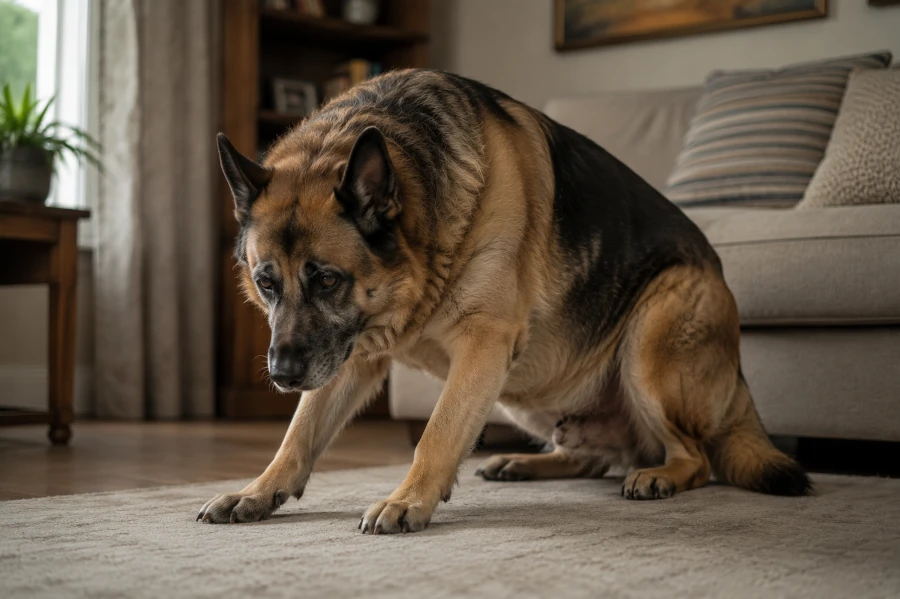
This connection is enormous.
Extra weight increases pressure on painful joints constantly.
Every step requires more effort.
Every movement creates more strain.
For dogs already dealing with:
- arthritis
- hip dysplasia
- spinal problems
weight gain can significantly worsen daily discomfort.
And because pain often reduces movement further, the cycle becomes difficult to break.
Some dogs gain weight not because they are overeating dramatically…
but because moving has quietly become uncomfortable.
Why Weight Gain Also Reduces Energy
Many owners think:
“He gained weight because he became lazy.”
But often, the opposite is closer to the truth.
The body becomes physically burdened first.
Then energy starts declining because movement itself becomes harder.
Extra weight affects:
- stamina
- heat tolerance
- breathing efficiency
- recovery after exercise
Over time, dogs may:
- rest more often
- avoid activity
- become less playful
- tire faster during walks
This reduced activity then contributes to even more weight gain.
These symptoms frequently increase fatigue and decrease energy [Fatigue and Low Energy in Senior Dogs].
Why Losing Muscle Can Hide Behind Weight Gain
One of the most misleading things about weight gain in senior dogs is this:
A dog can gain fat while simultaneously losing muscle.
From the outside, the dog may simply look “bigger.” But underneath that extra weight, physical strength may actually be declining.
This is especially common in older dogs with reduced activity levels.
They move less.
Burn fewer calories.
Lose muscle gradually.
At the same time, excess calories are stored more easily as body fat.
The result is a dog who may:
- weigh more
- move less efficiently
- tire faster
- appear bulky but physically weaker
That is why body weight alone does not tell the whole story.
A heavy senior dog is not necessarily a strong dog.
In fact, some overweight dogs struggle significantly with:
- balance
- mobility
- endurance
- standing up after rest
because muscle quality has declined underneath the extra fat.
This often contributes to weaken back legs.
This is also why gentle movement matters so much during aging.
Not only to control weight.
But to preserve strength.
How Weight Gain Changes Breathing and Heat Tolerance
Extra weight increases physical effort constantly, even during ordinary activities.
The body must work harder to:
- move
- regulate temperature
- support circulation
- breathe efficiently
That is why overweight senior dogs often:
- pant more easily
- struggle during warm weather
- tire faster on walks
- recover more slowly after activity
Heat becomes especially difficult.
Older dogs already regulate body temperature less efficiently than younger dogs. Extra weight adds another layer of strain.
Even mild exercise or moderate temperatures may leave some dogs:
- heavily panting
- restless
- unusually fatigued
This does not always mean severe disease.
Sometimes the body is simply carrying more physical load than it can comfortably manage.
And because breathing effort affects energy so strongly, improving body condition often improves stamina too.
Even relatively small weight reduction can make daily movement feel noticeably easier for many senior dogs.
The Emotional Side of Weight Gain
Weight gain affects emotional well-being too.
A dog who feels physically uncomfortable may:
- become quieter
- withdraw more
- avoid interaction
- lose confidence physically
Sometimes owners interpret these changes as simple aging.
But discomfort changes behavior.
Imagine carrying significant extra weight while also dealing with stiff joints and reduced strength.
Ordinary movement would feel exhausting.
That physical strain affects mood too.
These emotional changes may resemble behavioral changes in senior dogs.
When Weight Gain Becomes Dangerous
Not every overweight dog is in immediate danger.
But some signs suggest the body is struggling significantly.
You should pay closer attention if your dog shows:
- severe exercise intolerance
- heavy panting after mild activity
- major mobility decline
- inability to stand comfortably
- worsening joint pain
- breathing difficulty
- rapid ongoing weight gain
At this point, weight is no longer a cosmetic issue.
It is directly affecting physical function and quality of life.
What You Can Do at Home
Healthy weight management is not about starving a dog.
It is about reducing unnecessary physical strain safely.
Monitor body condition regularly
Look for:
- visible waist definition
- ability to feel ribs without excessive pressure
- overall mobility changes
Adjust calories carefully
Senior dogs often need fewer calories than owners realize.
Reduce treats thoughtfully
Small extra calories add up surprisingly fast.
Encourage gentle movement
The goal is not exhausting exercise.
It is sustainable movement that helps preserve:
- muscle
- circulation
- mobility
Support comfortable activity
Short walks, softer surfaces, and slower pacing often help overweight senior dogs stay active more comfortably.
This becomes easier with applying safe low-impact exercise.
Common Mistakes Owners Make
Weight gain is emotionally complicated because food often feels connected to love and comfort.
Assuming “a little chubby” is harmless
In senior dogs, even moderate excess weight can affect mobility significantly.
Reducing activity too much
Complete inactivity often worsens both weight gain and weakness.
Making sudden extreme diet changes
Rapid restriction may create stress or nutritional imbalance.
Ignoring muscle loss
Some overweight dogs still have weak muscle condition underneath excess fat.
Using food as the main emotional comfort
Affection and connection matter more than constant treats.
Supporting Health Instead of Chasing Thinness
The goal is not creating an unnaturally skinny dog.
It is improving:
- comfort
- mobility
- endurance
- joint support
- daily quality of life
Sometimes even modest weight reduction creates enormous improvement.
A dog may:
- move more easily
- recover faster
- sleep more comfortably
- regain confidence physically
Small changes matter.
The Part Owners Often Realize Too Late
Weight gain happens quietly.
That’s why it’s easy to underestimate.
You see your dog every day, so gradual changes blend into normal life.
But eventually, the body begins showing the cost.
The slower standing.
The heavier breathing.
The hesitation before movement.
The exhaustion after ordinary activity.
And many owners realize only then how much physical effort extra weight has been adding for months or years.
But there is good news inside this too.
Unlike some aspects of aging, weight-related strain is often one of the more manageable problems.
Not instantly.
Not perfectly.
But meaningfully.
And sometimes, helping a senior dog lose even a small amount of excess weight can make everyday life feel lighter, easier, and more comfortable again in ways that surprise both the dog and the owner.