It didn’t happen overnight.
There was no clear moment where I thought, “something is wrong.”
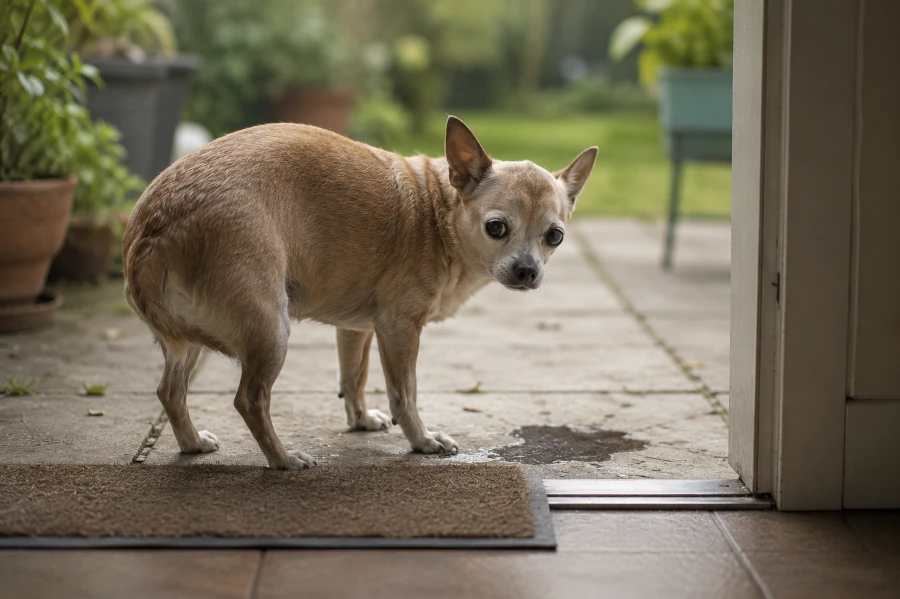
At first, it was just a small spot on the floor. Easy to ignore. Easy to explain.
Maybe he drank more water.
Maybe I didn’t let him out in time.
But then it happened again.
And again.
Always small. Always quiet. Almost like he didn’t even notice.
That’s what made it harder.
Because when a senior dog becomes incontinent, it doesn’t feel like a behavior problem. It feels like something slipping out of control — for him, not for you.
And if you’ve never dealt with it before, it can be confusing, frustrating, and honestly… a little heartbreaking.
In this guide we will cover:
- what incontinence really means in older dogs
- the most common causes
- how to recognize early signs
- what you can do right now at home
- when it becomes a medical issue
- common mistakes owners make
What Incontinence Really Means
Incontinence is not the same as “having an accident.”
An accident is when your dog could have held it… but didn’t.
Incontinence is when your dog, often due to age-related physical changes:
- doesn’t realize it’s happening
- cannot control it
- leaks urine without awareness
This distinction matters.
Because the response changes completely.
You’re not dealing with training.
You’re dealing with loss of control.
And in senior dogs, this is often linked to physical changes rather than behavior.
Why It Happens in Older Dogs
There isn’t just one cause of incontinence.
In fact, it’s often the result of multiple factors working together.
Weak bladder muscles
As dogs age, the muscles that control the bladder can weaken.
This makes it harder to hold urine, especially during sleep or rest.
Hormonal changes
Some older dogs, especially females, experience hormonal shifts that affect bladder control.
Neurological changes
Signals between the brain and bladder may become less efficient.
This means your dog may not even realize the bladder is full.
Underlying conditions
Incontinence can also be linked to:
- urinary tract infections
- kidney issues
- diabetes
- spinal problems
This is why it should never be dismissed too quickly, as it may be part of a broader group of health issues.
Early Signs You Might Miss
Incontinence rarely starts as a major issue.
It begins subtly.
You might notice:
- small wet spots where your dog was lying
- damp bedding
- urine smell without obvious accidents, often one of the first subtle warning signs of discomfort
- licking the genital area more often
- occasional dribbling when walking
- needing to go out more frequently
One of the clearest signs is this:
Your dog seems surprised when it happens.
He may look back, sniff, or move away without understanding.
That’s very different from a dog who knows he did something wrong.
The Emotional Side (For You and Your Dog)
This is where things get complicated.
For your dog:
- there is no guilt
- no embarrassment
- just confusion, at most
For you:
- frustration
- concern
- sometimes even irritation
And that gap can create tension.
It’s easy to think:
“Why didn’t he signal?”
“Why is this happening now?”
But the truth is:
He’s not choosing this.
He’s dealing with something his body can no longer manage the same way.
Once you shift that perspective, everything becomes easier.
When It’s Not Just Incontinence
Not all urinary issues are the same.
Sometimes what looks like incontinence is actually:
- increased urination (drinking more, peeing more)
- urgency (can’t hold it long enough)
- behavioral accidents
That’s why context matters.
Ask yourself:
- Is it happening during sleep?
- Is it small leaking or full urination?
- Is your dog aware or unaware?
These details help distinguish between causes.
And they matter when deciding what to do next.
How Incontinence Changes Daily Routine
Incontinence does not only affect the floor, the bedding, or the cleaning.
It affects rhythm.
Suddenly, you start thinking ahead in a way you didn’t before. You check the blanket before your dog gets up. You wonder if he needs to go out again. You notice how long he has been sleeping. You plan bedtime differently.
At first, this can feel exhausting, which is why having a consistent daily structure becomes so important.
Not because you don’t love your dog, but because it adds a layer of attention to everything.
The key is to make the routine lighter, not more complicated.
A few small adjustments can help:
- taking your dog out before he settles for a long nap
- keeping washable blankets in his favorite resting spots
- choosing one or two easy-to-clean areas for longer rest
- checking bedding calmly, without making it a big event
- preparing supplies in advance instead of reacting every time
This prevents incontinence from becoming the center of the day.
Your dog should not feel like every movement is being monitored. He should still be able to rest, follow you, and enjoy normal moments.
The goal is not to create a perfect system.
It is to create a forgiving one.
Because when the routine becomes easier for you, your patience lasts longer. And when your patience lasts longer, your dog feels safer.
That matters more than any single accident.
What You Can Do Right Now
You don’t need to solve everything immediately.
But you can make things easier — for both of you.
Increase bathroom frequency
Let your dog out more often, especially:
- before bedtime
- after meals
- after waking up
Even if it seems unnecessary.
Protect sleeping areas
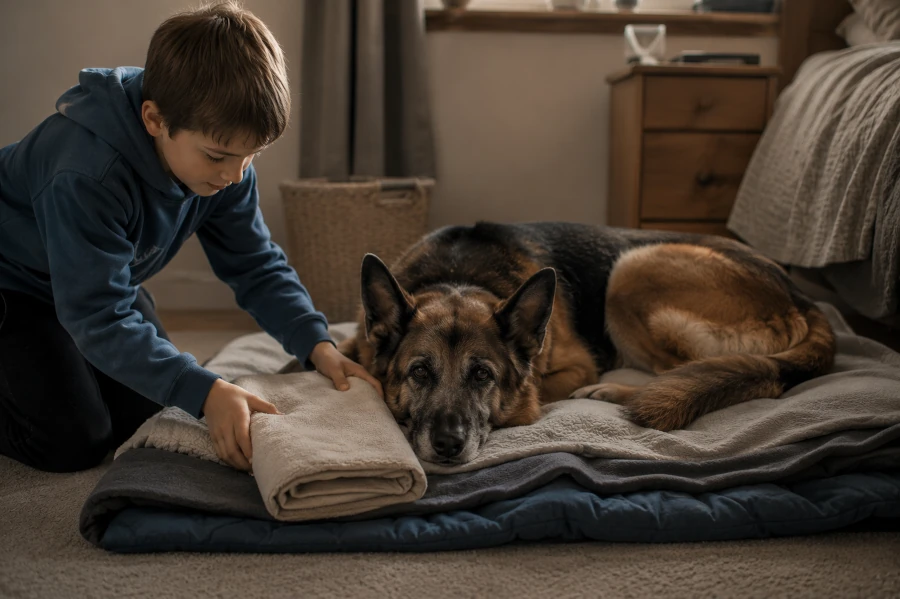
Use:
- washable blankets
- waterproof covers
- easily cleanable surfaces
This reduces stress and keeps your dog comfortable.
Keep a routine
Consistency helps the body adapt.
Regular feeding and bathroom times can reduce accidents.
Maintain hygiene
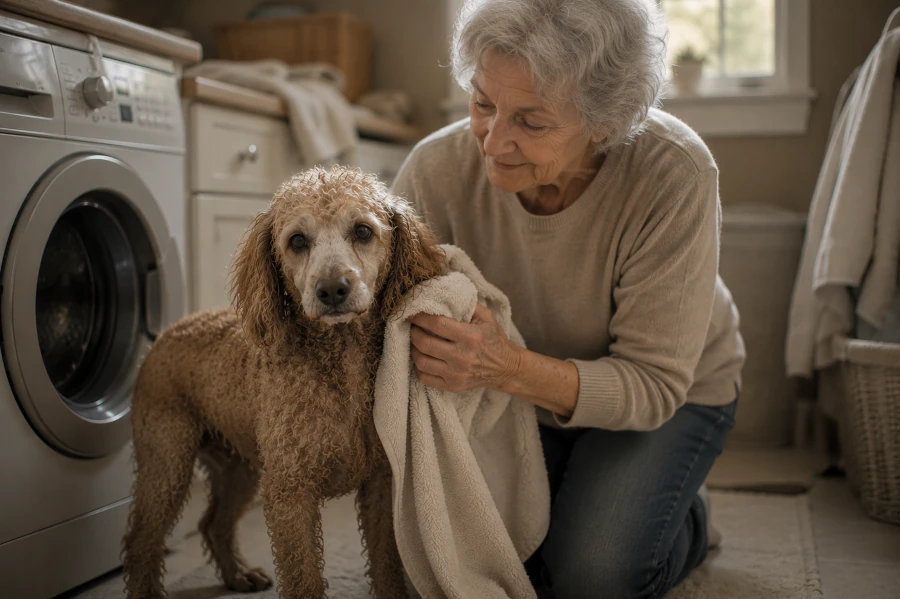
Gently clean your dog if needed.
This prevents irritation and infection.
Stay calm
Your reaction matters more than you think.
If you stay calm, your dog remains relaxed.
If you react with frustration, confusion increases.
When to Talk to Your Vet
Incontinence is common, but it’s not something to ignore completely.
You should consult a vet if:
- it starts suddenly
- it worsens quickly
- there is blood in urine
- your dog shows discomfort
- urination becomes very frequent
- there are signs of illness (lethargy, appetite changes)
Many causes are manageable.
Some require treatment.
But without a diagnosis, you’re guessing.
Common Mistakes Owners Make
This is where things often go wrong.
Assuming it’s behavioral
Trying to “correct” incontinence doesn’t work.
It only creates stress.
Reducing water intake
Some owners limit water to reduce accidents.
This can lead to dehydration and worsen underlying issues.
Ignoring early signs
Waiting too long can allow treatable conditions to progress.
Using punishment
This damages trust and doesn’t solve the problem.
Overcleaning with harsh products
Strong cleaners can irritate your dog’s skin.
Long-Term Management (What Life Looks Like)
In many cases, incontinence doesn’t completely disappear.
But it can be managed.
Over time, you’ll find a rhythm, especially when adapting your home to reduce daily stress and accidents.
- you’ll know when your dog needs to go out
- you’ll adjust sleeping arrangements
- you’ll prevent most accidents before they happen
And most importantly:
It becomes normal.
Not ideal. Not perfect.
But manageable.
Supporting Your Dog’s Dignity
This part matters more than people think.
Your dog doesn’t see himself as “incontinent.”
He is still:
- the same companion
- the same presence in your life
- the same dog who trusts you
Your job is not to fix everything.
It’s to support him without changing how you see him.
That means:
- not reacting with frustration
- not isolating him
- not treating him as a problem
It means adapting, quietly.
The Part That Stays With You
Incontinence is one of those changes that reminds you your dog is getting older.
Not in a dramatic way.
In a quiet, everyday way.
A small spot on the floor.
A damp blanket.
A routine that shifts.
It’s easy to focus on the inconvenience.
But if you look a little deeper, there’s something else there.
Your dog is still trying.
Still following you.
Still trusting you.
Still living his life as best as he can.
And this is one of those moments where your role becomes clearer than ever.
Not to demand perfection.
But to offer understanding.
Because for him, this isn’t a failure.
It’s just a change.
And how you respond to that change is what defines the rest of the journey.