
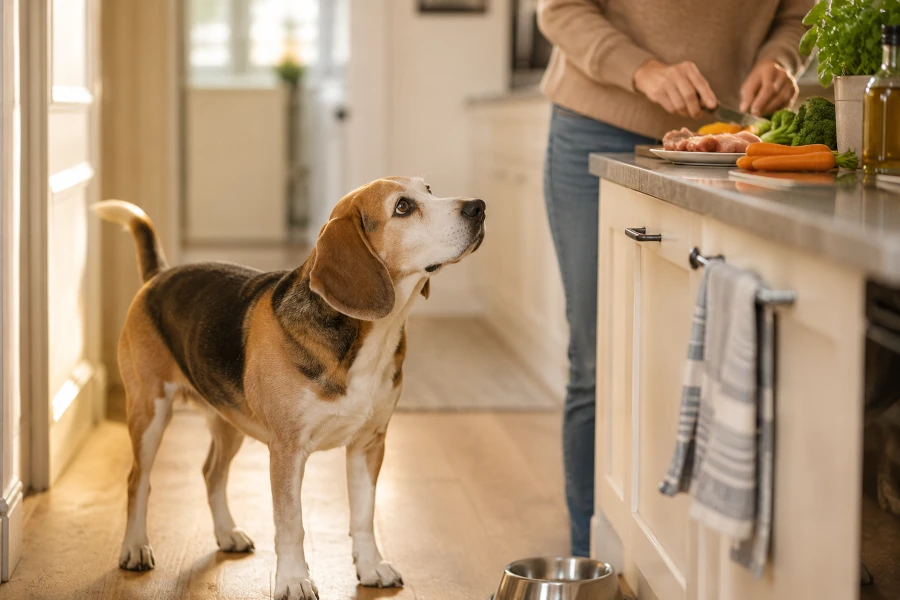
Choosing the best food for a senior dog can feel surprisingly complicated.
As dogs age, their nutritional needs change. Digestion becomes less efficient, metabolism slows, and maintaining muscle mass becomes more important.
The good news is that you don’t need to find a perfect food. You need to find the right food for your dog’s current needs.
In this guide, we’ll go through:
- what really changes in senior nutrition
- how to choose food based on real needs
- 10 solid food options for different situations
- how to avoid common mistakes that lead to problems
What Changes in a Senior Dog’s Diet
As dogs age:
– digestion becomes less efficient
– metabolism slows down
– muscle mass decreases
– appetite becomes less predictable
This means that senior dogs often need food that is easier to digest, nutritionally balanced, and adapted to their changing energy needs.
What Actually Makes a Good Senior Dog Food
When evaluating senior dog food, focus on four things:
– digestibility
– protein quality
– calorie balance
– palatability
If a food performs well in these areas, it will usually be a better choice than products that rely mainly on marketing claims.
10 Best Food Options for Senior Dogs
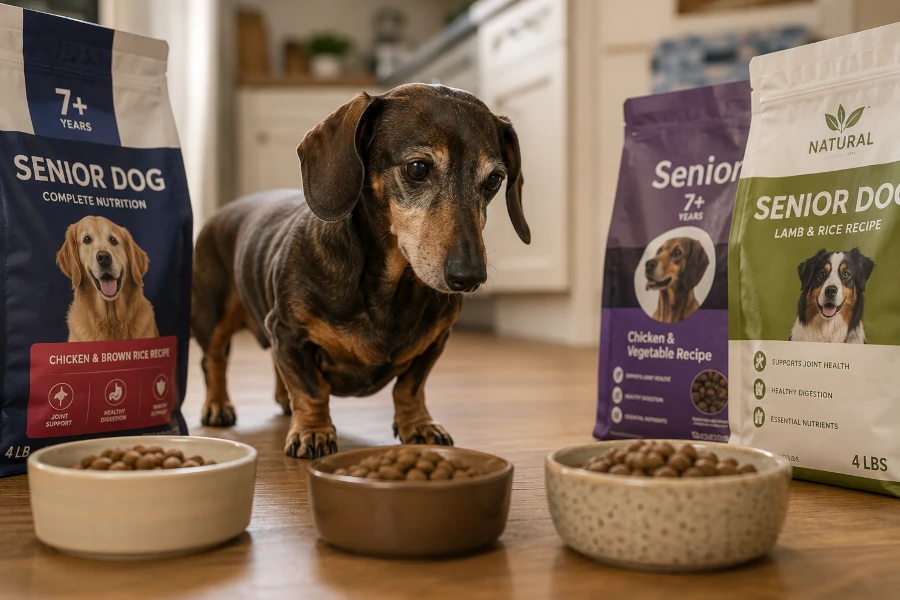
These are not “the best products in the world.”
They are reliable solutions that work in real situations.
1. Balanced Senior Dry Food
The safest starting point.
These formulas are designed specifically for aging dogs:
- moderate calories
- added joint support
- balanced nutrients
This type of food works well when your dog:
- still eats regularly
- has no major digestive issues
- maintains a relatively stable weight
It’s often the best baseline before trying more specific solutions.
Hill’s Science Diet Senior 7+ Small Bites (Chicken, Barley & Rice)
A balanced, reliable option designed specifically for aging dogs, with smaller kibble pieces that may be easier to chew. It supports brain function, energy levels, and overall vitality without being too heavy on digestion.
It’s a strong starting point if your dog is healthy but clearly slowing down.
Best for:
- dogs with no major health issues
- stable weight
- early signs of aging
Not ideal if:
- appetite is already low
- digestion is unstable
👉 Check current price for Hill’s Science Diet Senior 7+ Small Bites
2. Chicken-Based Digestible Formula
Chicken is one of the most commonly used proteins for a reason.
It tends to be:
- easier to digest
- well tolerated
- less heavy on the stomach
This makes it a strong option when you notice:
- occasional loose stools
- reduced appetite
- slower digestion
However, it may not be ideal if your dog has developed sensitivities to common proteins.
Purina Pro Plan Wet Food for Senior Dogs (Chicken & Rice)
It uses familiar ingredients that are generally well tolerated, while still providing enough nutritional support for aging dogs. A solid option when you want consistency without pushing the system too hard.
👉 Check current price for Purina Pro Plan Wet Food
3. Grain-Inclusive Simple Formula
Despite trends, grains are not the enemy for most dogs.
Simple formulas using:
- rice
- oats
Can actually support digestion and provide stable energy.
This option is ideal if your dog:
- has always eaten grain-based food
- shows no intolerance
- needs consistency rather than experimentation
Jinx Premium Dry Dog Food (Brown Rice)
This formula keeps things structured and predictable, supporting digestion and overall balance without unnecessary variation. It’s especially useful for dogs that have always done well on traditional diets.
👉 Check current price for Jinx Premium Dry Dog Food
4. Grain-Free Option (When Needed)
Grain-free diets can be helpful in specific cases.
But they are not automatically better.
They make sense when:
- your dog shows clear food sensitivities
- previous diets caused digestive discomfort
Switching to grain-free without a reason often creates unnecessary changes.
Jinx Premium Grain-Free Dry Dog Food
It removes common triggers while still maintaining good protein levels and overall balance. A good fit when previous foods have led to discomfort or inconsistent digestion.
👉 Check current price for Jinx Premium Grain-Free Dry Dog Food
5. Wet Food for Appetite Support
When appetite drops, this is often the turning point.
Wet food:
- has a stronger smell
- is softer
- is easier to chew and swallow
This makes it extremely useful when:
- your dog starts leaving food behind
- eating becomes slower
- interest in meals decreases
It’s not just about nutrition—it’s about making food appealing again.
Hill’s Science Diet Adult 7+ Wet Dog Food, Chicken & Vegetables
Softer, more aromatic, and easier to eat, this option can help bring back interest in food without forcing anything. Especially useful when your dog starts leaving meals unfinished.
👉 Check current price for Hill’s Science Diet Adult 7+ Wet Dog Food
6. Mixed Feeding Approach
One of the most effective strategies in real life.
Adding texture variety:
- improves taste perception
- makes meals more interesting
- increases acceptance
This works especially well when your dog:
- is becoming picky
- eats inconsistently
- needs encouragement without drastic changes
It’s often more effective than switching completely to a new food.
Blue Buffalo Wilderness Rocky Mountain Recipe Senior Wet Dog Food (High-Protein & Grain-Free)
This wet formula works particularly well when combined with a senior dry food, helping improve aroma, texture, and acceptance. The combination of textures makes meals more engaging and easier to eat. It often works well for dogs that are becoming picky or inconsistent with dry food alone.
👉 Check current price for Blue Buffalo Wilderness Rocky Mountain Recipe Senior Wet Dog Food
7. Weight-Control Formula
Weight gain is one of the most common issues in senior dogs.
These formulas:
- reduce fat content
- maintain essential nutrients
- prevent excessive calorie intake
They are useful when:
- your dog is less active
- weight is slowly increasing
- portions are hard to reduce further
But they should not be used if your dog is already losing weight.
VICTOR Super Premium Dog Food (Senior Healthy Weight Management)
It helps manage calorie intake while still supporting joints and mobility. A practical choice for dogs that are eating normally but moving less than before.
👉 Check current price for VICTOR Super Premium Dog Food
8. High-Protein Support Formula
Muscle loss is subtle but important.
Higher protein intake helps:
- maintain strength
- slow down physical decline
- support mobility
This is particularly useful when:
- your dog looks thinner
- muscle tone is decreasing
- activity is still relatively good
However, balance is important—too much protein without quality can be counterproductive.
Blue Buffalo Wilderness Natural High Protein Wet Food for Senior Dogs (Turkey & Chicken)
This is a more nutrient-dense option that helps maintain strength and physical condition. Best suited for dogs that are still relatively active but starting to lose muscle.
👉 Check current price for Blue Buffalo Wilderness Natural High Protein Wet Food
9. Limited Ingredient Diet (LID)
When digestion becomes unpredictable, simplicity wins.
LID formulas:
- reduce the number of ingredients
- make reactions easier to identify
- lower digestive stress
This approach is ideal for dogs with:
- recurring digestive issues
- inconsistent stools
- suspected food sensitivities
ZIWI Peak Limited Ingredient Lamb Air-Dried Dog Food
It uses a short ingredient list and a single-animal protein source, making it easier to identify potential food sensitivities while reducing digestive complexity.
👉 Check current price for ZIWI Peak Limited Ingredient Lamb Air-Dried Dog Food
10. Soft Kibble / Easy-Chew Food
Eating is not just about hunger.
It’s also about comfort.
Some senior dogs:
- struggle with chewing
- eat more slowly
- avoid harder kibble
Soft kibble or easy-chew formulas:
- reduce effort
- make meals less frustrating
- improve consistency
Designed to be easier to eat and digest, it works well for smaller or more sensitive dogs that struggle with standard kibble.
👉 Check current price for
How to Choose the Right One Without Overthinking
You don’t need to test everything.
Start from your dog.
Ask yourself:
- Is he eating consistently?
- Is his weight stable?
- Is digestion normal?
Then adjust based on what you observe.
Not what marketing suggests.
Dry vs Wet: What Actually Works Better?
There’s no universal answer.
Dry food:
- is convenient
- supports dental structure
- is easier to manage
Wet food:
- improves appetite
- is easier to eat
- increases hydration
In many cases, the best solution is not choosing one.
It’s combining both.
How to Switch Food Without Creating Problems
This is where many mistakes happen.
Even a better food can cause issues if introduced too fast.
Correct approach:
- Day 1–2: 75% old / 25% new
- Day 3–4: 50% / 50%
- Day 5–6: 25% / 75%
- Day 7: 100% new
And always observe:
- stool
- appetite
- behavior
When You Should NOT Change Food
Sometimes the best decision is doing nothing.
If your dog:
- eats well
- maintains weight
- has stable energy
Changing food may create problems instead of solving them.
The Most Common Mistakes
Switching too often creates instability.
Choosing based on marketing leads to poor decisions.
Ignoring your dog’s response leads to missed signals.
Trying to find a perfect food leads to unnecessary changes.
How to Stay Focused When Options Seem Endless
This part matters more than people think.
Because feeding your dog is not just practical.
It’s emotional.
It’s routine.
It’s something you’ve done for years.
And changing it feels like breaking something that used to work.
But you’re not breaking anything.
You’re adapting.
And that’s exactly what your dog needs now.
What “Right Food” Actually Looks Like
It doesn’t look perfect.
It looks stable.
Your dog:
- eats without hesitation
- maintains weight
- shows steady energy
No extremes.
No constant adjustments.
Just balance.
Conclusion
The best food for a senior dog is not universal.
It’s specific.
It depends on:
- your dog
- his condition
- his response
You don’t need the perfect product.
You need the right fit.
And finding it is not about guessing.
It’s about observing, adjusting, and staying consistent.